


Glitch with GSLV's third stage caused ISRO to lose its Earth observation satellite
Where's the satellite? Naren opines it might've splashed into the Bay of Bengal, and the stage splashed down between the Andaman Islands and Thailand.


ISRO's GSLV-F10 launches while carrying the Earth Observation satellite-03. Image credit: ISRO[/caption]The satellite is an imaging satellite launched on a Geosynchronous Satellite Launch Vehicle-F10 (GSLV-F10) from the Satish Dhawan Space Centre at Sriharikota, in Andhra Pradesh. While the launch at 5.43 am IST on 12 August was a success, the Cryogenic Upper Stage let ISRO down, as it did not ignite.In a tweet, ISRO said "GSLV-F10 launch took place today at 05.43 hrs IST as scheduled. Performance of first and second stages was normal. However, Cryogenic Upper Stage ignition did not happen due to technical anomaly. The mission couldn't be accomplished as intended."
A cryogenic engine is extremely efficient as compared to a regular rocket engine, making it ideal for spacecraft. It’s also incredibly hard to develop, which is why only a handful of nations have succeeded in building one. The GSLV's third stage motor is a record-setter in its own right. This cryogenic engine is classified as one of the most powerful upper stage motors in the world.It develops a thrust of 200 kN in a vacuum and can operate for 640 seconds. For fuel, it uses a mixture of oxygen and hydrogen, which are cooled to cryogenic temperatures (below -183ºC) and are thus in liquid form.The average cost of a GSLV launch is estimated to be about Rs 400 crore or $62 million, making it one of the cheapest launch vehicles in the world.This launch had a rocky start as it was constantly pushed back due to either the pandemic or other technical issues. Originally, the satellite was supposed to launch on 5 March, 2020, but was cancelled and rescheduled for 28 March, 2021. That, too, was postponed, after which it was slated for a May launch, which was also later cancelled. The second COVID-19 wave hit and everything came to a grinding halt.Since ISRO usually stays mum on issues, we do not officially know if the satellite has been placed into orbit or if it has been lost.What happened?
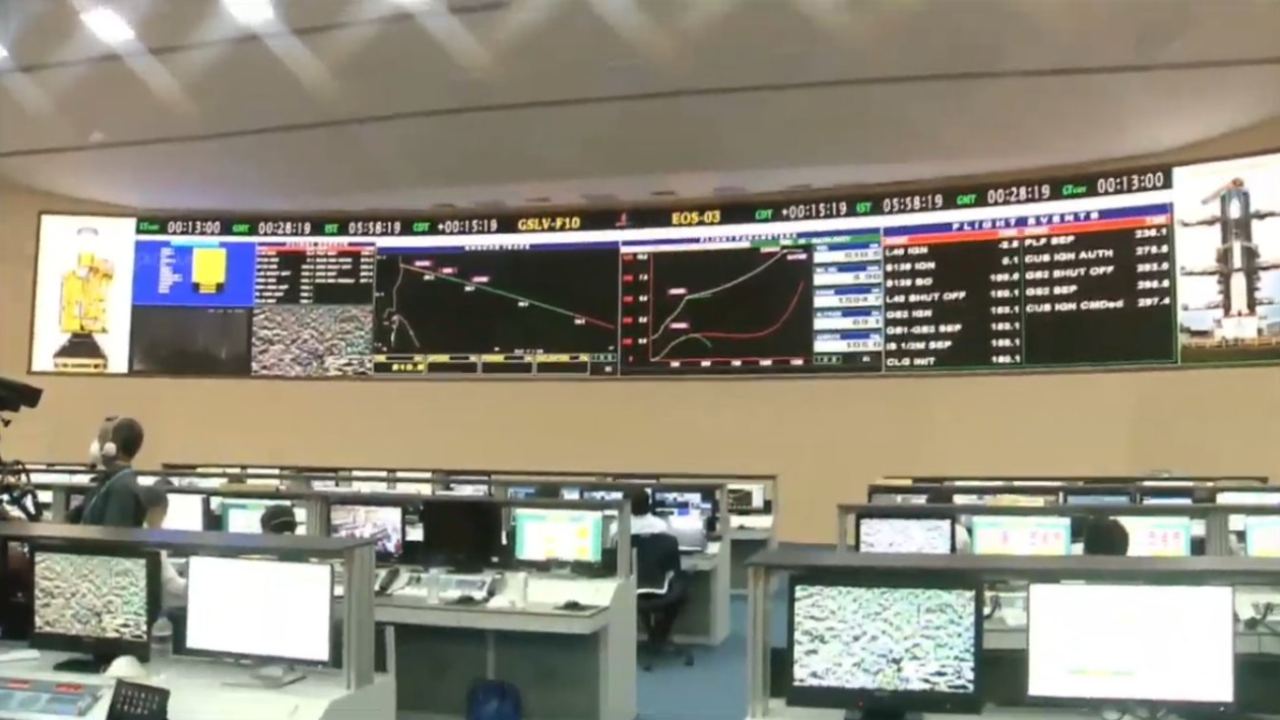 Screengrab of ISRO's mission control during the EOS-03 launch mission. Image credit: ISRO/YouTube/Karthik Naren[/caption]Naren told Firstpost, "Around five minutes into the launch, the rocket kept losing attitude and velocity of the upper stage and eventually fell - you can see the slope on the graphic at the end.""The fairing had already separated, and the satellite was exposed to the vacuum of space at 130 km altitude."Scientists were seen holding discussions, after which Range Operations Director announced the "mission could not be accomplished fully" due to a "performance anomaly".[caption id="attachment_9888261" align="alignnone" width="1024"]
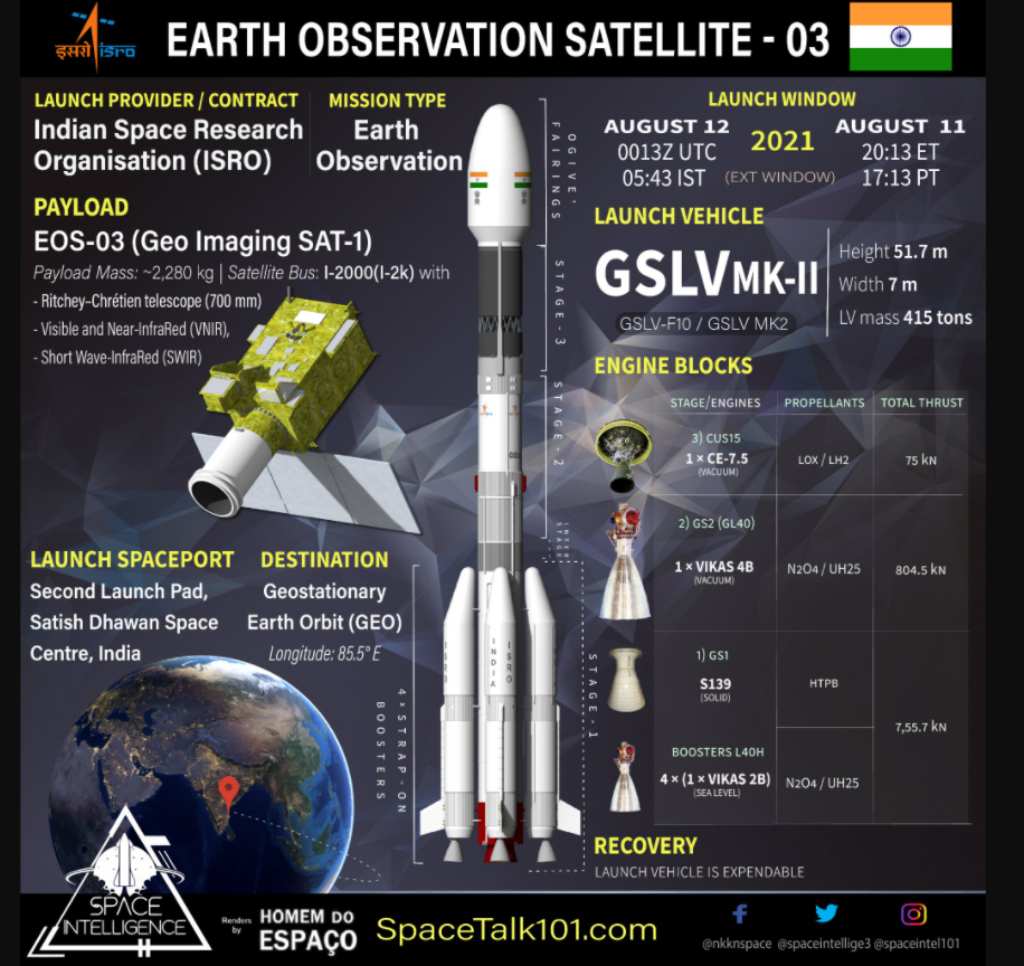 About the EOS-03. Image credit: Karthik Naren[/caption]Later, ISRO Chairman K Sivan announced, "(The mission) could not be fully accomplished mainly because there is a technical anomaly observed in the cryogenic stage. This I wanted to tell all my friends.""The satellite didn't reach orbit since the indigenous Cryogenic upper stage or CUS-15 had to burn for another few minutes to reach orbital speed. It needed to reach a targeted Geo Synchronous Transfer orbital velocity of more than 7.9 kmps, for 170 × 36297 at an inclination of 19.4°, but it could only reach 4.7 kmps during the tumbling of stage, which is why it was an anomaly", Naren explains.According to data provided by ISRO, the CUS-15 has to burn for a total of 13 minutes (from T+5 minutes to T+18 minutes and 29 seconds), but it started having issues after the ignition at the six-minute mark.[caption id="attachment_9888291" align="alignnone" width="1280"]
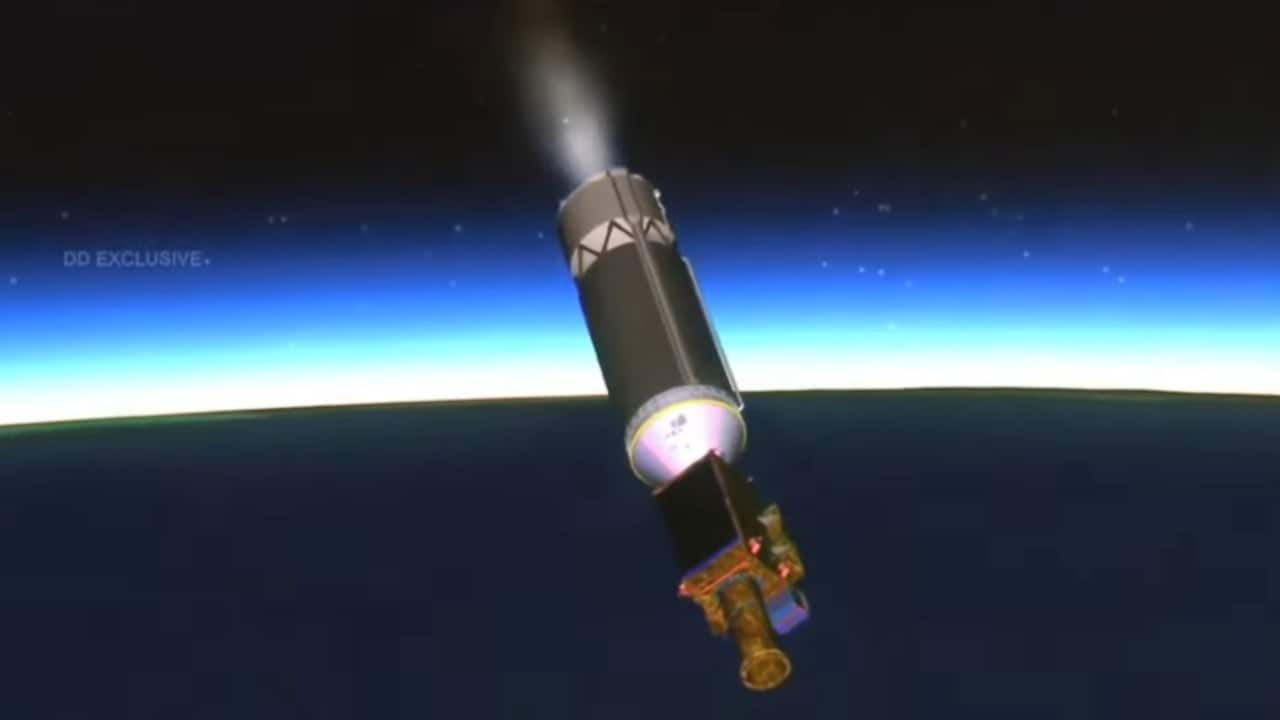 Screengrab from the EOS-03 mission launch showing GSLV-F10's third stage pitching downwards. Image credit: ISRO/YouTube/Karthik Naren[/caption]So where is the satellite? Naren opines it may have splashed into the Bay of Bengal, and the stage splashed down between the Andaman Islands and Thailand, in the region of Gulf of Martaban.Hindustan Times reports the GSLV rockets are not as successful as ISRO's workhorse PSLV. Three of 14 GSLV missions have failed as compared to two of the 53 PSLV missions. The GSLV rocket was used to launch the Chandrayaan-2 mission, which also was a partial failure as the lander-rover module crashed on the moon's surface, while the orbiter continues its science mission. The GSLV will also be the one to take Indian astronauts into space for the first time if all goes to plan."ISRO really need to master the usage of Cryogenics for their future launch vehicles. They have already worked on Cryogenics, but these type of failures now will create another opportunity to review their cryogenic stages, especially before the Gaganyaan mission and their upcoming Heavy Launch Vehicle projects," adds Naren.
People react
About the satellite
The GISAT weighs more than two tonnes and has a mission life of 10 years. For the first time, ISRO was using an Ogive-shaped fairing, which is a classic bullet-shaped surface casing that is capable of accommodating a larger payload.In a press release, Singh said that the Earth Observation Satellite (EOS-03) is "an excellent agile Earth Observatory" that was to be launched and placed in a Geosynchronous Transfer Orbit (GTO) by the GSLV-F10 rocket. The satellite will use its onboard propulsion system to reach a geostationary orbit of about 36,000 km above the Earth’s surface on its own.[caption id="attachment_9884991" align="alignnone" width="1024"]
ISRO's GSLV-F10 Ogive-shaped fairing. Image credit: ISRO[/caption]Geostationary implies that the satellite will be located above the Equator and always appear to be fixed at one point in the sky. But such satellites aren’t motionless. All that happens is that the high orbit they are placed in “makes the satellite travel at the same rate as the Earth’s spin“. With its movement thus synchronised with the rotation of the Earth, GISAT-1 will be circling the Earth once every 24 hours.
Highlights of EOS-03
- Provide real-time images of large area region of interest.
- Monitoring of natural disasters, episodic events and any short-term events.
- It will help in defense purposes.

Careless Whispers: Scientists discover that plants can 'talk' to each other using smells
Life on Mars? European Space Agency’s Orbiter discovers ice water deposits at equator
Microsoft briefly overtakes Apple as the most valuable company, Apple back on top again
Even NASA is facing a tough time, starts layoffs following major budget cuts
ISRO, NASA's NISAR satellite to get ready by Jan-end, will monitor Earth's snow-covered regions