
Advertisement


Sections
First southern white rhino born of artificial insemination, could help save species
The mother was inseminated with frozen semen from a male rhino last year and carried her calf for 493 days.

A southern white rhino conceived through artificial insemination was born at the San Diego Zoo in what was called a historic milestone that could help save a subspecies from extinction.The calf was born on Sunday and the mother named Victoria remained calm during the 30-minute labour, zoo officials said in a statement. "We are so pleased Victoria and the calf are doing well," said Barbara Durrant, the director of Reproductive Sciences at the zoo. "She is very attentive to her baby, and the calf is up and walking, and nursing frequently. Not only are we thankful for a healthy calf, but this birth is significant, as it also represents a critical step in our effort to save the northern white rhino from the brink of extinction."[caption id="attachment_7085321" align="alignnone" width="1280"]![A day-old southern white rhino calf rests beside his mother, Victoria, at the Nikita Kahn Rhino Rescue Center at the San Diego Zoo Safari Park in California on July 29, 2019. The rhino was the first successful artificial insemination birth of a southern white rhino in North America. Image credit: Ken Bohn / San Diego Zoo]() A day-old southern white rhino calf rests beside his mother, Victoria, at the Nikita Kahn Rhino Rescue Center at the San Diego Zoo Safari Park. Image credit: Ken Bohn / San Diego Zoo[/caption]The birth marks the first successful artificial insemination birth of a southern white rhino in North America.Victoria was inseminated with frozen semen from a southern white rhino named Maoto in March of last year and carried her calf for 493 days.The successful birth has raised hopes that artificial insemination could help efforts to genetically recover the northern white rhino, a distant subspecies of the southern white rhino. Only two northern white rhinos remain on Earth and both are female. The last male died last year.There are an estimated 18,000 southern wild rhinos remaining in the wild but the species is also being decimated by poachers in South Africa at a rate of one every eight hours.The San Diego zoo currently has six female southern white rhinos, which were relocated to the zoo's Safari Park from private reserves in Southern Africa in 2015.[caption id="attachment_7085341" align="alignnone" width="1000"]
A day-old southern white rhino calf rests beside his mother, Victoria, at the Nikita Kahn Rhino Rescue Center at the San Diego Zoo Safari Park. Image credit: Ken Bohn / San Diego Zoo[/caption]The birth marks the first successful artificial insemination birth of a southern white rhino in North America.Victoria was inseminated with frozen semen from a southern white rhino named Maoto in March of last year and carried her calf for 493 days.The successful birth has raised hopes that artificial insemination could help efforts to genetically recover the northern white rhino, a distant subspecies of the southern white rhino. Only two northern white rhinos remain on Earth and both are female. The last male died last year.There are an estimated 18,000 southern wild rhinos remaining in the wild but the species is also being decimated by poachers in South Africa at a rate of one every eight hours.The San Diego zoo currently has six female southern white rhinos, which were relocated to the zoo's Safari Park from private reserves in Southern Africa in 2015.[caption id="attachment_7085341" align="alignnone" width="1000"]![A day-old southern white rhino calf stands on its wobbly legs at the Nikita Kahn Rhino Rescue Center at the San Diego Zoo Safari Park in California on July 29, 2019. The rhino was the first successful artificial insemination birth of a southern white rhino in North America. Image credit: Ken Bohn / San Diego Zoo]() A day-old southern white rhino calf stands at the Nikita Kahn Rhino Rescue Center at the San Diego Zoo Safari Park. Image credit: Ken Bohn / San Diego Zoo[/caption]Scientists hope the animals could potentially serve as future surrogate mothers for a northern white rhino."There are many challenges ahead, but researchers are optimistic that a northern white rhino calf could be born from these processes within 10 to 20 years," zoo officials said.As to Victoria and her calf, they will remain off-limits to visitors for the time being to allow them to bond.And the newborn can expect a playmate in the near future as another rhino impregnated through artificial insemination is due to give birth in September or October.
A day-old southern white rhino calf stands at the Nikita Kahn Rhino Rescue Center at the San Diego Zoo Safari Park. Image credit: Ken Bohn / San Diego Zoo[/caption]Scientists hope the animals could potentially serve as future surrogate mothers for a northern white rhino."There are many challenges ahead, but researchers are optimistic that a northern white rhino calf could be born from these processes within 10 to 20 years," zoo officials said.As to Victoria and her calf, they will remain off-limits to visitors for the time being to allow them to bond.And the newborn can expect a playmate in the near future as another rhino impregnated through artificial insemination is due to give birth in September or October.
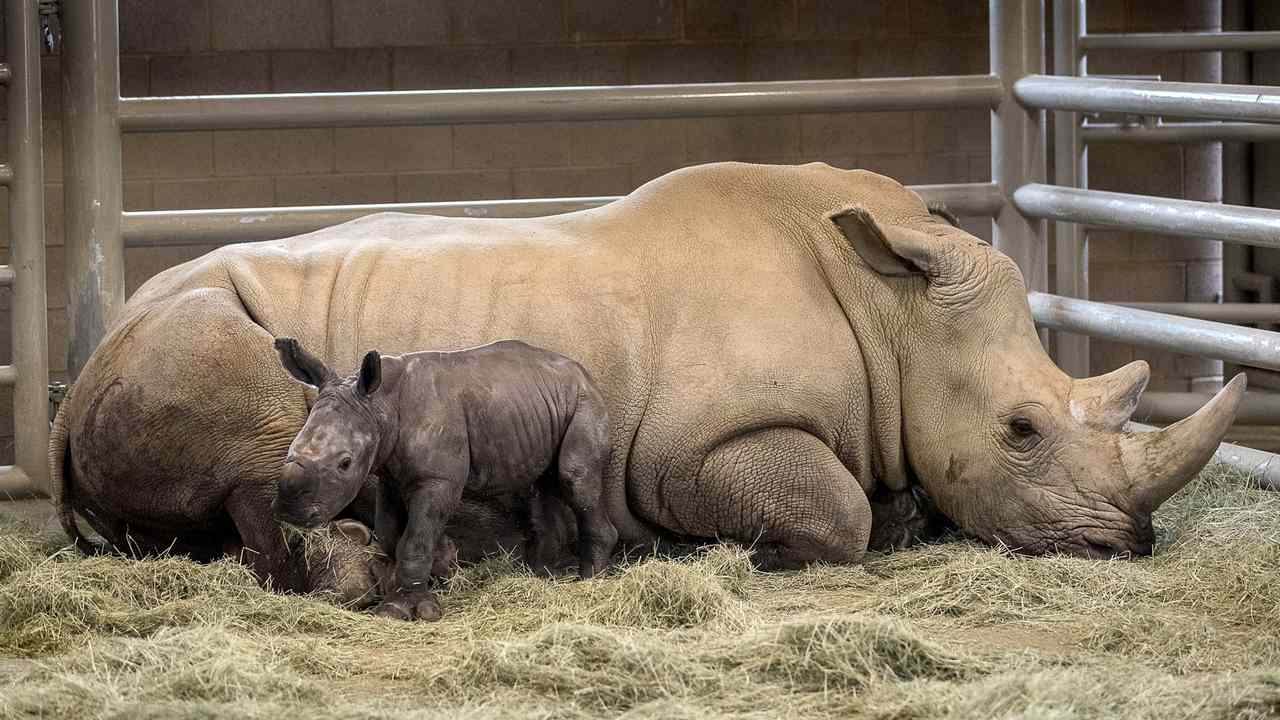 A day-old southern white rhino calf rests beside his mother, Victoria, at the Nikita Kahn Rhino Rescue Center at the San Diego Zoo Safari Park. Image credit: Ken Bohn / San Diego Zoo[/caption]The birth marks the first successful artificial insemination birth of a southern white rhino in North America.Victoria was inseminated with frozen semen from a southern white rhino named Maoto in March of last year and carried her calf for 493 days.The successful birth has raised hopes that artificial insemination could help efforts to genetically recover the northern white rhino, a distant subspecies of the southern white rhino. Only two northern white rhinos remain on Earth and both are female. The last male died last year.There are an estimated 18,000 southern wild rhinos remaining in the wild but the species is also being decimated by poachers in South Africa at a rate of one every eight hours.The San Diego zoo currently has six female southern white rhinos, which were relocated to the zoo's Safari Park from private reserves in Southern Africa in 2015.[caption id="attachment_7085341" align="alignnone" width="1000"]
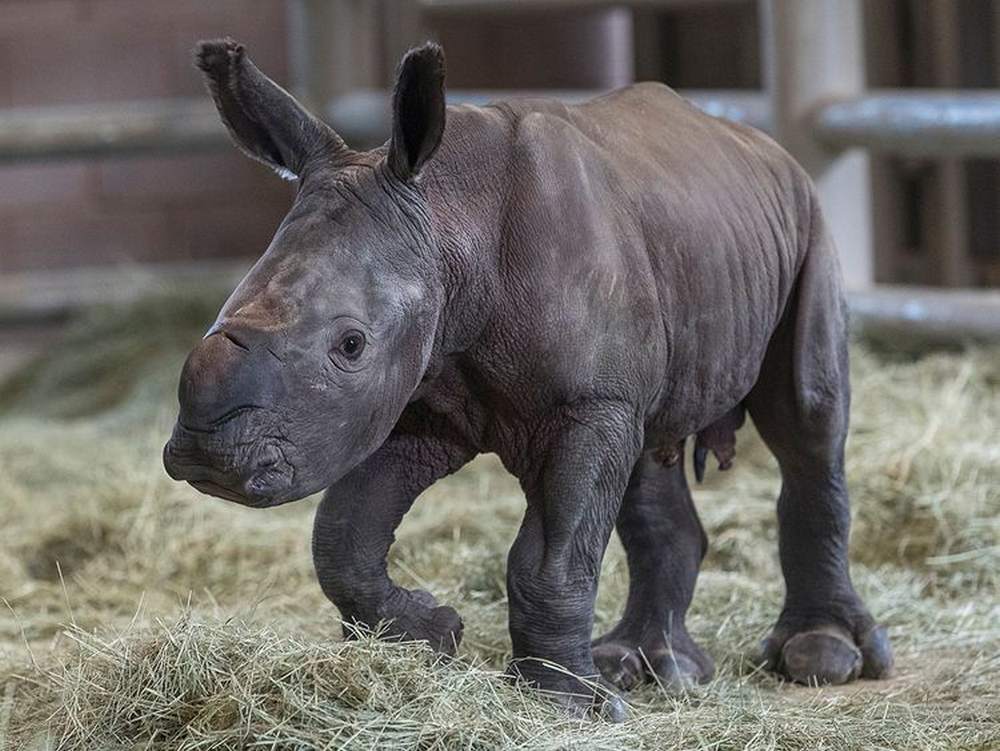 A day-old southern white rhino calf stands at the Nikita Kahn Rhino Rescue Center at the San Diego Zoo Safari Park. Image credit: Ken Bohn / San Diego Zoo[/caption]Scientists hope the animals could potentially serve as future surrogate mothers for a northern white rhino."There are many challenges ahead, but researchers are optimistic that a northern white rhino calf could be born from these processes within 10 to 20 years," zoo officials said.As to Victoria and her calf, they will remain off-limits to visitors for the time being to allow them to bond.And the newborn can expect a playmate in the near future as another rhino impregnated through artificial insemination is due to give birth in September or October.
First Published:Jul 31, 2019, 10:04:58 IST
Advertisement
Advertisement

Careless Whispers: Scientists discover that plants can 'talk' to each other using smells
Japanese scientists have recorded a video that shows plants, in certain conditions, communicate with each other using mists that carry smells. The discovery, reveals that plants release a fine mist of airborne compounds, to warn nearby plants of potential dangers
Life on Mars? European Space Agency’s Orbiter discovers ice water deposits at equator
European Space Agency's Mars Express Orbiter has identified massive ice and ice water deposits beneath the surface of Mars. The Mars Express orbiter was also the first to confirmed the presence of ice on Mars in 2004
Microsoft briefly overtakes Apple as the most valuable company, Apple back on top again
At its peak during the session, Microsoft's value reached $2.903 trillion, with a 2% surge. As of writing this article, Apple closed at $2.89 trillion, whereas Microsoft closed at $2.86 trillion
Even NASA is facing a tough time, starts layoffs following major budget cuts
NASA is facing some massive budget cuts, because of which, it has been forced to postpone some upcoming missions. NASA's Jet Propulsion Laboratory has been hit hard by recent federal budget cuts, resulting in the layoff of 100 contractors last week
ISRO, NASA's NISAR satellite to get ready by Jan-end, will monitor Earth's snow-covered regions
The NISAR satellite which has been developed jointly ISRO and NASA, should be ready for launch by the end of January 2024. The collaboration between NASA and ISRO on NISAR is the first time the two agencies have cooperated on hardware development for an Earth-observing mission
Advertisement
Advertisement