


Even rare, 4-000 year old comets can cause meteor showers on Earth, finds study
They found nine new matches between meteor showers and long-period comets and six potential matches.

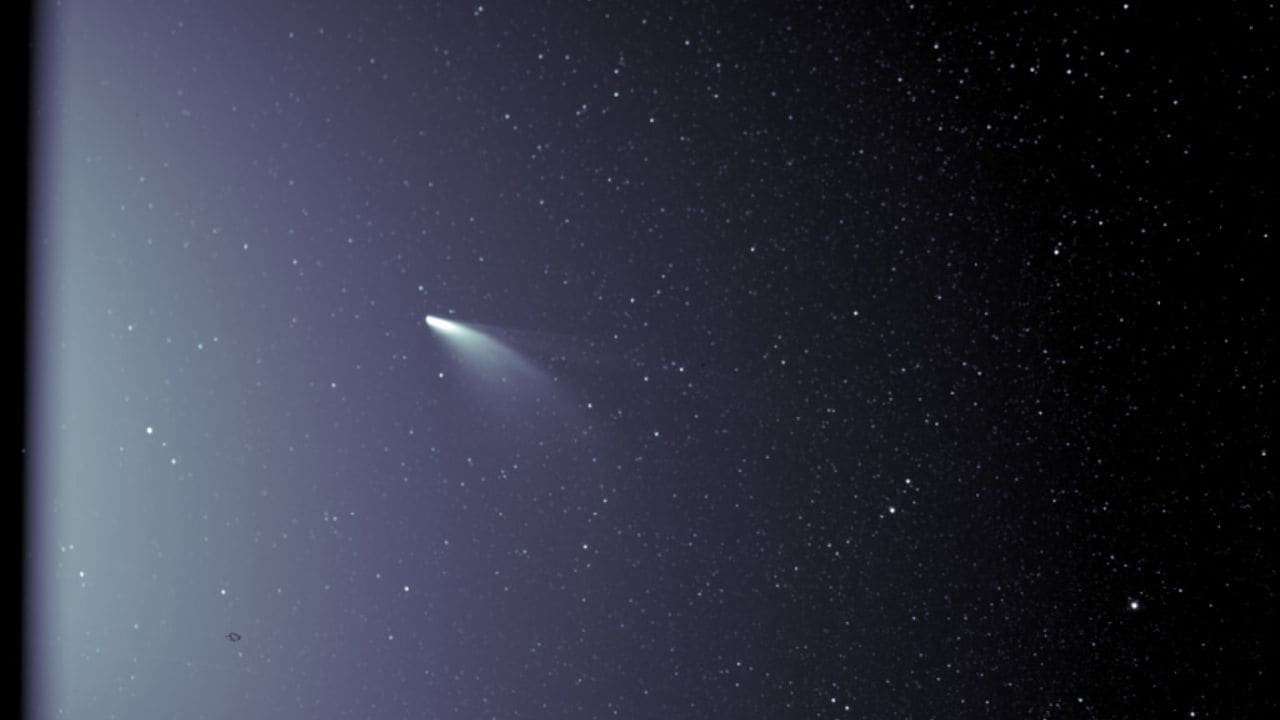
An unprocessed image from the WISPR instrument on NASA’s Parker Solar Probe shows the comet NEOWISE as of 5 July 2020, soon after its closest approach to the Sun. representational Image. Image: NASA Goddard[/caption]A space rock that penetrates the Earth's atmosphere is a meteor. The resistance of the air causes it to become heated as it falls toward Earth and we call it a "shooting star." When multiple meteors zip through the atmosphere at the same time, we call it a meteor shower, NASA explains.Jenniskens, who currently heads the Cameras for Allsky Meteor Surveillance (CAMS) project, detects the visible meteors in the night sky using low-light video security cameras. He finds out the direction from which comet debris is entering Earth’s atmosphere, and the camera is a big help to measure their route and orbit line.The number of triangulated meteors increased significantly in recent years due to the new research networks created in Australia, Namibia, and Chile. The entry of these countries helped in finding better images of the meteor showers in the night sky.The researchers found at least nine new matches between meteor showers and long-period comets and six potential matches. According to a report by Space.com, the study looks for comets that are responsible for unusual meteor showers like the sigma Virginids in December and the Pegasids in July, which are caused by debris from comets C/1846 J1 Brorsen and C/1979 Y1 Bradfield, respectively.“Until recently, we only knew five long-period comets to be parent bodies to one of our meteor showers but now we identified nine more, and perhaps as many as 15,” confirms Jenniskens.“In the future, with more observations, we may be able to detect fainter showers and trace the orbit of parent comets on even longer orbits,” he added.Long-period comets have orbital periods longer than 200 years and their orbits are highly elliptical.While comets make up a small fraction of things that impact Earth, history has shown that it can cause some of the biggest damage.Recently, the Eta Aquarids meteor shower took place from 5-6 May 2-21. The Perseids meteor shower will occur from 12 - 13 August 2021 and will be visible from India.

Careless Whispers: Scientists discover that plants can 'talk' to each other using smells
Life on Mars? European Space Agency’s Orbiter discovers ice water deposits at equator
Microsoft briefly overtakes Apple as the most valuable company, Apple back on top again
Even NASA is facing a tough time, starts layoffs following major budget cuts
ISRO, NASA's NISAR satellite to get ready by Jan-end, will monitor Earth's snow-covered regions