
Advertisement


Sections
Earth saw its sixth mass extinction 260 million years ago, new research proposes
The end-Guadalupian event was previously underestimated to be a minor event, however, that has changed.

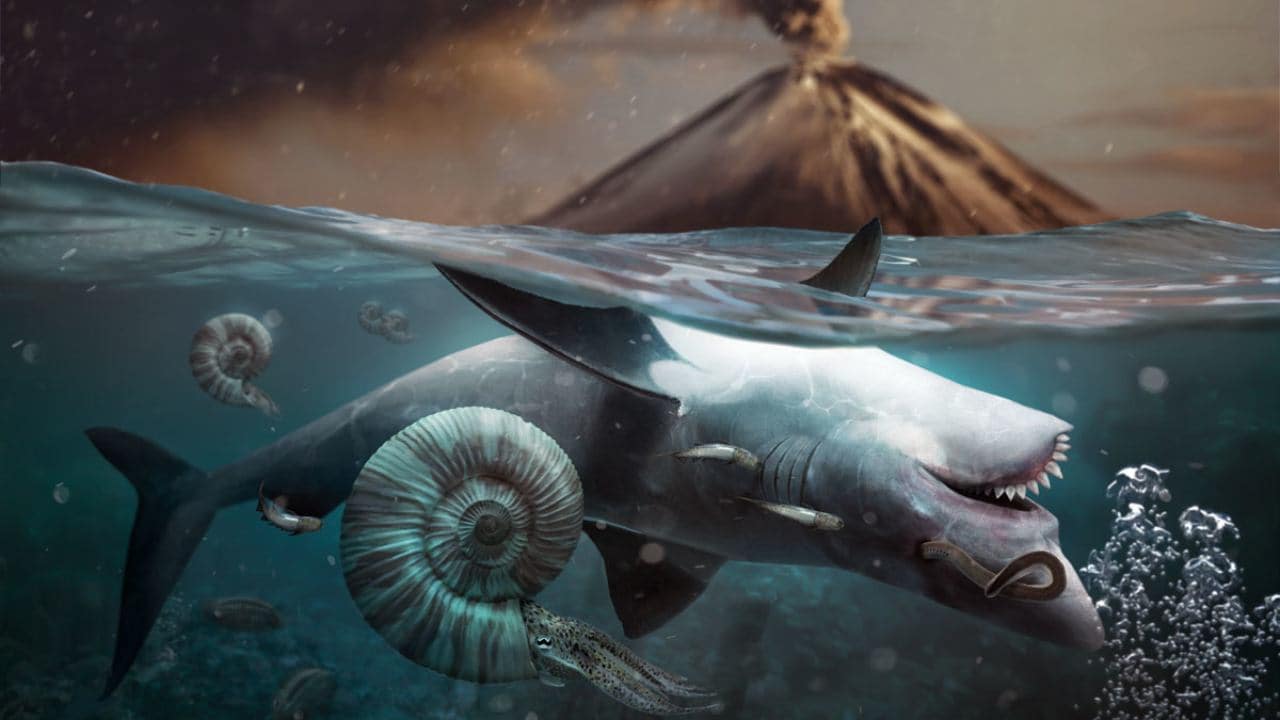
We have heard experts say we are currently in the sixth mass extinction, however, that number might soon change.New research has found that a sixth extinction-level event has already taken place, around 260 million years ago. This was previously thought to be a minor extinction event but it was severely underestimated.This makes the current event, the one we are going through, the seventh.The previous event has been named as the end of the Guadalupian era or the Middle Permian period.[caption id="attachment_5695171" align="alignnone" width="1280"]![An ancient mass extinction called the Great Dying wiped out 90% of all life on earth. Image: Earth Archives]() An ancient mass extinction called the Great Dying wiped out 90 percent of all life on earth. Image: Earth Archives[/caption]Michael Rampino, co-author of the study said in an interview with Newsweek, "The end-Guadalupian event was somewhat selective. Coral reef environments were very hard hit. Ocean bottom communities, and swimming organisms such as coiled ammonoids, were hard hit. On land, many reptile species disappeared. So the event was severe, both in the number of species going extinct and in the major ecological damage."According to available data, around 60 percent of the marine species became extinct and Rampino said that the same amount of non-marine species might have died out as well.The study states the grim reality of that event by saying, "In terms of both losses in the number of species and overall ecological damage, the end-Guadalupian event now ranks as major mass extinction, similar to the other five.”The Guadalupian extinction has something in common with the other five. Rampino, in a statement, said, “Notably, all six major mass extinctions are correlated with devastating environmental upheavals — specifically, massive flood-basalt eruptions, each covering more than a million square kilometres with thick lava flows.”In the case of the end-Guadalupian extinction event, the Emeishan flood-basalt eruption produced the Emeishan Traps. It is an extensive volcanic rock formation, found today in south-western China in the Sichuan province. The eruption’s impact was similar to those caused in other known major mass extinctions.Rampino said in a statement, “Massive eruptions such as this one release large amounts of greenhouse gases, specifically carbon dioxide and methane, that cause severe global warming, with warm, oxygen-poor oceans that are not conducive to marine life.”[caption id="attachment_7266871" align="alignnone" width="1280"]
An ancient mass extinction called the Great Dying wiped out 90 percent of all life on earth. Image: Earth Archives[/caption]Michael Rampino, co-author of the study said in an interview with Newsweek, "The end-Guadalupian event was somewhat selective. Coral reef environments were very hard hit. Ocean bottom communities, and swimming organisms such as coiled ammonoids, were hard hit. On land, many reptile species disappeared. So the event was severe, both in the number of species going extinct and in the major ecological damage."According to available data, around 60 percent of the marine species became extinct and Rampino said that the same amount of non-marine species might have died out as well.The study states the grim reality of that event by saying, "In terms of both losses in the number of species and overall ecological damage, the end-Guadalupian event now ranks as major mass extinction, similar to the other five.”The Guadalupian extinction has something in common with the other five. Rampino, in a statement, said, “Notably, all six major mass extinctions are correlated with devastating environmental upheavals — specifically, massive flood-basalt eruptions, each covering more than a million square kilometres with thick lava flows.”In the case of the end-Guadalupian extinction event, the Emeishan flood-basalt eruption produced the Emeishan Traps. It is an extensive volcanic rock formation, found today in south-western China in the Sichuan province. The eruption’s impact was similar to those caused in other known major mass extinctions.Rampino said in a statement, “Massive eruptions such as this one release large amounts of greenhouse gases, specifically carbon dioxide and methane, that cause severe global warming, with warm, oxygen-poor oceans that are not conducive to marine life.”[caption id="attachment_7266871" align="alignnone" width="1280"]![Representational Image.]() Representational Image.[/caption]It is important to study past events. In a statement, Rampino said, “It is crucial that we know the number of severe mass extinctions and their timing in order to investigate their causes.”The previous five mass extinction events are:
Representational Image.[/caption]It is important to study past events. In a statement, Rampino said, “It is crucial that we know the number of severe mass extinctions and their timing in order to investigate their causes.”The previous five mass extinction events are:
 An ancient mass extinction called the Great Dying wiped out 90 percent of all life on earth. Image: Earth Archives[/caption]Michael Rampino, co-author of the study said in an interview with Newsweek, "The end-Guadalupian event was somewhat selective. Coral reef environments were very hard hit. Ocean bottom communities, and swimming organisms such as coiled ammonoids, were hard hit. On land, many reptile species disappeared. So the event was severe, both in the number of species going extinct and in the major ecological damage."According to available data, around 60 percent of the marine species became extinct and Rampino said that the same amount of non-marine species might have died out as well.The study states the grim reality of that event by saying, "In terms of both losses in the number of species and overall ecological damage, the end-Guadalupian event now ranks as major mass extinction, similar to the other five.”The Guadalupian extinction has something in common with the other five. Rampino, in a statement, said, “Notably, all six major mass extinctions are correlated with devastating environmental upheavals — specifically, massive flood-basalt eruptions, each covering more than a million square kilometres with thick lava flows.”In the case of the end-Guadalupian extinction event, the Emeishan flood-basalt eruption produced the Emeishan Traps. It is an extensive volcanic rock formation, found today in south-western China in the Sichuan province. The eruption’s impact was similar to those caused in other known major mass extinctions.Rampino said in a statement, “Massive eruptions such as this one release large amounts of greenhouse gases, specifically carbon dioxide and methane, that cause severe global warming, with warm, oxygen-poor oceans that are not conducive to marine life.”[caption id="attachment_7266871" align="alignnone" width="1280"]
 Representational Image.[/caption]It is important to study past events. In a statement, Rampino said, “It is crucial that we know the number of severe mass extinctions and their timing in order to investigate their causes.”The previous five mass extinction events are:
- The end of the Ordovician (443 million years ago)
- The Late Devonian (372 million years ago)
- The Permian (252 million years ago)
- The Triassic (201 million years ago)
- The Cretaceous (66 million years ago)
First Published:Sep 18, 2019, 14:25:48 IST
Advertisement
Advertisement

Careless Whispers: Scientists discover that plants can 'talk' to each other using smells
Japanese scientists have recorded a video that shows plants, in certain conditions, communicate with each other using mists that carry smells. The discovery, reveals that plants release a fine mist of airborne compounds, to warn nearby plants of potential dangers
Life on Mars? European Space Agency’s Orbiter discovers ice water deposits at equator
European Space Agency's Mars Express Orbiter has identified massive ice and ice water deposits beneath the surface of Mars. The Mars Express orbiter was also the first to confirmed the presence of ice on Mars in 2004
Microsoft briefly overtakes Apple as the most valuable company, Apple back on top again
At its peak during the session, Microsoft's value reached $2.903 trillion, with a 2% surge. As of writing this article, Apple closed at $2.89 trillion, whereas Microsoft closed at $2.86 trillion
Even NASA is facing a tough time, starts layoffs following major budget cuts
NASA is facing some massive budget cuts, because of which, it has been forced to postpone some upcoming missions. NASA's Jet Propulsion Laboratory has been hit hard by recent federal budget cuts, resulting in the layoff of 100 contractors last week
ISRO, NASA's NISAR satellite to get ready by Jan-end, will monitor Earth's snow-covered regions
The NISAR satellite which has been developed jointly ISRO and NASA, should be ready for launch by the end of January 2024. The collaboration between NASA and ISRO on NISAR is the first time the two agencies have cooperated on hardware development for an Earth-observing mission
Advertisement
Advertisement