


Space Week: Dogs, chimps, fruit flies and all the other animals that flew to space before humans did
As we celebrate human endeavours in space, let us not forget the contribution of our non-human friends in letting us understand space better.


A photo of Yuri Gagarin ahead of his epic first journey to Earth's orbit in 1961. Image credit: ESA[/caption]Before sending humans to space, both the US and USSR were experimenting with animal astronauts to study the effects of zero-gravity on living systems, and the safety and feasibility of humans returning from space to Earth safely. Since the early days of space flights, scientists have sent a range of animals into space for these studies. Animals ranging from dogs, cats, chimpanzees, rabbits to even insects including beetles, bees, ants, spiders, cockroaches to marine species such as fish, brine shrimp, jellyfish and more, have been sent to space since the 1950s. So let's take a look at the major milestones in animals astronauts who travelled in space (100 km above the Earth’s surface) before humans took over.
20 February 1947: Fruit flies in space
14 June 1949: Albert II, the first monkey in space
With the dawn of the space race still to come, the Americans had already sent a rhesus macaque, Albert II, into space on a German V2 rocket. Albert II was flown to a height of 134 km and is said to have been anaesthetized for the flight's entire duration.[caption id="attachment_6837521" align="alignnone" width="640"]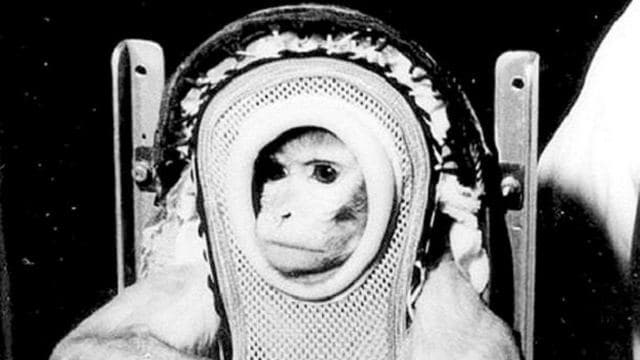
Albert II, the first monkey to enter space.[/caption]Did Albert II survive the space flight? Unfortunately, no. Albert II is said to have died on impact after the rocket re-entered the atmosphere. But his respiratory and cardiological data was recorded till that moment, which established the fact that Albert II had lived in the duration of the space flight.
3 November 1957: Laika a.k.a Muttnik, the first dog to enter space
Laika was the first dog to have been to space. An 11-pound mongrel picked up from Moscow streets, Laika was, after a significant training period, launched into orbit on the Sputnik 2 space capsule. A street dog was selected for this mission as opposed to a domesticated one, as it was found to be well adapted to harsh conditions like the Russian winter.[caption id="attachment_6837541" align="alignnone" width="1280"]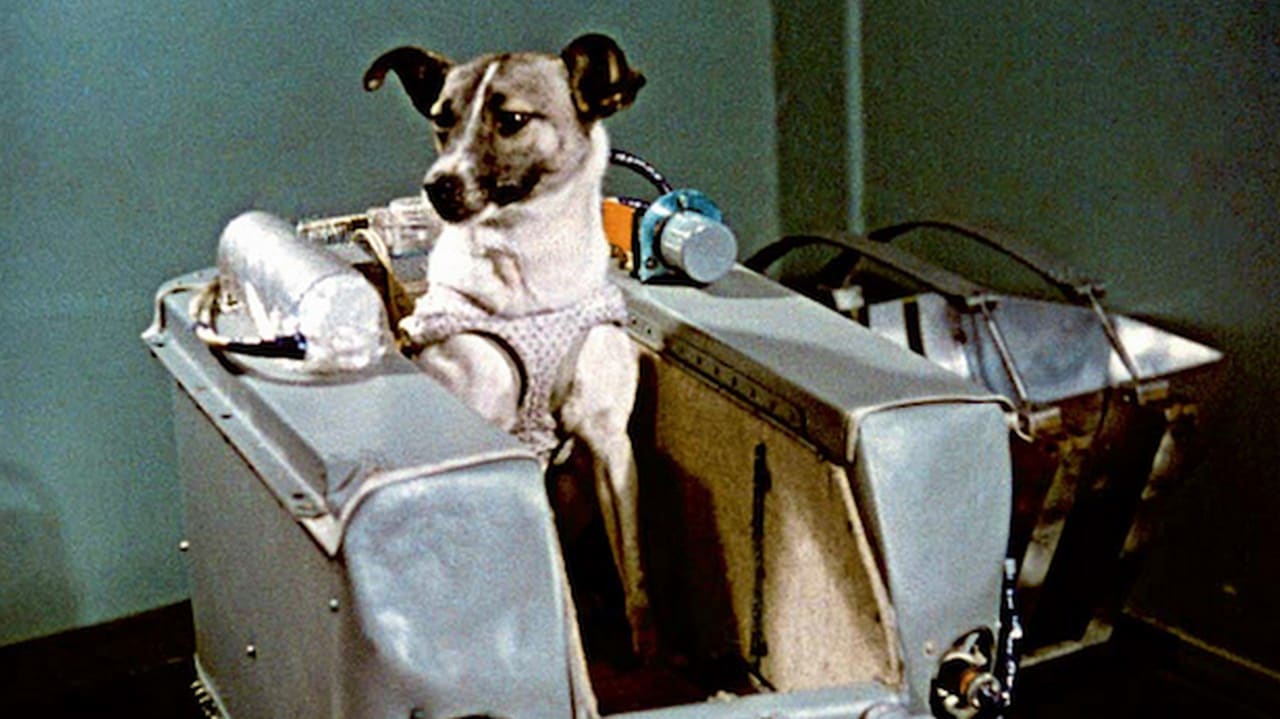
Laika, the first dog in space.[/caption]Laika had a custom-made space suit which took into consideration her four feet as well as the snout. There was even an oxygen supply in case there was a pressure leak. She was taught to feed on a nutritious gel, which would be her space-food. Nicknamed Muttnik by the American press, Laika didn’t survive her return to Earth, as Sputnik 2 didn't have a reentry system. This was a disclaimer that was given by the Soviets well before the spacecraft was launched. While she was meant to stay onboard for around seven days, it’s reported that she died within seven hours as her cabin overheated and unusual levels of stress, during the fourth orbit.Sputnik 2 circled the Earth a total of 2570 times, with the unconscious (possibly deceased) Laika in it, before burning up in the Earth’s atmosphere on 4 April 1958. While Laika didn’t return safely, her spaceflight proved that living organisms could tolerate the zero gravity of space for longer than scientists thought at the time.Did Laika survive the space flight? Unfortunately, no.
28 May 1959: Able and Baker, the monkey duo
Baker, a squirrel monkey and her rhesus monkey companion, Able, were sent into space aboard the Jupiter C rocket on 28 May 1959. They were housed in the nose cone of the missile, where they spent all of nine minutes in space before returning to Earth – alive. They were wired with electrodes to track their vital signs throughout. [caption id="attachment_6837551" align="alignnone" width="1024"]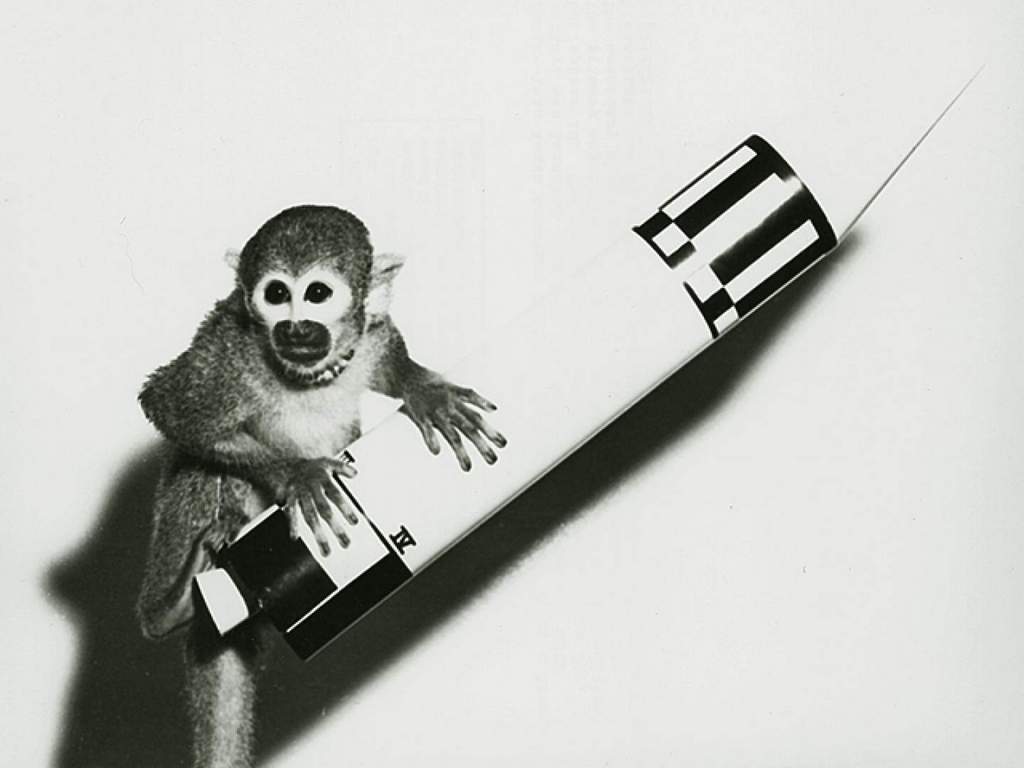
Baker atop a model of the Jupiter 2 rocket. Image: Air and Space Museum[/caption]Did Able and Baker survive the space flight? Well, almost. While both Able and Baker returned safely to Earth, Able died just five days later due to a case of bad anaesthesia when the researchers were removing the medical electrode from his body. Baker went on to live till 1984.
19 August 1960: Belka and Strelka, the dog-duo that returned alive
31 January 1961: Ham the Chimp
1963: Felicette, the cat
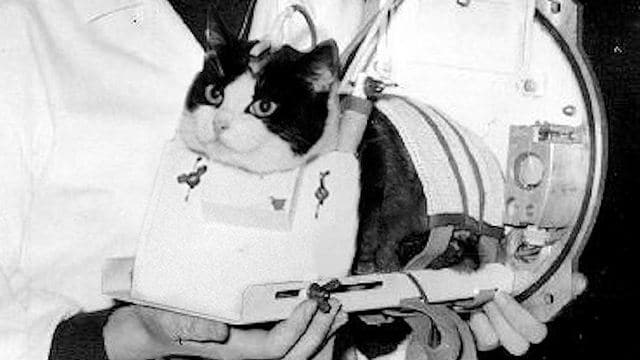
Felicette, the first and only cat to have travelled in space[/caption]Felicette, along with dozen-odd stray cats, were subjected to rigorous pre-spaceflight training – compression chambers, tiny containers, even a centrifuge. Eventually, she was put on a rocket that would take her 160 km above the Earth's surface. She had electrodes wired to her brain for scientists to monitor her vitals. Felicette has inspired a Kickstarter project to commemorate her spaceflight. The internet and cats, I tell you.Did Felicette survive the space flight? While Felicette was normal after returning, she was put to sleep several months after her flight by scientists who wanted to study her brain.
22 Feb 1966: Veterok and Ugolyok, the dogs who set a space travel record
Large mammals are no longer used in spaceflight research
Back in the early days of the space race, not much was known about what the long-term effects of weightlessness in space are. Sure, animal testing aboard the International Space Station is still a thing, but there's a difference between the conditions then and now. Today, the space station environment is a lot more suitable for animals larger than mice. These experiments, done on snails and frogs in space, holds immense value in studying conditions in humans too. There is no longer a need to use mammals like chimpanzees, dogs or cats in space tests. For instance, fish make excellent candidates for studying human genetics. This makes them a choice candidate to look at what mutations arise from space radiation, the effectiveness of medical treatments like gene therapy and CRISPR gene editing in zero gravity conditions, and several more. That said, there were some interesting findings from looking at how non-human organisms responded to space. Fish and tadpoles tended to swim in loops rather than straight lines in space. If a light source is flashed at them, fish use that as their guiding light, Laura Lewis, a member of NASA’s Ames Institutional Animal Care and Use Committee, said. "Baby mammals have a hard time in space because they normally huddle for warmth and in space, it's hard to huddle when bodies drift and float. It's also difficult for babies to nurse when they can't locate their mother's nipple,” according to a NASA report. "Regulations for animal research are more intense than for using people in research, because people can give consent. Animals can't object, so people need to work on their behalf." However, it isn't all about consent and ethics with animals and space. Animals for any kind of test require daily care, on-call veterinarians, bulky infrastructure and a well-maintained housing facility."Housing rules for animals are more extensive than for human children in a daycare centre. NASA facilities that house animals for research are accredited by an organisation that requires proof that animals are cared for in a facility that meets those standards," Lewis added. As in the case of medical sciences, in spaceflight too, animals were the first to be tested before humans. The number of animals used to test weightlessness reduced remarkably with the advent of computer modelling. Humans are fairly competent spaceflight passengers now, and these pioneering non-human beings are in large part to thank for that.

Careless Whispers: Scientists discover that plants can 'talk' to each other using smells
Life on Mars? European Space Agency’s Orbiter discovers ice water deposits at equator
Microsoft briefly overtakes Apple as the most valuable company, Apple back on top again
Even NASA is facing a tough time, starts layoffs following major budget cuts
ISRO, NASA's NISAR satellite to get ready by Jan-end, will monitor Earth's snow-covered regions