
Advertisement


Sections
CRISPR will bring huge shifts to agriculture, food sectors in next 5 years says founder
Gene modification involves mix-and-match of genes between organisms, or even across species.

Gene editing technology CRISPR has found itself in the news a whole lot since it was first invented and used in living systems in 2012 and 2013, respectively. It made waves throughout the global research community for the enormous potential and power packed into an easy-to-use laboratory kit.One of the co-inventors of CRISPR, Dr Jennifer Doudna, thinks that the most powerful of its uses to go mainstream won't have anything to do with diseases or designer babies.Instead, Doudna thinks its biggest impact will be in the fields of agriculture and food.[caption id="attachment_6500621" align="aligncenter" width="1280"]![Gene editing technology has a variety of potential applications. Image: Getty]() Gene editing technology has a variety of potential applications. Image: Getty[/caption]"In the next five years, the most profound thing we'll see in terms of CRISPR's effects on everyday lives will be in the agricultural sector," she told Business Insider. CRISPR'ed crops could go as far as alleviating problems like hunger and obesity by packing in genes for energy-rich and nutritious proteins in staple foods.Gene-edited crops are very different from the controversial genetically modified organisms (GMOs). Gene modification involves mix-and-match of genes between organisms, or even across species. For instance, DNA can be picked up from a bacteria that is pesticide-resistant into cotton seeds that remain unaffected by pesticides in the environment lifelong.Memphis Meats, a food technology startup backed by big names including Bill Gates and Richard Branson, has successfully even made real strips of meat and meatballs from animal cells (without killing any animals) using CRISPR.[caption id="attachment_5654001" align="aligncenter" width="1280"]
Gene editing technology has a variety of potential applications. Image: Getty[/caption]"In the next five years, the most profound thing we'll see in terms of CRISPR's effects on everyday lives will be in the agricultural sector," she told Business Insider. CRISPR'ed crops could go as far as alleviating problems like hunger and obesity by packing in genes for energy-rich and nutritious proteins in staple foods.Gene-edited crops are very different from the controversial genetically modified organisms (GMOs). Gene modification involves mix-and-match of genes between organisms, or even across species. For instance, DNA can be picked up from a bacteria that is pesticide-resistant into cotton seeds that remain unaffected by pesticides in the environment lifelong.Memphis Meats, a food technology startup backed by big names including Bill Gates and Richard Branson, has successfully even made real strips of meat and meatballs from animal cells (without killing any animals) using CRISPR.[caption id="attachment_5654001" align="aligncenter" width="1280"]![Representational image.]() Representational image.[/caption]The evolution of CRISPR as a technology has been slow and its progress marred by a lot of controversy in recent years. Proving the safety of a technique before diving into its novel uses in animals and humans is essential. This single step alone could take years in human beings since there aren't any long-term studies underway for gene-editing treatments in humans. However, those same limitations don't apply to the agriculture industry, which has already seen the same controversies in the genetically-modified organismsThe most recent controversy surrounding CRISPR came from Chinese researcher He Jiankui's gene edited human baby study. Though he was technically giving the twin girls a biological, life-long resistance to HIV infection, Jiankui flouted most of the code of conduct and ethical limitations to ensure his study continued.He was eventually fired from his place of work and charged with ethical wrongdoing for overlooking ethical norms in China (the most liberal of countries with regard to regulations for gene editing).
Representational image.[/caption]The evolution of CRISPR as a technology has been slow and its progress marred by a lot of controversy in recent years. Proving the safety of a technique before diving into its novel uses in animals and humans is essential. This single step alone could take years in human beings since there aren't any long-term studies underway for gene-editing treatments in humans. However, those same limitations don't apply to the agriculture industry, which has already seen the same controversies in the genetically-modified organismsThe most recent controversy surrounding CRISPR came from Chinese researcher He Jiankui's gene edited human baby study. Though he was technically giving the twin girls a biological, life-long resistance to HIV infection, Jiankui flouted most of the code of conduct and ethical limitations to ensure his study continued.He was eventually fired from his place of work and charged with ethical wrongdoing for overlooking ethical norms in China (the most liberal of countries with regard to regulations for gene editing).
 Gene editing technology has a variety of potential applications. Image: Getty[/caption]"In the next five years, the most profound thing we'll see in terms of CRISPR's effects on everyday lives will be in the agricultural sector," she told Business Insider. CRISPR'ed crops could go as far as alleviating problems like hunger and obesity by packing in genes for energy-rich and nutritious proteins in staple foods.Gene-edited crops are very different from the controversial genetically modified organisms (GMOs). Gene modification involves mix-and-match of genes between organisms, or even across species. For instance, DNA can be picked up from a bacteria that is pesticide-resistant into cotton seeds that remain unaffected by pesticides in the environment lifelong.Memphis Meats, a food technology startup backed by big names including Bill Gates and Richard Branson, has successfully even made real strips of meat and meatballs from animal cells (without killing any animals) using CRISPR.[caption id="attachment_5654001" align="aligncenter" width="1280"]
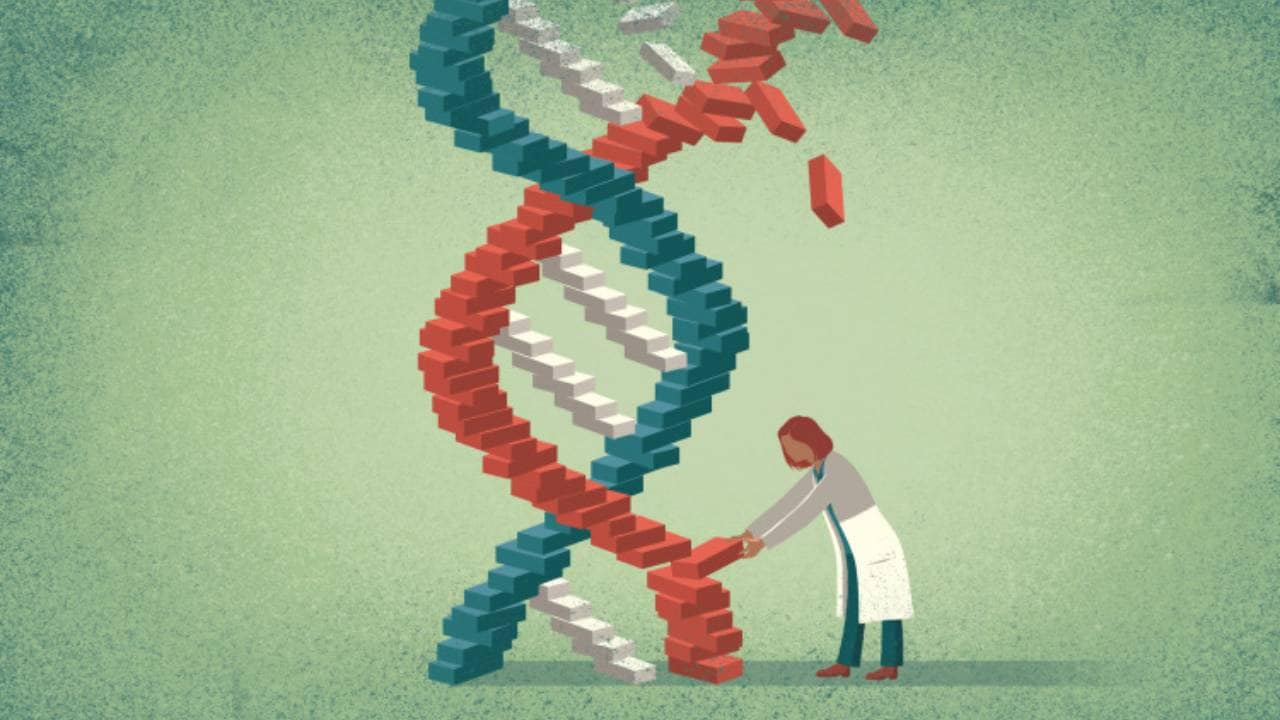 Representational image.[/caption]The evolution of CRISPR as a technology has been slow and its progress marred by a lot of controversy in recent years. Proving the safety of a technique before diving into its novel uses in animals and humans is essential. This single step alone could take years in human beings since there aren't any long-term studies underway for gene-editing treatments in humans. However, those same limitations don't apply to the agriculture industry, which has already seen the same controversies in the genetically-modified organismsThe most recent controversy surrounding CRISPR came from Chinese researcher He Jiankui's gene edited human baby study. Though he was technically giving the twin girls a biological, life-long resistance to HIV infection, Jiankui flouted most of the code of conduct and ethical limitations to ensure his study continued.
First Published:Apr 23, 2019, 15:17:50 IST
Advertisement
Advertisement

Careless Whispers: Scientists discover that plants can 'talk' to each other using smells
Japanese scientists have recorded a video that shows plants, in certain conditions, communicate with each other using mists that carry smells. The discovery, reveals that plants release a fine mist of airborne compounds, to warn nearby plants of potential dangers
Life on Mars? European Space Agency’s Orbiter discovers ice water deposits at equator
European Space Agency's Mars Express Orbiter has identified massive ice and ice water deposits beneath the surface of Mars. The Mars Express orbiter was also the first to confirmed the presence of ice on Mars in 2004
Microsoft briefly overtakes Apple as the most valuable company, Apple back on top again
At its peak during the session, Microsoft's value reached $2.903 trillion, with a 2% surge. As of writing this article, Apple closed at $2.89 trillion, whereas Microsoft closed at $2.86 trillion
Even NASA is facing a tough time, starts layoffs following major budget cuts
NASA is facing some massive budget cuts, because of which, it has been forced to postpone some upcoming missions. NASA's Jet Propulsion Laboratory has been hit hard by recent federal budget cuts, resulting in the layoff of 100 contractors last week
ISRO, NASA's NISAR satellite to get ready by Jan-end, will monitor Earth's snow-covered regions
The NISAR satellite which has been developed jointly ISRO and NASA, should be ready for launch by the end of January 2024. The collaboration between NASA and ISRO on NISAR is the first time the two agencies have cooperated on hardware development for an Earth-observing mission
Advertisement
Advertisement