
Advertisement


Sections
Covid-19 immunity: ‘Natural immunity’ from Covid-19 infection better than a vaccine?
Considering the unknowns, Covid-19 vaccines have predictably prevented illness, and would be a far safer bet, experts said.

On the heels of last month’s news of stunning results from Pfizer’s and Moderna’s experimental Covid-19 vaccines, Sen. Rand Paul tweeted a provocative comparison. The new vaccines were 90% and 94.5% effective, Paul said. But "naturally acquired" Covid-19 was even better, at 99.9982%, he claimed.Paul, R-Ky., is one of many people who have extolled the benefits of contracting the coronavirus. The senator was diagnosed with the disease this year and has argued that surviving a bout of Covid-19 confers greater protection and poses fewer risks than getting vaccinated.The trouble with that logic is that it’s difficult to predict who will survive an infection unscathed, said Jennifer Gommerman, an immunologist at the University of Toronto. Given all the unknowns — like a region’s hospital capacity or the strength of a person’s immune response — choosing the disease over the vaccine is “a very bad decision,” she said.The primary advantage of a vaccine is that it’s predictable and safe, she said. “It’s been optimally tailored to generate an effective immune response.”We asked experts to weigh in on some key questions.![Moderna's COVID-19 vaccine technnology could revolutionise future treatments for infectious diseases and pandemics. Image: AP]()
Which produces a stronger immune response: a natural infection or a vaccine?
The short answer: We don’t know. But Covid-19 vaccines have predictably prevented illness, and they are a far safer bet, experts said.Vaccines for some pathogens, like pneumococcal bacteria, induce better immunity than the natural infection does. Early evidence suggests that the Covid-19 vaccines may fall into this category. Volunteers who received the Moderna shot had more antibodies in their blood than did people who had been sick with COVID-19.[caption id="attachment_8601401" align="alignnone" width="1280"]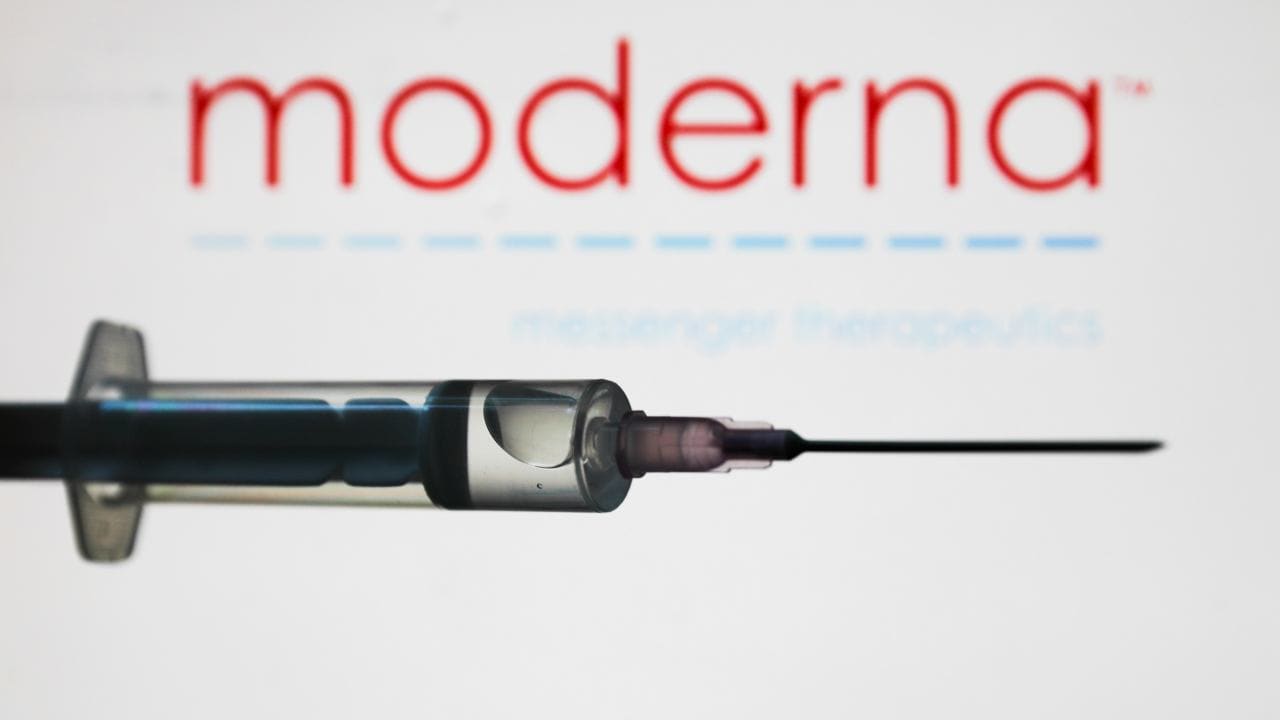
Moderna's COVID-19 vaccine technology could revolutionise future treatments for infectious diseases and pandemics. Image: AP[/caption]
I’m young, healthy and at low risk of Covid-19. Why not take my chances with that rather than get a rushed vaccine?
The experts were unanimous in their answer: Covid-19 is by far the more dangerous option.“It’s clear that one is less problematic for the body to recover from them than the other. There’s more risk with natural infection,” said Marion Pepper, an immunologist at the University of Washington in Seattle.People who are obese or who have diseases like diabetes are particularly susceptible to severe cases of Covid-19. On average, the virus seems to be less risky for younger people, and women tend to fare better than men. But beyond those broad generalizations, doctors don’t know why some people get very sick and die while others have no symptoms.Apoorva Mandavilli. c.2020 The New York Times CompanyFirst Published:Dec 09, 2020, 12:01:03 IST
Advertisement
Advertisement

Careless Whispers: Scientists discover that plants can 'talk' to each other using smells
Japanese scientists have recorded a video that shows plants, in certain conditions, communicate with each other using mists that carry smells. The discovery, reveals that plants release a fine mist of airborne compounds, to warn nearby plants of potential dangers
Life on Mars? European Space Agency’s Orbiter discovers ice water deposits at equator
European Space Agency's Mars Express Orbiter has identified massive ice and ice water deposits beneath the surface of Mars. The Mars Express orbiter was also the first to confirmed the presence of ice on Mars in 2004
Microsoft briefly overtakes Apple as the most valuable company, Apple back on top again
At its peak during the session, Microsoft's value reached $2.903 trillion, with a 2% surge. As of writing this article, Apple closed at $2.89 trillion, whereas Microsoft closed at $2.86 trillion
Even NASA is facing a tough time, starts layoffs following major budget cuts
NASA is facing some massive budget cuts, because of which, it has been forced to postpone some upcoming missions. NASA's Jet Propulsion Laboratory has been hit hard by recent federal budget cuts, resulting in the layoff of 100 contractors last week
ISRO, NASA's NISAR satellite to get ready by Jan-end, will monitor Earth's snow-covered regions
The NISAR satellite which has been developed jointly ISRO and NASA, should be ready for launch by the end of January 2024. The collaboration between NASA and ISRO on NISAR is the first time the two agencies have cooperated on hardware development for an Earth-observing mission
Advertisement
Advertisement