


Comet from solar system's edge triggered a winter that killed the dinosaurs 66 mn-years-ago: Harvard study
These long-period comets take about 200 years to orbit the Sun and we can expect similar impacts every 250 million to 750 million years.

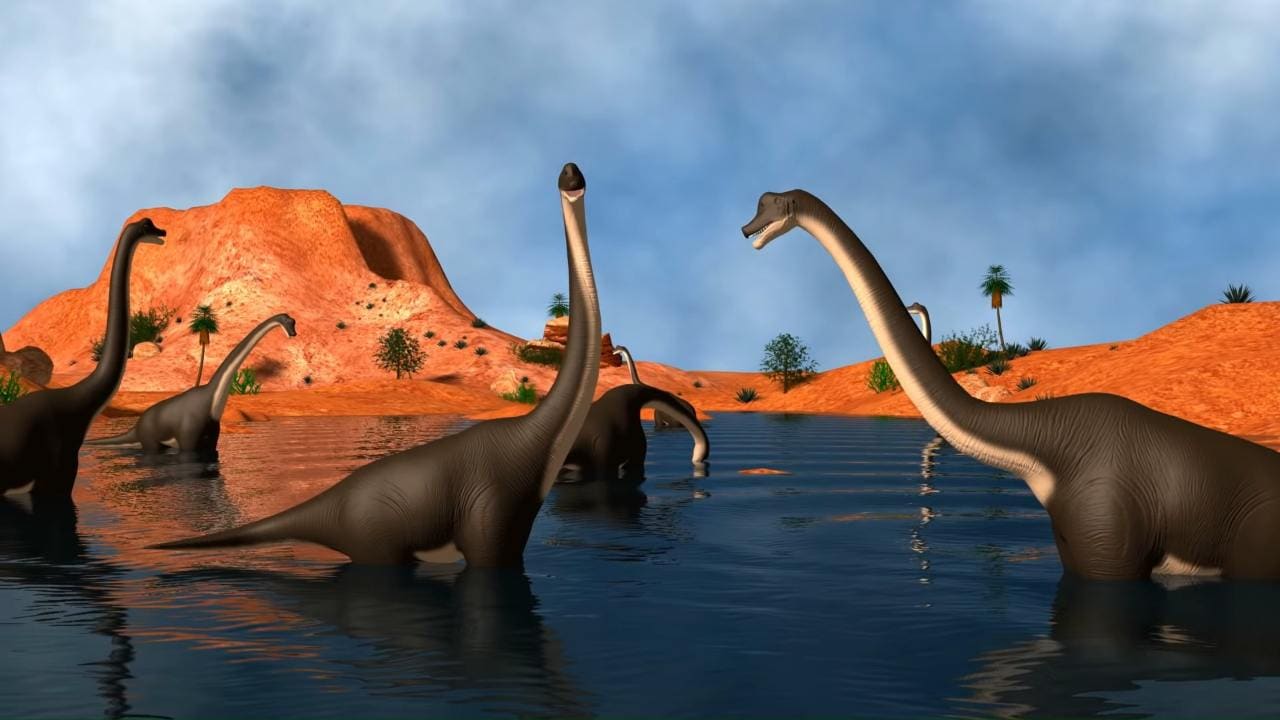
Havard professors have developed a statistical model that showed the probability that long-period comets would hit Earth that is consistent with the age of Chicxulub and other known impactors. Image credit: Harvard[/caption]The duo's paper, published in the journal Scientific Reports this week, pushes back against an older theory that claims the object was a fragment of an asteroid that came from our solar system's Main Belt."Jupiter is so important because it's the most massive planet in our solar system," lead author Amir Siraj told AFP.Jupiter ends up acting as a kind of "pinball machine" that "kicks these incoming long-period comets into orbits that bring them very close to the Sun."So-called "long-period comets" come from the Oort cloud, thought to be a giant spherical shell surrounding the solar system like a bubble that is made of icy pieces of debris the size of mountains or larger. The long-period comets take about 200 years to orbit the Sun and are also called sungrazers because of how close they pass. Because they come from the deep freeze of the outer solar system, comets are icier than asteroids and are known for the stunning gas and dust trails that they produce as they melt.But, said Siraj, the evaporative impact of the Sun's heat on sungrazers is nothing compared to the massive tidal forces they experience when one side faces our star."As a result, these comets experience such a large tidal force that the most massive of them would shatter into about a thousand fragments, each of those fragments large enough to produce a Chicxulub size impactor, or dinosaur-killing event on Earth."Siraj and his co-author Avi Loeb, a professor of science, developed a statistical model that showed the probability that long-period comets would hit Earth that is consistent with the age of Chicxulub and other known impactors.The previous theory about the object being an asteroid produces an expected rate of such events that was off by a factor of about ten compared to what has been observed, Loeb told AFP.
A beautiful sight
Another line of evidence in favour of the comet origin is the composition of Chicxulub: only about a tenth of all asteroids from the Main Belt, which lies between Mars and Jupiter, are made up of carbonaceous chondrite, while most comets have it.Evidence suggests the Chicxulub crater and other similar craters, such as the Vredefort crater in South Africa that was struck about two billion years ago, and the million-year-old Zhamanshin crater in Kazakhstan, all had carbonaceous chondrite.The hypothesis can be tested by further studying these craters, ones on the Moon, or even by sending out space probes to take samples from comets."It must have been a beautiful sight to see this rock approaching 66 million years ago, that was larger than the length of Manhattan Island," said Loeb, though ideally, we'd like to learn to track such objects and devise ways to deflect them if necessary.Loeb added he was excited by the prospect of the Vera Rubin Observatory in Chile becoming operational next year.The telescope might be able to see tidal disruption of long-period comets "and will be extremely important in making forecasts for definitely the next 100 years, to know if anything bad could happen to us."Though Siraj and Loeb calculated Chicxulub-like impactors would occur once every few hundreds of millions of years, "it's a statistical thing, you say, 'on average, it's every so often' but you never know when the next one will come," said Loeb."The best way to find out is to search the sky," he concluded.

Careless Whispers: Scientists discover that plants can 'talk' to each other using smells
Life on Mars? European Space Agency’s Orbiter discovers ice water deposits at equator
Microsoft briefly overtakes Apple as the most valuable company, Apple back on top again
Even NASA is facing a tough time, starts layoffs following major budget cuts
ISRO, NASA's NISAR satellite to get ready by Jan-end, will monitor Earth's snow-covered regions