


Combining antibiotics with silver nanoparticles help with drug resistance bacteria
With the increase in antibiotics use, bacteria's resistance is increasing, this study might help combat it.

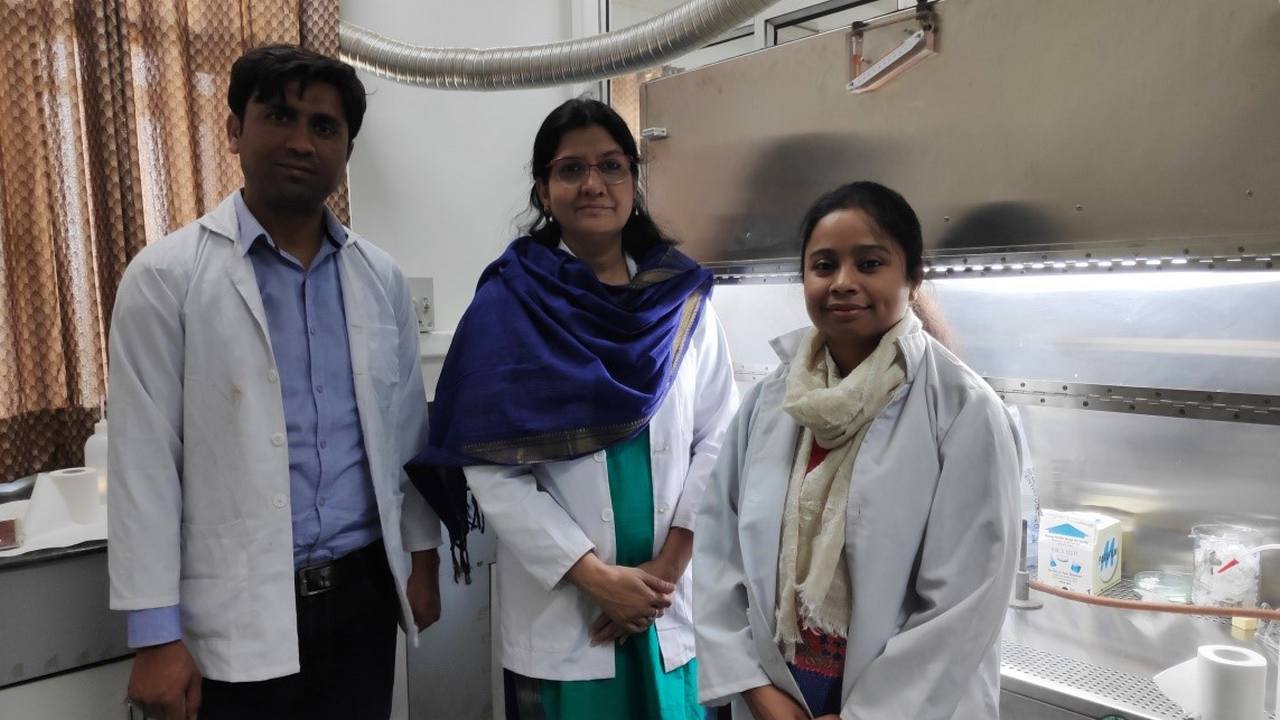
From L-R, Hammad Alam, Dr. Meryam Sardar and Nafeesa Khatoon the team that undertook the research. Image credit: India science wire[/caption]Researchers tested the new formulation on six different strains of bacteria (both sensitive and resistant to antibiotics). They found that it was not only effective in killing bacteria but also did so at a much lower concentration than Ampicillin and silver nanoparticles alone.Researchers also tested the possibility of bacteria becoming resistant to the new formulation. For this, they repeatedly exposed the bacteria to it and found that bacteria showed no resistance even after 15 cycles of exposure. The new formulation proved to be more effective in getting rid of the bacteria as it kills it at lower dose and the bacteria are not showing resistance to this formulation.“The results of this study would be extended to more clinically pathogenic resistant strains. Also, modification of silver nanoparticles and other non-toxic nano-materials with different kinds of drugs would be standardized and their antimicrobial activity will be studied with superbugs which are resistant to most antibiotics,” said Dr. Meryam Sardar, leader of the research team, while discussing her future plans with India Science Wire.A report on the research findings has been published in the journal Scientific Reports. The research team included Nafeesa Khatoon, Hammad Alam, Afreen Khan and Khalid Raza apart from Meryam Sardar.

Careless Whispers: Scientists discover that plants can 'talk' to each other using smells
Life on Mars? European Space Agency’s Orbiter discovers ice water deposits at equator
Microsoft briefly overtakes Apple as the most valuable company, Apple back on top again
Even NASA is facing a tough time, starts layoffs following major budget cuts
ISRO, NASA's NISAR satellite to get ready by Jan-end, will monitor Earth's snow-covered regions