
Advertisement


Sections
Climate repair: Cambridge Centre to explore refreezing Poles, dumping iron in oceans
Cutting carbon emissions alone won't be enough to prevent damaging climate change, scientists warn.

Cambridge University plans to open a new centre soon, bring experts from all over the world to focus exclusively on new ways to repair the planet's deteriorating climate. The Centre for Climate Repair is being put together in response to fear in the scientific community that approaches currently being used to stop the dangers of climate change, let alone reverse some of the damage caused to the planet, just aren't working.Some of the wild ideas that will be investigated at the new Centre are from a field of applied science known as geoengineering. Refreezing the Earth's polar ice caps and removing CO2 from the atmosphere to regulate temperature on the ground are some of the more popular ideas in geoengineering.![How cloud brightening works. Image: Geoengineering.org]() How cloud brightening works. Image courtesy: Geoengineeringmonitor.org[/caption]This produces tiny particles of salt which are injected into the clouds, which makes them more widespread and reflective, cooling the area below them temporarily.
How cloud brightening works. Image courtesy: Geoengineeringmonitor.org[/caption]This produces tiny particles of salt which are injected into the clouds, which makes them more widespread and reflective, cooling the area below them temporarily.![CarbFix has found a novel means of carbon capture at a geothermal power plant in Iceland — trapping carbon dioxide to rocks. Image: CarbFix]() Project CarbFix has found a novel means of carbon capture at a geothermal power plant in Iceland — trapping carbon dioxide to rocks. Image: CarbFix[/caption]"We have a source of hydrogen, a source of carbon dioxide, a source of heat and a source of renewable electricity from the plant. We're going to harness all those... and make synthetic fuels," Prof Styring told BBC News.
Project CarbFix has found a novel means of carbon capture at a geothermal power plant in Iceland — trapping carbon dioxide to rocks. Image: CarbFix[/caption]"We have a source of hydrogen, a source of carbon dioxide, a source of heat and a source of renewable electricity from the plant. We're going to harness all those... and make synthetic fuels," Prof Styring told BBC News.![A phytoplankton bloom in the Bering Sea, spotted from the International Space Station. Image: NASA Earth Observatory]() A phytoplankton bloom in the Bering Sea spotted from the International Space Station. Image: NASA Earth Observatory[/caption]"What we do over the next 10 years will determine the future of humanity for the next 10,000 years. There is no major centre in the world that would be focused on this one big issue," Prof Sir David King, Co-ordinator of the Centre and former chief scientific adviser to the government, told BBC News.Ideas like these have a lot of disadvantages, including some that won't be apparent until it's tested in their real, intended environments. There may be downsides and trouble with feasibility in other cases.But at the end of the day, what better way to solve an impending man-made climate disaster than brainstorm radical, bizarre ideas that work, work fast and are easily scaled up?A formal launch of the Centre is planned for autumn 2019, according to Varsity News.
A phytoplankton bloom in the Bering Sea spotted from the International Space Station. Image: NASA Earth Observatory[/caption]"What we do over the next 10 years will determine the future of humanity for the next 10,000 years. There is no major centre in the world that would be focused on this one big issue," Prof Sir David King, Co-ordinator of the Centre and former chief scientific adviser to the government, told BBC News.Ideas like these have a lot of disadvantages, including some that won't be apparent until it's tested in their real, intended environments. There may be downsides and trouble with feasibility in other cases.But at the end of the day, what better way to solve an impending man-made climate disaster than brainstorm radical, bizarre ideas that work, work fast and are easily scaled up?A formal launch of the Centre is planned for autumn 2019, according to Varsity News.
Can the poles be refrozen?
One of the important projects CCR will take up is refreezing the Earth's North and South poles, where glaciers are melting at an alarming rate. One of the most promising means of doing this is by "brightening" the clouds over these areas.If seawater is pumped by unmanned ships through very fine sprays or nozzles, they will be carried along with tiny particles of salt into the clouds above. The clouds will grow more reflective and spread out, making the temperature beneath a whole lot cooler.[caption id="attachment_6635751" align="alignnone" width="1280"] How cloud brightening works. Image courtesy: Geoengineeringmonitor.org[/caption]This produces tiny particles of salt which are injected into the clouds, which makes them more widespread and reflective, cooling the area below them temporarily.
Can carbon dioxide be captured & recycled?
Carbon capture and storage (CCS) is growing to become a microcosm within engineering in itself. CCS involves techniques to collect carbon emitted by polluting sources like coal- or gas-fired power stations and steel plants.A pilot project is underway at Tata Steel in South Wales, where Professor Peter Styring from University of Sheffield is developing and tweaking a carbon capture and utilisation (CCU) technology to effectively recycle CO2. Interestingly, the captured carbon can be turned into fuel at the same plant using waste heat.[caption id="attachment_5763131" align="alignnone" width="1280"]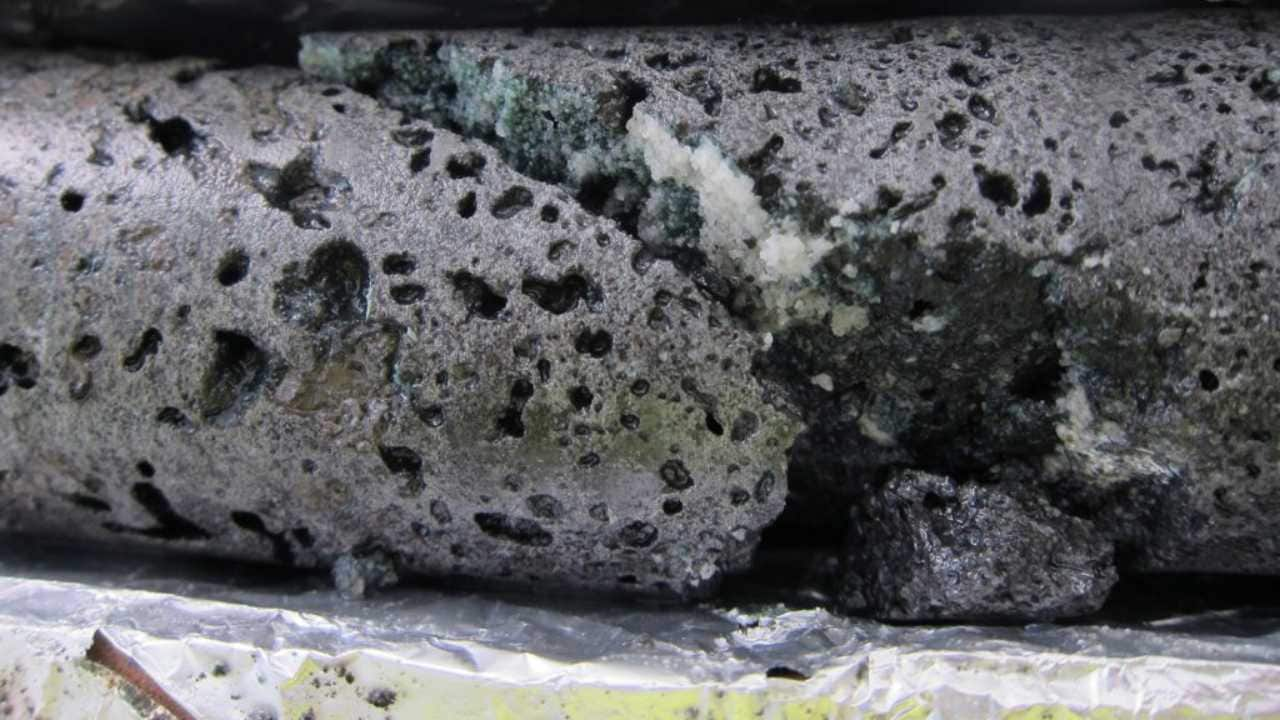 Project CarbFix has found a novel means of carbon capture at a geothermal power plant in Iceland — trapping carbon dioxide to rocks. Image: CarbFix[/caption]"We have a source of hydrogen, a source of carbon dioxide, a source of heat and a source of renewable electricity from the plant. We're going to harness all those... and make synthetic fuels," Prof Styring told BBC News.
Greening the Ocean
Another popular geoengineering solution involved turning the ocean greener, so they become more capable of absorbing carbon dioxide. Using deposits of iron dust, vast areas of the ocean can be fertilized to trigger a bloom of phytoplankton — the microscopic marine life that forms the base of the aquatic food chain.Phytoplankton absorb carbon from the air by photosynthesis. What's attractive about this idea is that a quantity of iron no larger than a vitamin tablet can be used to seed an Olympic pool-sized volume of seawater to "bloom".Late oceanographer John Martin, who originally cooked up the iron-fertilization technique, famously (and reassuringly) quipped, "Give me a half tanker load of iron, and I’ll give you an Ice Age."[caption id="attachment_6636231" align="alignnone" width="1280"] A phytoplankton bloom in the Bering Sea spotted from the International Space Station. Image: NASA Earth Observatory[/caption]"What we do over the next 10 years will determine the future of humanity for the next 10,000 years. There is no major centre in the world that would be focused on this one big issue," Prof Sir David King, Co-ordinator of the Centre and former chief scientific adviser to the government, told BBC News.Ideas like these have a lot of disadvantages, including some that won't be apparent until it's tested in their real, intended environments. There may be downsides and trouble with feasibility in other cases.But at the end of the day, what better way to solve an impending man-made climate disaster than brainstorm radical, bizarre ideas that work, work fast and are easily scaled up?A formal launch of the Centre is planned for autumn 2019, according to Varsity News.
First Published:May 15, 2019, 12:56:19 IST
Advertisement
Advertisement

Careless Whispers: Scientists discover that plants can 'talk' to each other using smells
Japanese scientists have recorded a video that shows plants, in certain conditions, communicate with each other using mists that carry smells. The discovery, reveals that plants release a fine mist of airborne compounds, to warn nearby plants of potential dangers
Life on Mars? European Space Agency’s Orbiter discovers ice water deposits at equator
European Space Agency's Mars Express Orbiter has identified massive ice and ice water deposits beneath the surface of Mars. The Mars Express orbiter was also the first to confirmed the presence of ice on Mars in 2004
Microsoft briefly overtakes Apple as the most valuable company, Apple back on top again
At its peak during the session, Microsoft's value reached $2.903 trillion, with a 2% surge. As of writing this article, Apple closed at $2.89 trillion, whereas Microsoft closed at $2.86 trillion
Even NASA is facing a tough time, starts layoffs following major budget cuts
NASA is facing some massive budget cuts, because of which, it has been forced to postpone some upcoming missions. NASA's Jet Propulsion Laboratory has been hit hard by recent federal budget cuts, resulting in the layoff of 100 contractors last week
ISRO, NASA's NISAR satellite to get ready by Jan-end, will monitor Earth's snow-covered regions
The NISAR satellite which has been developed jointly ISRO and NASA, should be ready for launch by the end of January 2024. The collaboration between NASA and ISRO on NISAR is the first time the two agencies have cooperated on hardware development for an Earth-observing mission
Advertisement
Advertisement