


Black holes aren't always born from imploding stars, a radical new study proposes
So far, massive, star-sized black holes were thought to form only from collapsed stars.

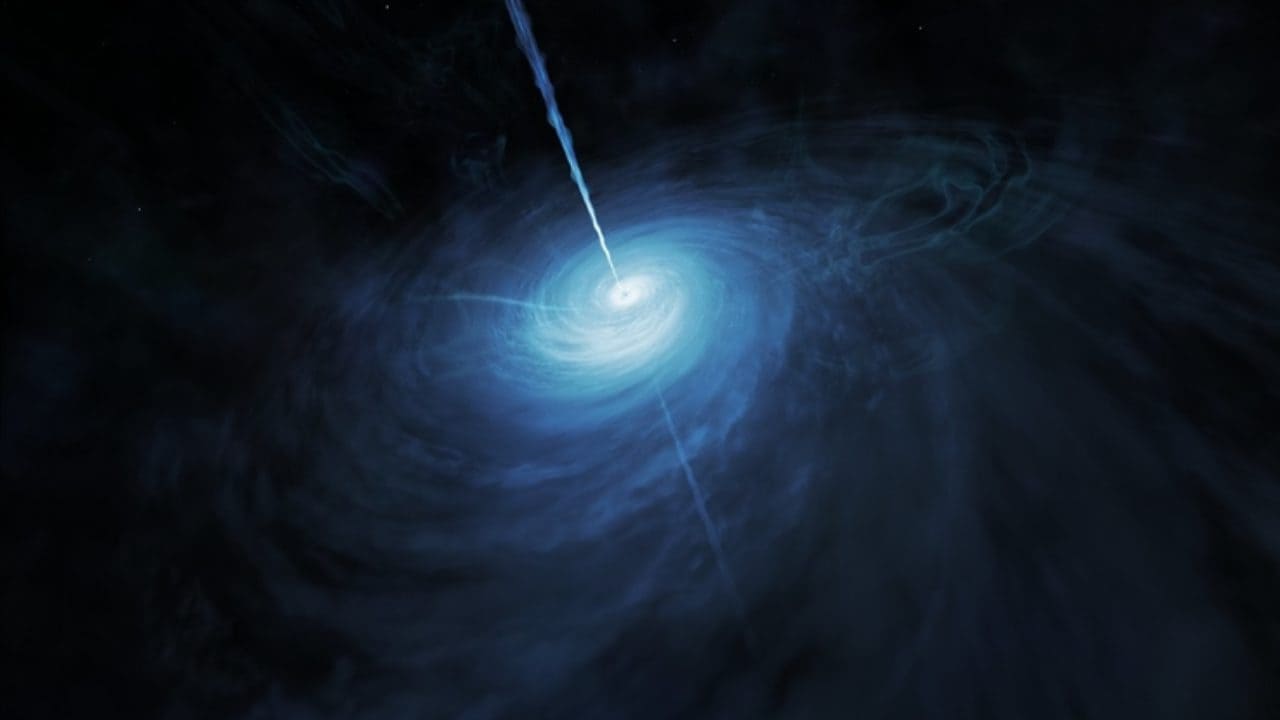
This artist’s impression shows how J043947.08+163415.7, a very distant quasar powered by a supermassive black hole could look. This object is by far the brightest quasar yet discovered in the early Universe.[/caption]This finding also aligns with reigning models of black hole formation in the early universe – a fairly disputed area of astrophysics. The researchers have found what they're calling the first "indirect observational evidence that black holes originate from direct-collapses and not from stellar remnants."The revised model suggests that the observed supermassive black hole was formed "very, very quickly over very, very short periods of time", after which it suddenly stopped growing."Supermassive black holes only had a short time period where they were able to grow fast and then at some point, because of all the radiation in the universe created by other black holes and stars, their production came to a halt," Dr Basu explained.

Careless Whispers: Scientists discover that plants can 'talk' to each other using smells
Life on Mars? European Space Agency’s Orbiter discovers ice water deposits at equator
Microsoft briefly overtakes Apple as the most valuable company, Apple back on top again
Even NASA is facing a tough time, starts layoffs following major budget cuts
ISRO, NASA's NISAR satellite to get ready by Jan-end, will monitor Earth's snow-covered regions