


Big wind, solar farms could boost rain in Sahara and slow global warming: Study
It could cause ecological, environmental, and societal impacts on a large scale, the report reads.

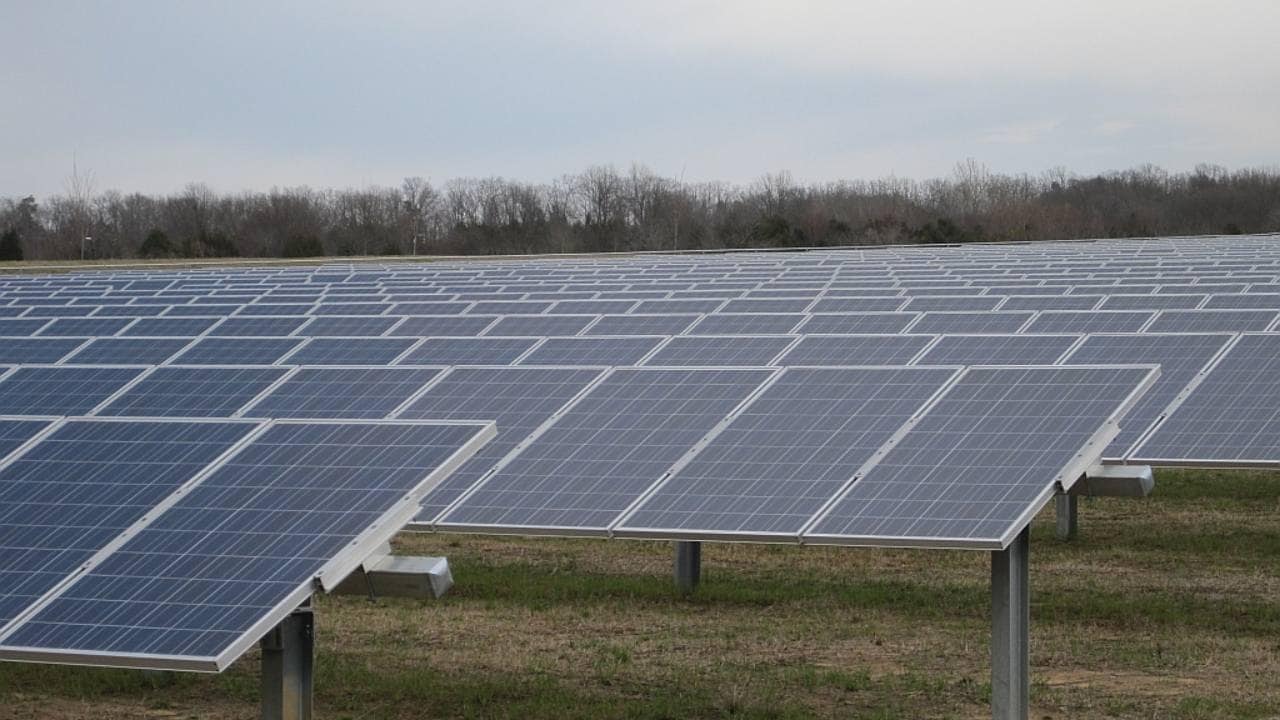
Representational image. Flickr[/caption]More plants, more grazing"The vast majority of the Sahara would remain extremely dry," Daniel Kirk-Davidoff, co-author an adjunct associate professor at the University of Maryland, said.But more rain along the southern edge of the Sahara would lead to more plant growth, "which would allow for more grazing," he told AFP."It is hard to imagine that this would be a bad thing from the point of view of human communities there."The reason for the change has to do with the way wind farms bring in warmer air from above, particularly at night, a process which can increase evaporation and plant growth.This warm air exchange can also double the amount of daily precipitation.Meanwhile, dark-coloured solar panels reduce the amount of surface light that is reflected from the Earth, slightly raising temperatures and also triggering more precipitation.Previous studies have found that wind and solar farms can introduce significant changes in climate at the continental scale by creating rougher, darker land surfaces.But this study is the first to incorporate how vegetation would change as a result, said lead author Yan Li, a postdoctoral researcher at the University of Illinois."The lack of vegetation feedbacks could make the modelled climate impacts very different from their actual behaviour."Researchers also pointed out that any hikes in temperature from solar and wind farms would be limited in geographic area and scope, unlike fossil fuel emissions which continually build in the atmosphere and raise warming over time."The increase in rainfall and vegetation, combined with clean electricity as a result of solar and wind energy, could help agriculture, economic development and social well-being in the Sahara, Sahel, Middle East and other nearby regions," Safa Motesharrei, co-author and researcher at the University of Maryland, said.

Careless Whispers: Scientists discover that plants can 'talk' to each other using smells
Life on Mars? European Space Agency’s Orbiter discovers ice water deposits at equator
Microsoft briefly overtakes Apple as the most valuable company, Apple back on top again
Even NASA is facing a tough time, starts layoffs following major budget cuts
ISRO, NASA's NISAR satellite to get ready by Jan-end, will monitor Earth's snow-covered regions