


Astronomers find a treasure trove of Neptune-sized 'Super Earths' hiding in dust
Super Earths could be forming around young stars in much greater numbers than scientists have thought.

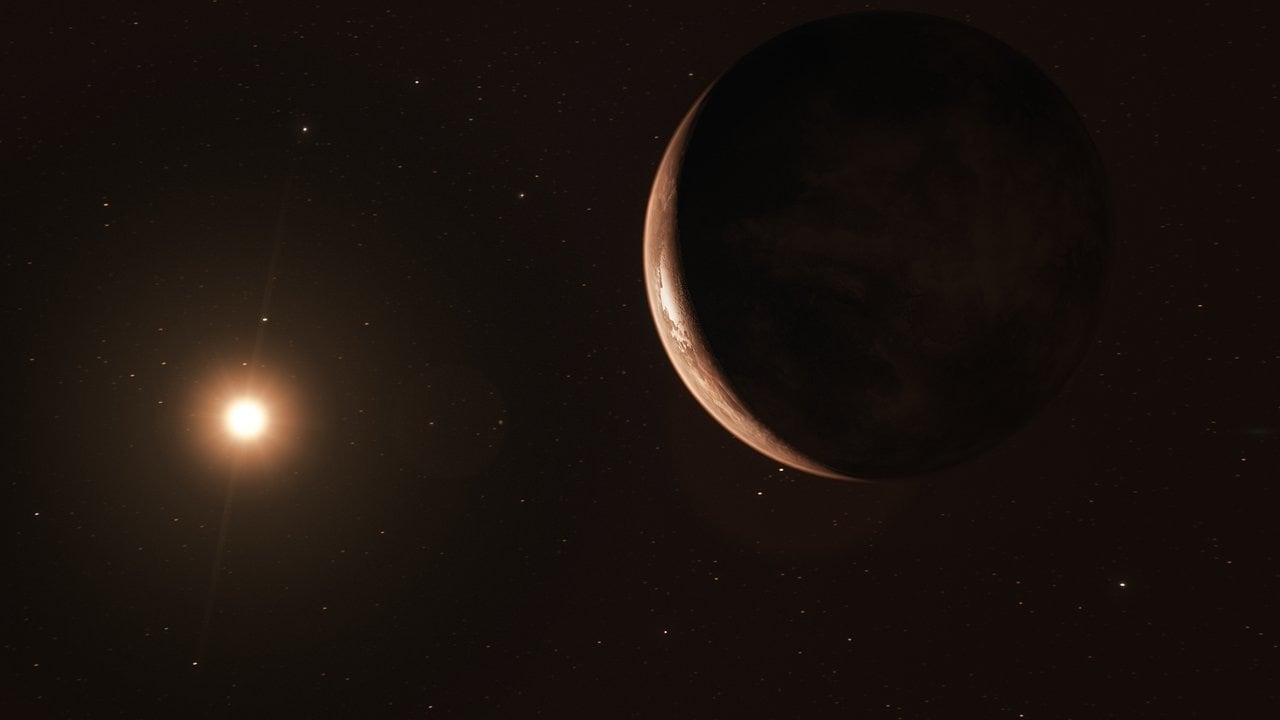
This image shows an artist’s impression of the exoplanet viewed from space. Image courtesy: ESO[/caption]"This is fascinating because it is the first time that exoplanet statistics, which suggest that super Earths and Neptunes are the most common type of planets, coincide with observations of protoplanetary disks," said lead author Feng Long, a doctoral student at Peking University in Beijing, China.The research, published in the Astrophysical Journal, helps scientists better understand how our own solar system came to be.Using the Atacama Large Millimeter Array, or ALMA, comprising 45 radio antennas in Chile's Atacama Desert, the team performed a survey of young stars in the Taurus star-forming region, a vast cloud of gas and dust located a modest 450 light-years from Earth.When the researchers imaged 32 stars surrounded by protoplanetary disks, they found that 12 of them, 40 percent, have rings and gaps, structures that according to the team's measurements and calculations can be best explained by the presence of nascent planets.The Neptune-sized gas planets or so-called super Earths, terrestrial planets of up to 20 Earth masses, were found to be the most common. Only two of the observed disks could potentially harbour behemoths rivalling Jupiter, the largest planet in the solar system."Since most of the current exoplanet surveys can't penetrate the thick dust of protoplanetary disks, all exoplanets, with one exception, have been detected in more evolved systems where a disk is no longer present," explained Paola Pinilla, from the University of Arizona in the US."Our results are an exciting step in understanding this key phase of planet formation and by making these adjustments, we are hoping to better understand the origins of the rings and gaps," Long said.

Careless Whispers: Scientists discover that plants can 'talk' to each other using smells
Life on Mars? European Space Agency’s Orbiter discovers ice water deposits at equator
Microsoft briefly overtakes Apple as the most valuable company, Apple back on top again
Even NASA is facing a tough time, starts layoffs following major budget cuts
ISRO, NASA's NISAR satellite to get ready by Jan-end, will monitor Earth's snow-covered regions