


Astronomers create 3-D map of Milky Way, show that its stars are warped and twisted
The Milky Way began to form after the Big Bang that marked the beginning of the universe 13.8 billion years ago.

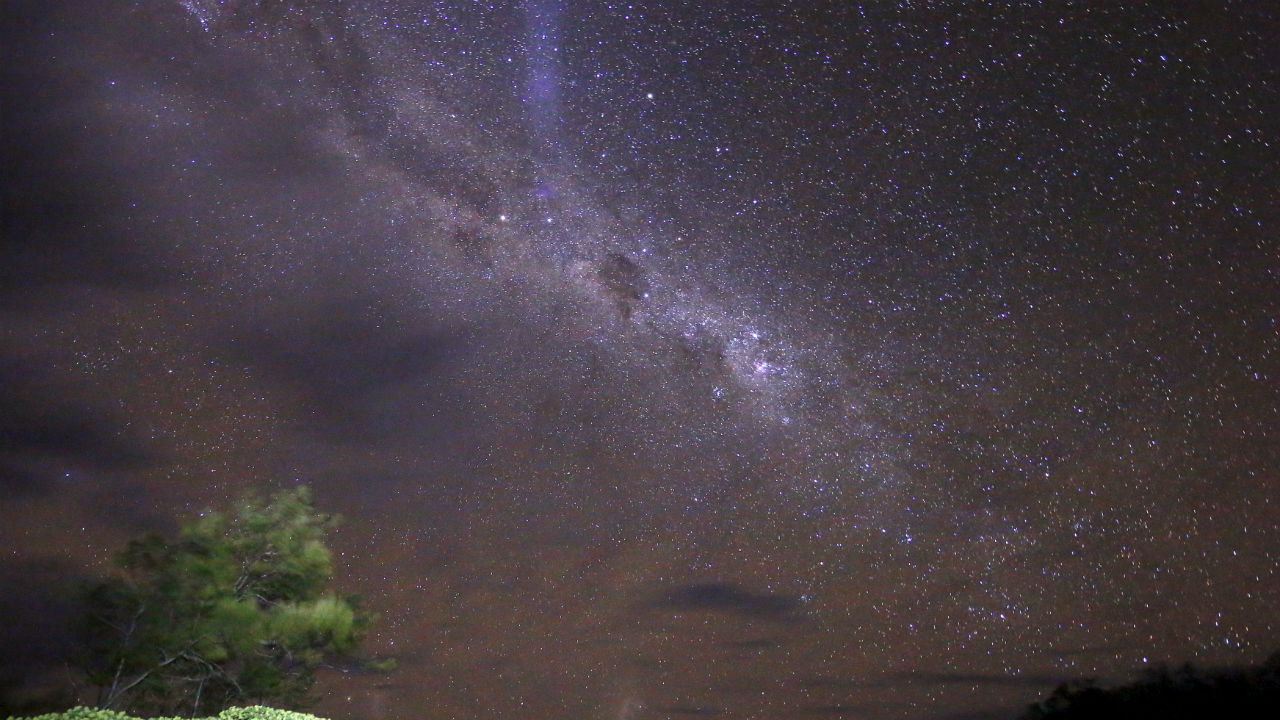
The Milky Way[/caption]Until now, the understanding of the galaxy’s shape had been based upon indirect measurements of celestial landmarks within the Milky Way and inferences from structures observed in other galaxies populating the universe. The new map was formulated using precise measurements of the distance from the sun to 2,400 stars called “Cepheid variables” scattered throughout the galaxy.“Cepheids are ideal to study the Milky Way for several reasons,” added University of Warsaw astronomer and study co-author Dorota Skowron. “Cepheid variables are bright supergiant stars and they are 100 to 10,000 times more luminous than the sun, so we can detect them on the outskirts of our galaxy. They are relatively young - younger than 400 million years - so we can find them near their birthplaces.”The astronomers tracked the Cepheids using the Warsaw Telescope located in the Chilean Andes. These stars pulsate at regular intervals and can be seen through the galaxy’s immense clouds of interstellar dust that can make dimmer stellar bodies hard to spot.The map showed that the galaxy’s disk, far from flat, is significantly warped and varies in thickness from place to place, with an increasing thickness measured further from the galactic centre. The disk boasts a diameter of about 140,00 light-years. Each light-year is about 6 trillion miles (9 trillion km).The Milky Way began to form relatively soon after the Big Bang explosion that marked the beginning of the universe some 13.8 billion years ago. The sun, located roughly 26,000 light-years from the supermassive black hole residing at the centre of the galaxy, formed about 4.5 billion years ago.

Careless Whispers: Scientists discover that plants can 'talk' to each other using smells
Life on Mars? European Space Agency’s Orbiter discovers ice water deposits at equator
Microsoft briefly overtakes Apple as the most valuable company, Apple back on top again
Even NASA is facing a tough time, starts layoffs following major budget cuts
ISRO, NASA's NISAR satellite to get ready by Jan-end, will monitor Earth's snow-covered regions