


Ancient supernova particles found in deep-sea sediments on the Earth
They said Iron-60 is radioactive and decays within 15 million years hence this means that any iron-60 found must have been formed much later

The Earth and the solar system are regularly showered by the products of supernovae, which are the most powerful explosions in the known universe. Now, a recent study highlights that there is tangible evidence that point towards such a phenomenon, describing rare isotopes of iron found in deep-sea sediments that are at least 33,000 years old.
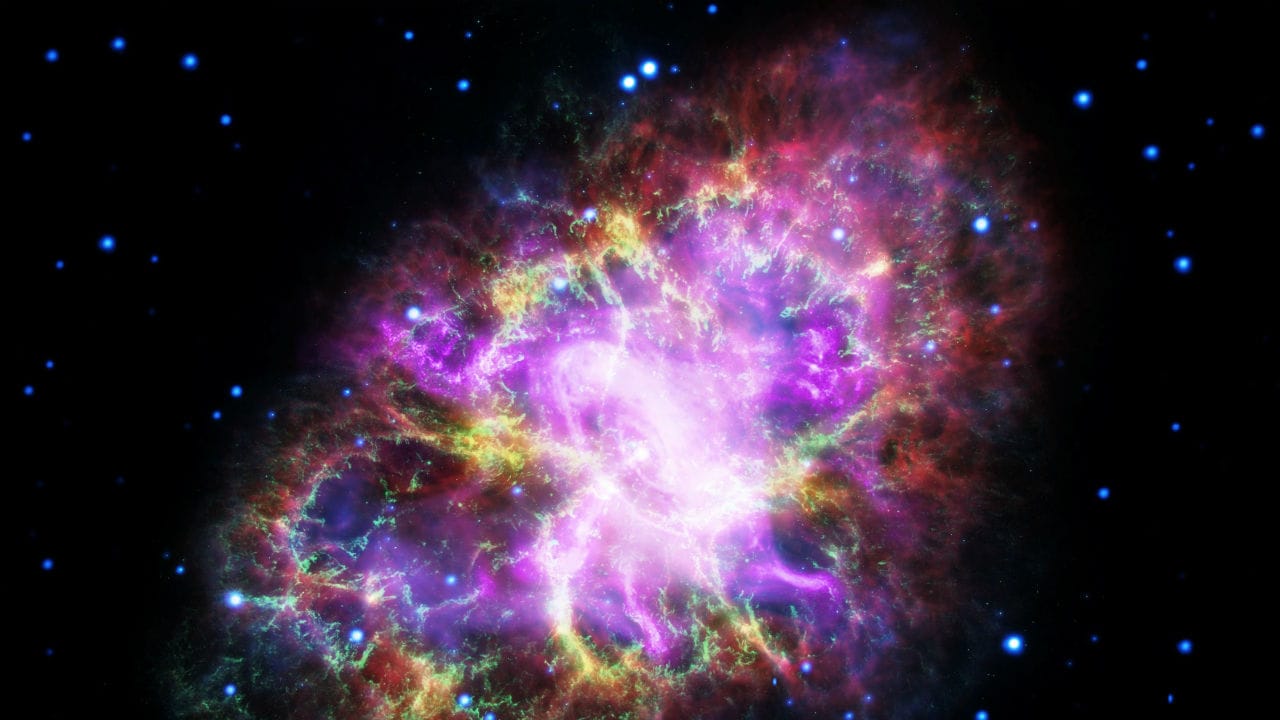
Representative image of a supernova.[/caption]As per the statement, the study, which has been led by Professor Anton Wallner, a nuclear physicist at ANU, shows the Earth has been travelling for the last 33,000 years through a cloud of faintly radioactive dust.
According to Professor Wallner, the clouds seem to be remnants of previous supernova explosions, "a powerful and super bright explosion of a star."
Researchers searched through several deep-sea sediments from two different locations about 33,000 years ago, using the extreme sensitivity of HIAF's mass spectrometer. The researchers found clear traces of the isotope iron-60, which is formed during supernova explosions.
 More from Science
The researchers said Iron-60 is radioactive and completely decays away within 15 million years. This points towards the fact that any iron-60 found on the earth must have been formed much later than the rest of the 4.6-billion-year old earth and arrived here from nearby supernovae before settling on the ocean floor.
Subsequently, the team found iron-60 in the sediment at extremely low levels - equating to radioactivity levels in space far below the Earth’s natural background levels. The distribution matched the Earth’s recent travel through the interstellar cloud. However, researchers found the iron-60 extended further back and was spread throughout the entire 33,000 year measurement period.
According to Professor Wallner, the iron-60 could originate from even older supernovae explosions, and what they measured is some kind of echo.
The findings were reported in the Proceedings of the National Academy of Sciences.

Careless Whispers: Scientists discover that plants can 'talk' to each other using smells
Life on Mars? European Space Agency’s Orbiter discovers ice water deposits at equator
Microsoft briefly overtakes Apple as the most valuable company, Apple back on top again
Even NASA is facing a tough time, starts layoffs following major budget cuts
ISRO, NASA's NISAR satellite to get ready by Jan-end, will monitor Earth's snow-covered regions