


Aging Spitzer space telescope to be shut down after 16 years of service, says NASA
It was designed to last two and a half to five years and is trailing behind Earth while orbiting the Sun.

NASA is pulling the plug on one of its great observatories -- the Spitzer Space Telescope -- after 16 years of scanning the universe with infrared eyes.
The end comes Thursday when ground controllers put the aging spacecraft into permanent hibernation.
For years, Spitzer peered through dusty clouds at untold stars and galaxies, uncovered a huge, nearly invisible ring around Saturn, and helped discover seven Earth-size planets around a nearby star.
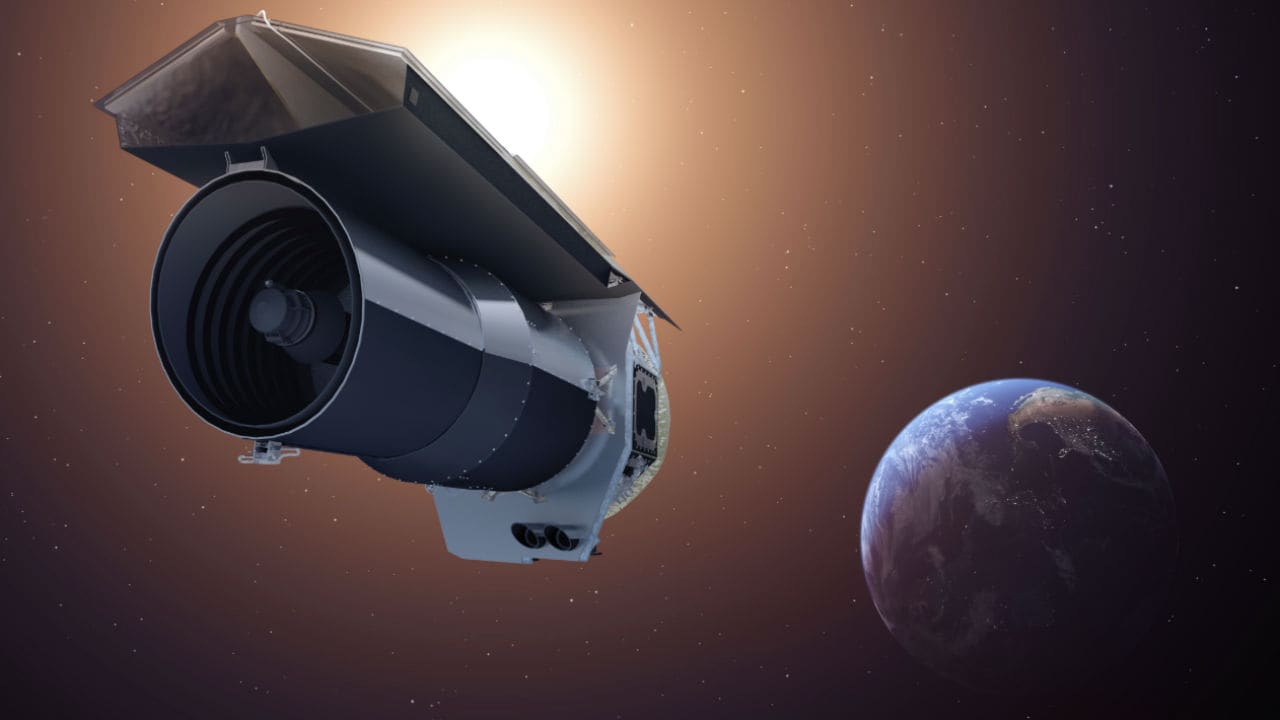
The ageing telescope is an expensive affair and it costs NASA about $12 million a year to keep it going. Image: NASA[/caption]An estimated 4,000 scientists around the world took part in the observations and published nearly 9,000 studies, according to NASA.
“You have to be proud ... when you look back and say, ‘Look at the team that’s operating Spitzer, look at the team that’s contributing to having all of this great science,’ ” said project manager Joseph Hunt.
Designed to last just two and a half to five years, the telescope got increasingly difficult to operate as it drifted farther behind Earth, NASA said. It currently trails Earth by 265 million kilometers, while orbiting the sun.
 More from Science
Also Read: Nasa's Spitzer telescope celebrates its sweet 16 with 10 splendid stellar images
Spitzer will continue to fall even farther behind Earth, posing no threat to another spacecraft or anything else, officials said.
“Although it would be great to be able to operate all of our telescopes forever, this is not possible,” NASA’s astrophysics director Paul Hertz said in an email.
NASA originally planned to decommission Spitzer a few years ago, but put off its demise as the James Webb Space Telescope, a vastly more elaborate infrared observatory, kept getting delayed.
Launched in 2003, Spitzer was the last of NASA’s four so-called great observatories. With its infrared instruments, it was able to sense heat coming off celestial objects like night vision goggles, said Suzanne Dodd, a former project manager who now oversees NASA’s Deep Space Network at the Jet Propulsion Laboratory in Pasadena, California.
By seeing through dust, “we’re lifting the cosmic veil on the universe,” Dodd said.
Still sending back breathtaking pictures, the Hubble Space Telescope rocketed into orbit in 1990 to observe the cosmos in visible and ultraviolet light; it will celebrate its 30th anniversary in April.
The Compton Gamma Ray Observatory was launched in 1991, but because of equipment failure was destroyed in a fiery re-entry in 2000. The Chandra X-Ray Observatory is still working since its 1999 launch.

Careless Whispers: Scientists discover that plants can 'talk' to each other using smells
Life on Mars? European Space Agency’s Orbiter discovers ice water deposits at equator
Microsoft briefly overtakes Apple as the most valuable company, Apple back on top again
Even NASA is facing a tough time, starts layoffs following major budget cuts
ISRO, NASA's NISAR satellite to get ready by Jan-end, will monitor Earth's snow-covered regions