


3D printing an array of sensors directly onto expanding, contracting organs is now reality
Researchers used motion capture tracking to help the printer adjust its path to the movements of an organ.

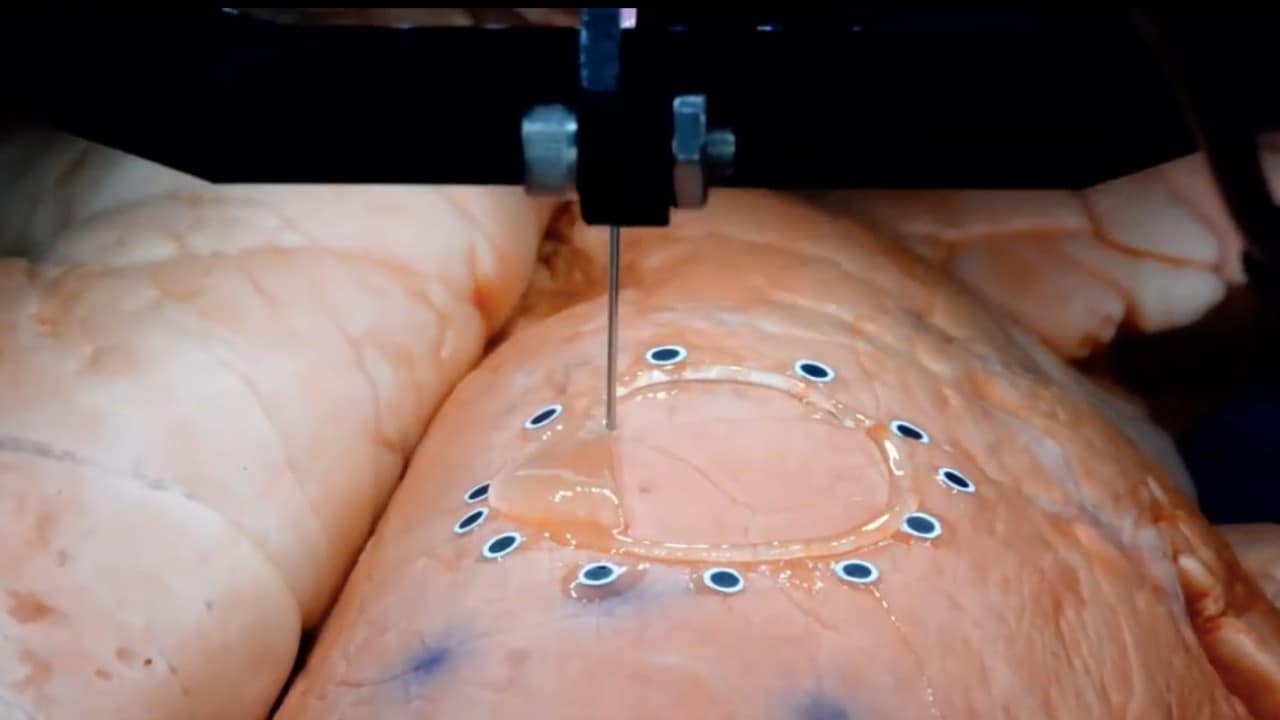
The new technique developed by University of Minnesota researchers allows 3D printing of hydrogel-based sensors directly on organs, like the lungs, that change shape or distort due to expanding and contracting. Image: Screengrab from McAlpine Research Group, University of Minnesota/YouTube[/caption]According to the report, the new technique allows for even more sophisticated tracking that allows for 3D printing sensors onto organs like the heart or lungs.The results of the study were published in Science Advances, a peer-reviewed publication by the American Association for the Advancement of Science (AAAS).Speaking about the study, Michael McAlpine, a University of Minnesota mechanical engineering professor and senior researcher on the study told TechXplore that they are pushing the boundaries of 3D printing in ways it was not imagined even years ago."3-D printing on a moving object is difficult enough, but it was quite a challenge to find a way to print on a surface that was deforming as it expanded and contracted," McAlpine added.

Careless Whispers: Scientists discover that plants can 'talk' to each other using smells
Life on Mars? European Space Agency’s Orbiter discovers ice water deposits at equator
Microsoft briefly overtakes Apple as the most valuable company, Apple back on top again
Even NASA is facing a tough time, starts layoffs following major budget cuts
ISRO, NASA's NISAR satellite to get ready by Jan-end, will monitor Earth's snow-covered regions