
Advertisement


Sections
Xiaomi unveils its own smartphone vending machine in India called Mi Express Kiosk
Mi Express kiosks will accept all forms of payment across credit cards, debit cards, cash and UPI.

Xiaomi's been trying to build a large-scale offline retail network in India for a while now. In addition to the company's Mi Homes, Mi Studios and Mi Experience Stores, the Chinese company's now introduced the Mi Express Kiosks across India.These new Mi Express Kiosks are essentially vending machines that allow consumers to buy Xiaomi smartphones and accessories on their own — quite similar to those soda vending machines you see at the airport.Xiaomi says that these kiosks are designed to accept all forms of payments across credit cards, debit cards, cash and even UPI.[caption id="attachment_6623421" align="alignnone" width="1024"]![Xiaomi's Mi Express Kiosk. Image: Xiaomi]()
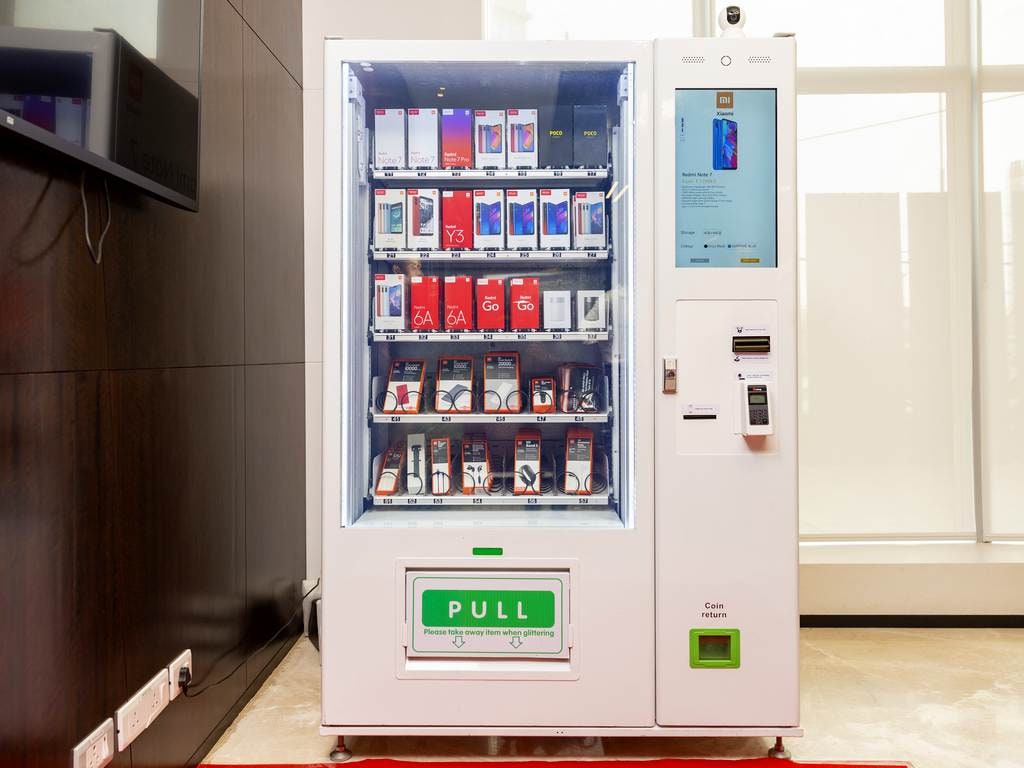
Xiaomi's Mi Express Kiosk. Image: Xiaomi[/caption]By introducing these vending machine-inspired kiosks, the brand aims to develop a new retail strategy in reaching out to its consumers directly. This, in turn, Xiaomi believes will help eliminate operational and cost inefficiencies for the consumers.According to per the company, Mi Express Kiosks serve as a highly effective initiative for consumers to easily access and buy Xiaomi products instantly in offline markets.
As far as prices of products go, each device available at a Mi Express Kiosk will be offered at the same price as on Mi.com and Mi Homes.According to the Chinese smartphone maker, all technologies equipping Mi Express Kiosks were researched and developed in India, although the concept has been around in China since 2018. The vending machines will be operational between 10 am to 8 pm on all working days.The company aims to set up several more kiosks in the coming months, and gradually expand the retail plan across more cities.For now, Mi Express Kiosks can be found in metro cities only. These kiosks will be located in areas with larger daily footfall such as tech parks, metro stations, airports, and shopping malls.First Published:May 13, 2019, 14:23:00 IST
Advertisement
Advertisement

Why AI notetakers are raising serious privacy and security concerns
AI notetakers promise effortless meeting summaries, but experts warn they could expose confidential conversations, corporate secrets and personal voiceprints. As businesses increasingly adopt AI-powered meeting assistants, questions over data storage, privacy, consent and legal risks are becoming impossible to ignore
5 min read
China's low-cost AI models are changing the global AI race. Here's why Silicon Valley is worried
As Chinese firms continue to improve performance while keeping prices low, the AI race is no longer just about building the smartest model—it is increasingly becoming a battle over who can deliver the best value
2 min read
China's Kimi K3 challenges US AI leaders with frontier-level performance at lower cost
Chinese artificial intelligence startup Moonshot AI has unveiled its latest open-weight AI model, Kimi K3, with early results suggesting it could compete with some of the world's most advanced AI systems developed by leading US companies
2 min read
How did Instagram run ads promoting child abuse in India?
India has issued a notice to Meta after an investigation alleged that Instagram displayed paid advertisements promoting child sexual abuse material. MeitY ordered Meta to remove such Instagram ads and explain within seven days how they were approved
8 min read
Why has India halted WhatsApp’s username feature before launch?
India has halted WhatsApp’s planned username feature, citing concerns about cybercrime, impersonation, and law enforcement challenges. As Meta races to address security concerns, here’s why MeitY has paused the rollout, what the feature does, and how it could influence privacy and online safety in India
3 min read
Advertisement
Advertisement