
Advertisement


Sections
Toyota's e-Palette concept stores-on-wheels shown at CES 2018 prove yet again how Black Mirror preempts trends
Toyota has announced a concept called e-Palettes, which are fully-automated, next-generation battery electric vehicles designed to be scalable

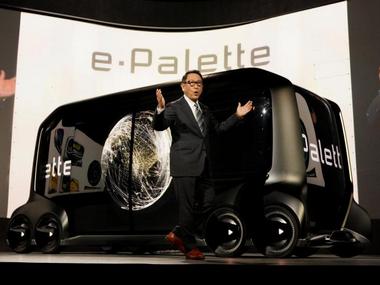
Consumer Electronics Show (CES) sees its fair share of auto tech every year. We had seen the Byton electric car yesterday, which comes from a Tencent-backed Chinese startup. Today there is news from the Toyota stable on the autonomous vehicles front.[caption id="attachment_4294293" align="alignleft" width="380"]![Toyota e-Palette concept. Image: Reuters]() Toyota e-Palette concept. Image: Reuters[/caption]Toyota has announced a concept called e-Palettes, which are 'fully-automated, next-generation battery electric vehicles designed to be scalable and customisable for a range of Mobility as a Service business'. What this essentially means is that this autonomous vehicle concept can be used by businesses which rely on a lot of in-city transportation. Think Amazon same day delivery, Pizza Hut pizza delivery and so on. And based on the size of the shipment, the size of these e-Palettes can change accordingly.There is no clarity if Toyota itself will make these autonomous vehicles. It says it will work with Amazon, Didi Chuxing, Mazda, Pizza Hut and Uber. The plan is to go live with a demo by the 2020 Olympics in Tokyo.This is still in a conceptual stage, and if we look at the history of concepts at CES, most of them never see the light of day in the immediate future. Even if e-Palettes do translate into reality, there will be a lot of geo-fencing involved to ensure that there aren't untoward accidents. Think software park campuses or big institutes where the path of the vehicle can be monitored and controlled.Toyota has taken longer than its rivals to warm up to the idea of autonomous vehicles, but it has committed $1 billion through 2020 to develop advanced automated driving and artificial intelligence technology. It plans to begin testing cars that can drive themselves on highways around 2020.[caption id="attachment_4294291" align="alignnone" width="1280"]
Toyota e-Palette concept. Image: Reuters[/caption]Toyota has announced a concept called e-Palettes, which are 'fully-automated, next-generation battery electric vehicles designed to be scalable and customisable for a range of Mobility as a Service business'. What this essentially means is that this autonomous vehicle concept can be used by businesses which rely on a lot of in-city transportation. Think Amazon same day delivery, Pizza Hut pizza delivery and so on. And based on the size of the shipment, the size of these e-Palettes can change accordingly.There is no clarity if Toyota itself will make these autonomous vehicles. It says it will work with Amazon, Didi Chuxing, Mazda, Pizza Hut and Uber. The plan is to go live with a demo by the 2020 Olympics in Tokyo.This is still in a conceptual stage, and if we look at the history of concepts at CES, most of them never see the light of day in the immediate future. Even if e-Palettes do translate into reality, there will be a lot of geo-fencing involved to ensure that there aren't untoward accidents. Think software park campuses or big institutes where the path of the vehicle can be monitored and controlled.Toyota has taken longer than its rivals to warm up to the idea of autonomous vehicles, but it has committed $1 billion through 2020 to develop advanced automated driving and artificial intelligence technology. It plans to begin testing cars that can drive themselves on highways around 2020.[caption id="attachment_4294291" align="alignnone" width="1280"]![Toyota e-Palette concept. Image: Reuters]() Toyota e-Palette concept. Image: Reuters[/caption]“This announcement marks a major step forward in our evolution towards sustainable mobility, demonstrating our continued expansion beyond traditional cars and trucks to the creation of new values including services for customers,” said Toyota President Akio Toyoda in a statement.Pizza Hut tweeted a photo of its take on the e-Palette concept.If any of you have seen Black Mirror's latest season, this autonomous pizza delivery van will look eerily similar to the one seen in Season 4, Episode 3.In fact, the Black Mirror account tweeted, "We know how this goes". This was in reference to the fact that in the episode, one of these autonomous pizza delivery vehicles hits a pedestrian while he's crossing the road. Like all Black Mirror episodes, this particular incident also forces us to reflect on our current day obsessions and where we are going with them. Autonomous vehicles are being tested in California, and there have been instances of accidents.Black Mirror has had this uncanny knack of preempting a lot of the trends, and e-Palettes is an example of that being proved right. Feel like it's just a coincidence? Well, how about SAM, the AI-enabled messenger chatbot who has also been named the first 'virtual politician'. Look up Waldo Moment (Season 2, Episode 3), to know how SAM could play out eventually.Also, Humans (Season 3, Episode 3) and Metalhead (Season 4, Episode 5) paint a grim picture of how automated war-trained robots could become killing machines if not controlled in time. Looking at the developments of Boston Dynamics, where robots can do backflips and robot dogs could traverse hilly terrains, the Black Mirror episodes have a knack of alerting us as to how our present obsessions could lead to a dystopian future.
Toyota e-Palette concept. Image: Reuters[/caption]“This announcement marks a major step forward in our evolution towards sustainable mobility, demonstrating our continued expansion beyond traditional cars and trucks to the creation of new values including services for customers,” said Toyota President Akio Toyoda in a statement.Pizza Hut tweeted a photo of its take on the e-Palette concept.If any of you have seen Black Mirror's latest season, this autonomous pizza delivery van will look eerily similar to the one seen in Season 4, Episode 3.In fact, the Black Mirror account tweeted, "We know how this goes". This was in reference to the fact that in the episode, one of these autonomous pizza delivery vehicles hits a pedestrian while he's crossing the road. Like all Black Mirror episodes, this particular incident also forces us to reflect on our current day obsessions and where we are going with them. Autonomous vehicles are being tested in California, and there have been instances of accidents.Black Mirror has had this uncanny knack of preempting a lot of the trends, and e-Palettes is an example of that being proved right. Feel like it's just a coincidence? Well, how about SAM, the AI-enabled messenger chatbot who has also been named the first 'virtual politician'. Look up Waldo Moment (Season 2, Episode 3), to know how SAM could play out eventually.Also, Humans (Season 3, Episode 3) and Metalhead (Season 4, Episode 5) paint a grim picture of how automated war-trained robots could become killing machines if not controlled in time. Looking at the developments of Boston Dynamics, where robots can do backflips and robot dogs could traverse hilly terrains, the Black Mirror episodes have a knack of alerting us as to how our present obsessions could lead to a dystopian future.
 Toyota e-Palette concept. Image: Reuters[/caption]Toyota has announced a concept called e-Palettes, which are 'fully-automated, next-generation battery electric vehicles designed to be scalable and customisable for a range of Mobility as a Service business'. What this essentially means is that this autonomous vehicle concept can be used by businesses which rely on a lot of in-city transportation. Think Amazon same day delivery, Pizza Hut pizza delivery and so on. And based on the size of the shipment, the size of these e-Palettes can change accordingly.There is no clarity if Toyota itself will make these autonomous vehicles. It says it will work with Amazon, Didi Chuxing, Mazda, Pizza Hut and Uber. The plan is to go live with a demo by the 2020 Olympics in Tokyo.This is still in a conceptual stage, and if we look at the history of concepts at CES, most of them never see the light of day in the immediate future. Even if e-Palettes do translate into reality, there will be a lot of geo-fencing involved to ensure that there aren't untoward accidents. Think software park campuses or big institutes where the path of the vehicle can be monitored and controlled.Toyota has taken longer than its rivals to warm up to the idea of autonomous vehicles, but it has committed $1 billion through 2020 to develop advanced automated driving and artificial intelligence technology. It plans to begin testing cars that can drive themselves on highways around 2020.[caption id="attachment_4294291" align="alignnone" width="1280"]
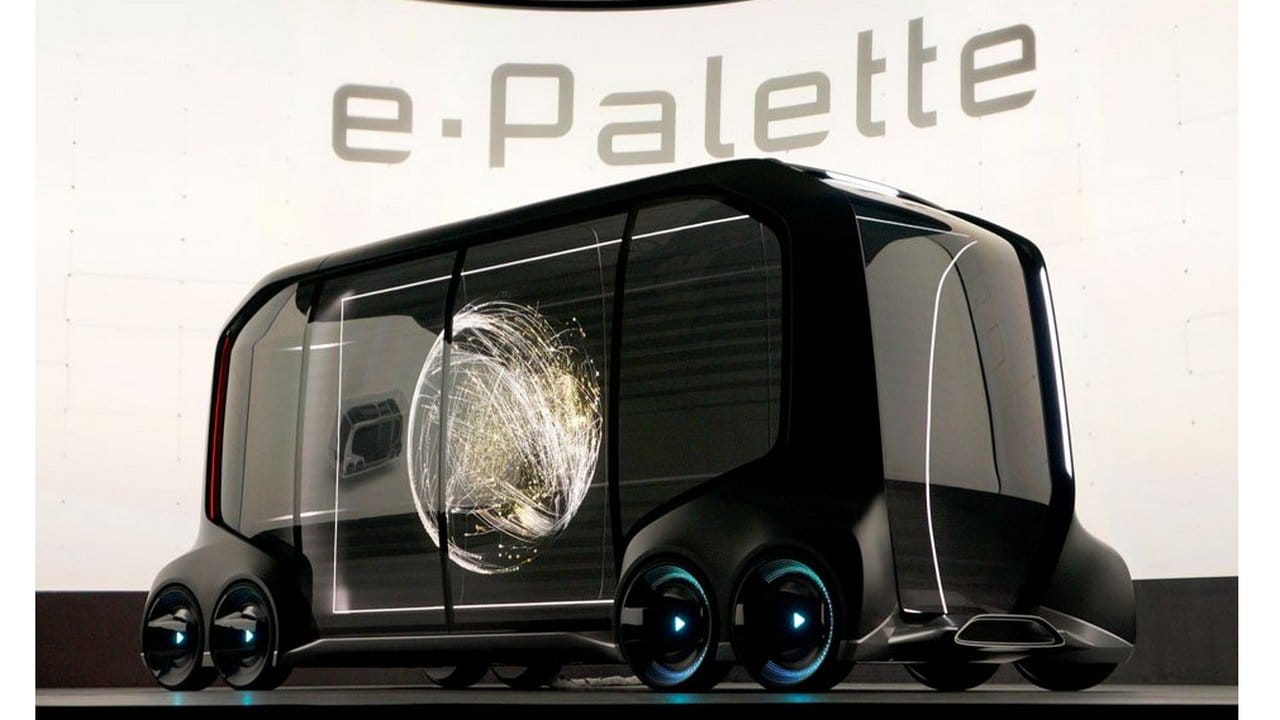 Toyota e-Palette concept. Image: Reuters[/caption]“This announcement marks a major step forward in our evolution towards sustainable mobility, demonstrating our continued expansion beyond traditional cars and trucks to the creation of new values including services for customers,” said Toyota President Akio Toyoda in a statement.Pizza Hut tweeted a photo of its take on the e-Palette concept.If any of you have seen Black Mirror's latest season, this autonomous pizza delivery van will look eerily similar to the one seen in Season 4, Episode 3.In fact, the Black Mirror account tweeted, "We know how this goes". This was in reference to the fact that in the episode, one of these autonomous pizza delivery vehicles hits a pedestrian while he's crossing the road. Like all Black Mirror episodes, this particular incident also forces us to reflect on our current day obsessions and where we are going with them. Autonomous vehicles are being tested in California, and there have been instances of accidents.Black Mirror has had this uncanny knack of preempting a lot of the trends, and e-Palettes is an example of that being proved right. Feel like it's just a coincidence? Well, how about SAM, the AI-enabled messenger chatbot who has also been named the first 'virtual politician'. Look up Waldo Moment (Season 2, Episode 3), to know how SAM could play out eventually.Also, Humans (Season 3, Episode 3) and Metalhead (Season 4, Episode 5) paint a grim picture of how automated war-trained robots could become killing machines if not controlled in time. Looking at the developments of Boston Dynamics, where robots can do backflips and robot dogs could traverse hilly terrains, the Black Mirror episodes have a knack of alerting us as to how our present obsessions could lead to a dystopian future.
First Published:Jan 09, 2018, 11:30:39 IST
Advertisement
Advertisement

Why AI notetakers are raising serious privacy and security concerns
AI notetakers promise effortless meeting summaries, but experts warn they could expose confidential conversations, corporate secrets and personal voiceprints. As businesses increasingly adopt AI-powered meeting assistants, questions over data storage, privacy, consent and legal risks are becoming impossible to ignore
5 min read
China's low-cost AI models are changing the global AI race. Here's why Silicon Valley is worried
As Chinese firms continue to improve performance while keeping prices low, the AI race is no longer just about building the smartest model—it is increasingly becoming a battle over who can deliver the best value
2 min read
China's Kimi K3 challenges US AI leaders with frontier-level performance at lower cost
Chinese artificial intelligence startup Moonshot AI has unveiled its latest open-weight AI model, Kimi K3, with early results suggesting it could compete with some of the world's most advanced AI systems developed by leading US companies
2 min read
How did Instagram run ads promoting child abuse in India?
India has issued a notice to Meta after an investigation alleged that Instagram displayed paid advertisements promoting child sexual abuse material. MeitY ordered Meta to remove such Instagram ads and explain within seven days how they were approved
8 min read
Why has India halted WhatsApp’s username feature before launch?
India has halted WhatsApp’s planned username feature, citing concerns about cybercrime, impersonation, and law enforcement challenges. As Meta races to address security concerns, here’s why MeitY has paused the rollout, what the feature does, and how it could influence privacy and online safety in India
3 min read
Advertisement
Advertisement