


Tesla battery maker Panasonic suspends cobalt supplier due to sanctions concern
Panasonic said it was unable to determine how much of the cobalt for Tesla batteries comes from Cuba.

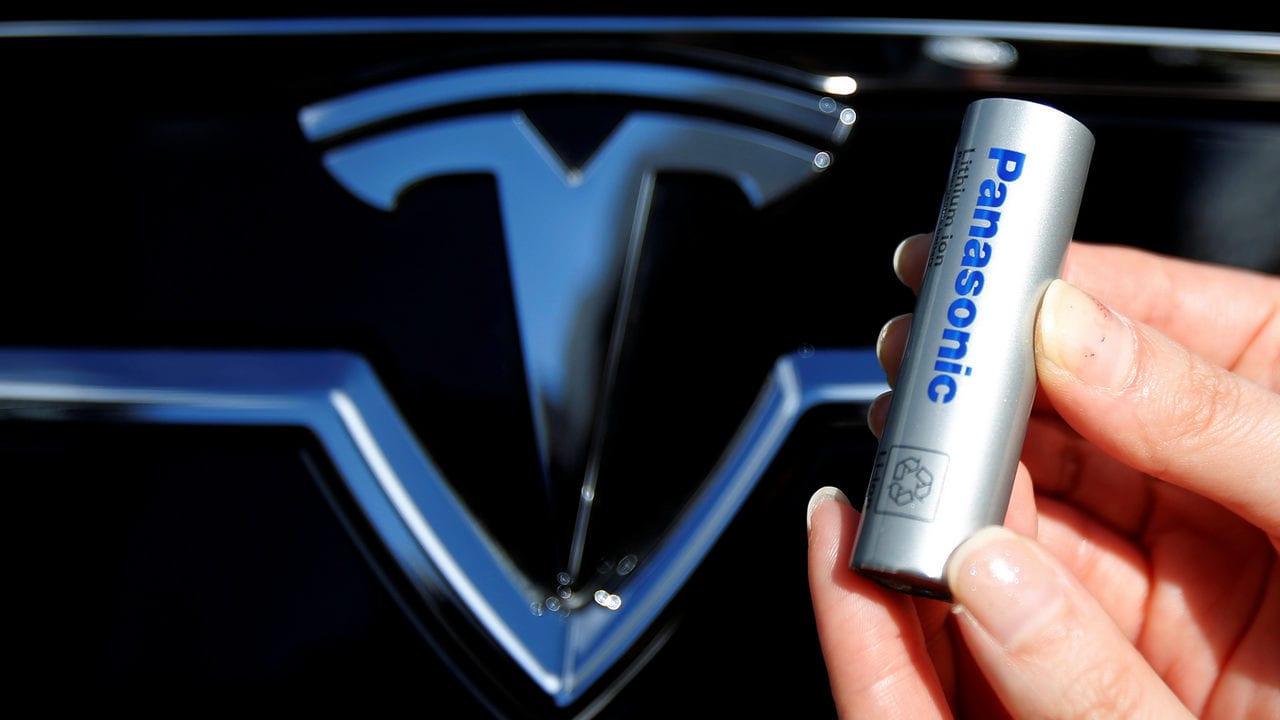
A Panasonic Corp's lithium-ion battery, which is part of Tesla's Model S and Model X battery packs, pictured with the Tesla Motors logo. Image: Reuters[/caption]“Panasonic has chosen to suspend its relationship with its Canadian supplier,” a spokeswoman said, without naming the supplier. She added that Panasonic had used cobalt from the Canadian supplier for batteries used in the Tesla Model S and Model X, but only after February this year.“Panasonic has sought guidance from the US Treasury Department’s Office of Foreign Assets Control (OFAC) regarding its interpretation of the scope of the US ban on Cuban-origin imports,” she said.A US Treasury official, who asked not to be named, said Treasury does not discuss investigations and could not confirm whether one existed.The United States imposed sanctions on Cuba after Fidel Castro nationalised swathes of American assets more than 50 years ago.Tesla, when asked for comment by Reuters, did not address questions about whether its batteries contained Cuban cobalt or whether that could potentially put the company in breach of sanctions.A spokesman said: “Tesla is aiming to achieve close to zero usage of cobalt in the near future.”The electric vehicle maker, run by billionaire Elon Musk, said in May that it had been working for years to reduce the amount of cobalt it uses in its batteries.Sherritt declined to comment on questions about whether it sold cobalt to Panasonic.“We don’t respond to questions about specific client activities,” Sherritt’s spokesman Joe Racanelli said.“We’ve been working in Cuba for 25 years and we sell our Class 1 nickel and cobalt that’s refined from our facility in Fort Saskatchewan, Alberta, to customers in Europe and Asia.”Scramble for resourcesAn anticipated electric vehicle revolution has sent demand and prices for cobalt - a crucial component in car batteries - surging over the past two years.Companies are under pressure to prove that the minerals they consume are sourced from mines that do not employ children or cause major environmental damage. Global cobalt supply is dominated by the Democratic Republic of Congo, which is riven by conflict and political instability.Sherritt produces Cobalt at the Moa mine in Cuba, a 50-50 joint venture between the Canadian company and the state-owned General Nickel Company of Cuba.Panasonic buys cobalt from Sherritt and the metal is then turned into specialised cobalt chemicals by a contractor, according to the sources.Panasonic is also supplied with cobalt chemicals by Sumitomo Metal Mining Co Ltd, which produces most of its material in the Philippines, the sources said.The sources said that Sumitomo supplied the bulk of the cobalt used in Tesla batteries. Reuters was unable to determine what proportion of the cobalt used in Panasonic’s batteries made for Tesla came from Sherritt.Sumitomo declined to comment on its supply chain.When asked about a potential cobalt supply crunch, a Panasonic spokeswoman said, after the Reuters report, that the company “will secure its demand of cobalt from existing and new sources”. The procurement from the Canadian supplier it suspended was not a majority, she added.

Why AI notetakers are raising serious privacy and security concerns
China's low-cost AI models are changing the global AI race. Here's why Silicon Valley is worried
China's Kimi K3 challenges US AI leaders with frontier-level performance at lower cost
How did Instagram run ads promoting child abuse in India?
Why has India halted WhatsApp’s username feature before launch?