


Tesla aims to increase production of its Model 3 sedans to 10,000 per week
Tesla, in June, announced its plan to build a wholly Tesla-owned Gigafactory 3 in Shanghai.

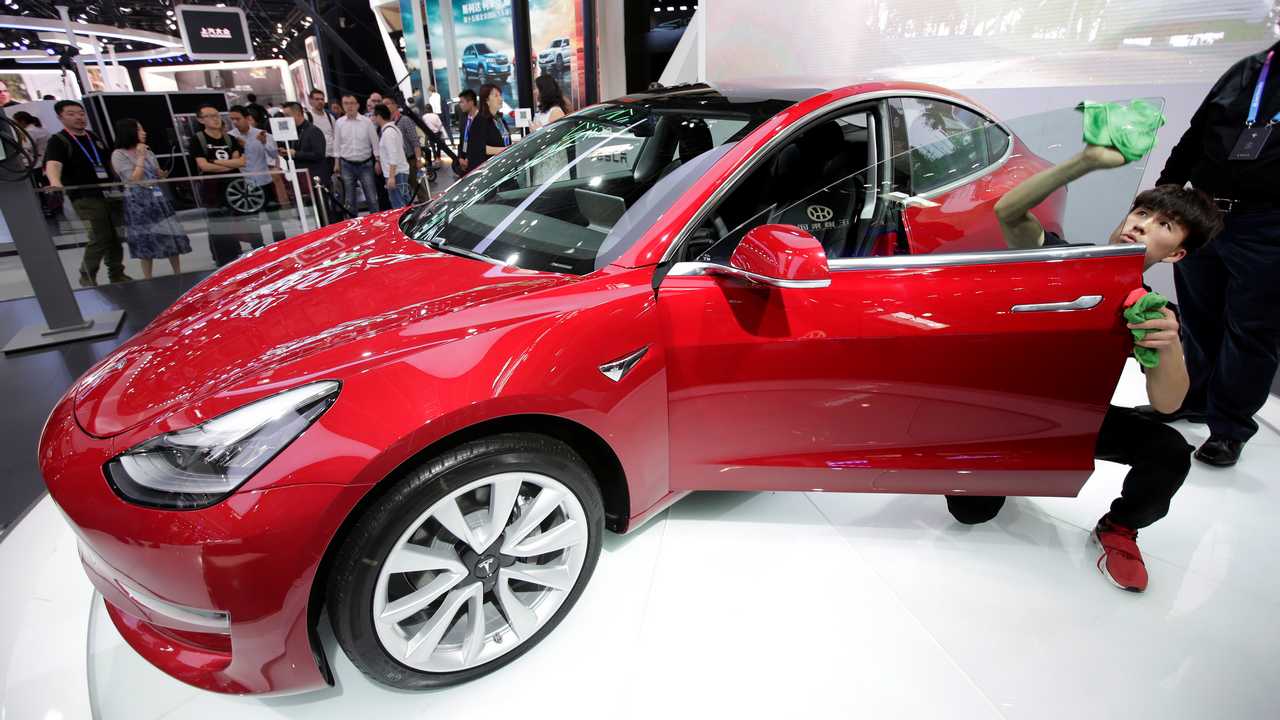
A man cleans a Tesla Model 3 car during a media preview. Image: Reuters[/caption]"The popularity of Model 3 is a true testament to the product. Based on trade-ins that we've received so far, we can see that its total addressable market is much larger than mid-sized premium sedans," Musk informed.The company expects to produce 50,000-55,000 Model 3s in Q3."Having achieved our 5,000 per week milestone, we will now continue to increase that further, with our aim to produce 6,000 Model 3 vehicles per week by late August."We aim to increase production to 10,000 Model 3s per week as fast as we can. We believe that the majority of Tesla's production lines will be ready to produce at this rate by the end of 2018," Musk said.He also apologized to analysts for his impolite behaviour during the Q1 earnings call in May when he cut off a senior technology analyst, dubbing his question on Model 3 gross margins "boring".Tesla, in June, announced its plan to build a wholly Tesla-owned Gigafactory 3 in Shanghai — its first "Gigafactory" outside the US."China is by far the largest electric vehicles (EV) market in the world and Chinese support for EVs has been exceptionally strong. Initial capacity is expected to be roughly 2,50,000 vehicles and battery packs per year, which will grow to 5,00,000, with the first cars expected to roll off the production line in about three years," said the Tesla CEO.Construction on the China facility is expected to start within the next few quarters, though Tesla's initial investment will not start in any significant way until 2019."In July, we delivered our 2,00,000th vehicle in the US. We produced 53,339 vehicles in Q2 and delivered 22,319 Model S and Model X vehicles and 18,449 Model 3 vehicles, totalling 40,768 deliveries," said Musk.

Why AI notetakers are raising serious privacy and security concerns
China's low-cost AI models are changing the global AI race. Here's why Silicon Valley is worried
China's Kimi K3 challenges US AI leaders with frontier-level performance at lower cost
How did Instagram run ads promoting child abuse in India?
Why has India halted WhatsApp’s username feature before launch?