


Scientists propose using solar energy to power nocturnal lunar missions
The invention also means that during the lunar night, there would be no need for batteries and nuclear power sources used by the Chinese rover that recently landed on the moon.

New York: As India gears up to send Chandrayaan 2, its second lunar exploration mission to the moon, in the near future, there is some heartening news for those manning our Moon Mission.
Scientists have proposed a system of mirrors, processed lunar soil and a heat engine to provide energy to rovers and crew during the lunar night.
[caption id="attachment_1287881" align="alignleft" width="380"]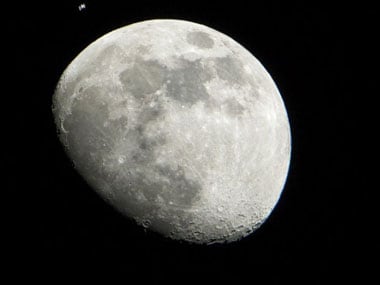 AFP[/caption]
The invention also means that during the lunar night, there would be no need for batteries and nuclear power sources used by the Chinese rover that recently landed on the moon.
The lunar night lasts approximately 14 days, during which temperatures as low as -150 C have been recorded. This complicates a rover's movement and equipment functioning on the lunar surface, requiring heavy batteries from earth or the use of nuclear energy.
 More from News Analysis
A team of researchers from the Polytechnic University of Catalonia, along with collaborators from the US, have studied two options for storing energy on the Moon during the day for use at night.
The first system consists of modifying fragments of regolith, or lunar soil, incorporating elements such as aluminium, for example, such that it becomes a thermal mass.
"When the sun's rays hit the surface, a system of mirrors reflects the light to heat the thermal mass, which later can transmit heat during the night to rovers," said Ricard Gonzalez-Cinca, co-author of the study.
The second system has a more sophisticated series of mirrors and a heat engine. The heat generated converts the liquid into a gas, which in turn heats the thermal mass.
Afterwards, during the long lunar night, the heat is transferred to a Stirling engine to produce electricity.
"This system is better equipped than the previous model for lunar projects with greater energy needs, such as a manned mission spending the night on the moon," added Gonzalez-Cinca.
The findings of the study were published in the journal Acta Astronautica.
IANS

Why AI notetakers are raising serious privacy and security concerns
China's low-cost AI models are changing the global AI race. Here's why Silicon Valley is worried
China's Kimi K3 challenges US AI leaders with frontier-level performance at lower cost
How did Instagram run ads promoting child abuse in India?
Why has India halted WhatsApp’s username feature before launch?