
Advertisement


Sections
Sacha Baron Cohen attacks Facebook; says Hitler could have got away with anti-Jewish ads
Cohen gave a scathing speech calling all social media companies the ‘greatest propaganda machine in history’.

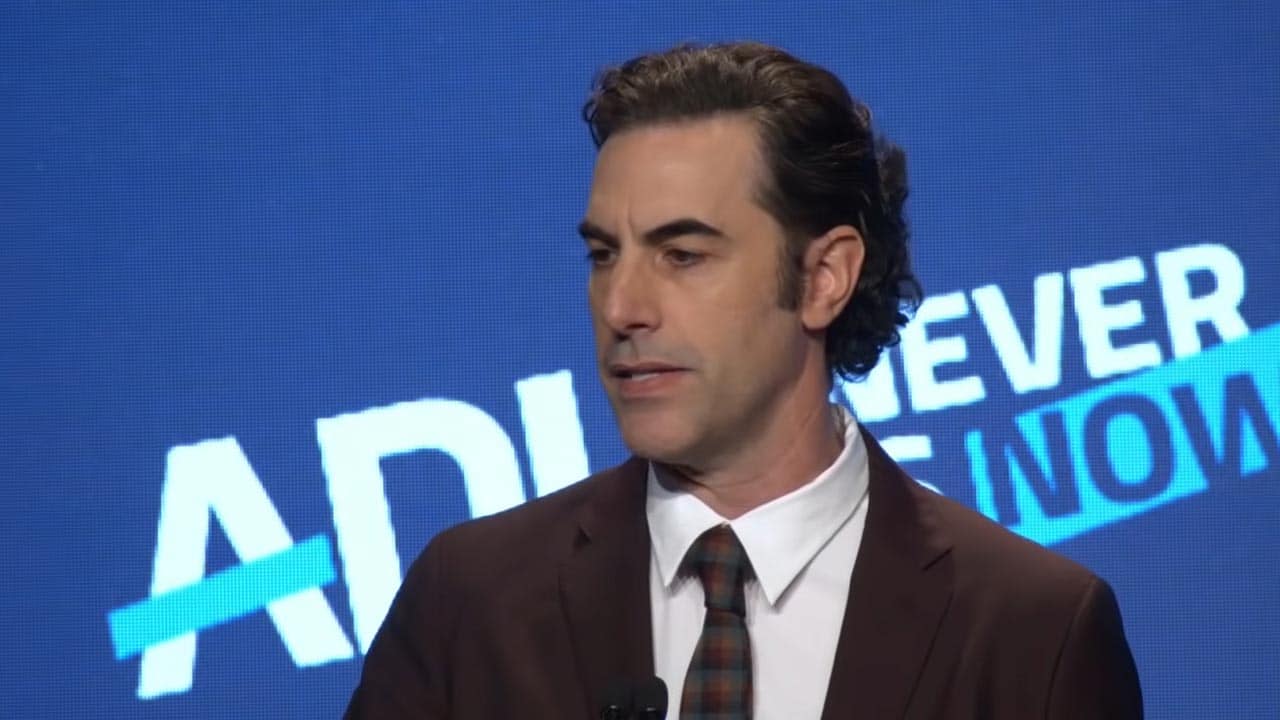
Addressing an audience at the Anti-Defamation League’s (ADL) Never Is Now summit, actor and comedian Sacha Baron Cohen delivered an unapologetic and brutal speech against social media companies, especially Facebook. He went on to collectively call all the companies the “greatest propaganda machine in history.”[caption id="attachment_7691881" align="alignnone" width="1280"]![Sacha Baron Cohen at the Never Is Now Summit by the Anti-Defamation League. Image: YouTube/Anti-Defamation League]() Sacha Baron Cohen at the Never Is Now Summit by the Anti-Defamation League. Image: YouTube/Anti-Defamation League[/caption]Widely popular for his iconic and satirical personas like Ali G, Borat, and Bruno, Cohen has been portraying bigotry and intolerance that’s rampant in the world via these roles. However, Cohen called out the big tech companies this time without going into any character, but himself.“Today around the world, demagogues appeal to our worst instincts. Conspiracy theories once confined to the fringe are going mainstream. It’s as if the Age of Reason – the era of evidential argument – is ending, and now knowledge is delegitimized and scientific consensus is dismissed. Democracy, which depends on shared truths, is in retreat, and autocracy, which depends on shared lies, is on the march. Hate crimes are surging, as are murderous attacks on religious and ethnic minorities,” Cohen said.Cohen was present at the summit to receive ADL's International Leadership Award. He reminded the audience how his alter egos showed a mirror to the prevalence of antisemitism, homophobia and Islamophobia. At the centre of all these dangerous issues are a handful of internet companies, according to Cohen.He asked the audience to put some thought on how Facebook, YouTube and Google, Twitter and other platforms give access to billions of people to the internet. And also how these platforms allow the spread of conspiracies, fake news and other potentially harmful content.Cohen set sights on Facebook’s stance on not fact-checking political ads. He said, “If Facebook were around in the 1930s, it would have allowed Hitler to post 30-second ads on his “solution” to the “Jewish problem”. He pointed out that Facebook CEO Mark Zuckerberg had said that social media companies should “live up to their responsibilities” but doesn’t mention what should they do on failing its responsibilities.Towards the end of his speech, Cohen suggested, “The ultimate aim of society should be to make sure that people are not targeted, not harassed and not murdered because of who they are, where they come from, who they love or how they pray.” He concluded his speech with a call to “prioritise truth over lies, tolerance over prejudice, empathy over indifference and experts over ignoramuses.”
Sacha Baron Cohen at the Never Is Now Summit by the Anti-Defamation League. Image: YouTube/Anti-Defamation League[/caption]Widely popular for his iconic and satirical personas like Ali G, Borat, and Bruno, Cohen has been portraying bigotry and intolerance that’s rampant in the world via these roles. However, Cohen called out the big tech companies this time without going into any character, but himself.“Today around the world, demagogues appeal to our worst instincts. Conspiracy theories once confined to the fringe are going mainstream. It’s as if the Age of Reason – the era of evidential argument – is ending, and now knowledge is delegitimized and scientific consensus is dismissed. Democracy, which depends on shared truths, is in retreat, and autocracy, which depends on shared lies, is on the march. Hate crimes are surging, as are murderous attacks on religious and ethnic minorities,” Cohen said.Cohen was present at the summit to receive ADL's International Leadership Award. He reminded the audience how his alter egos showed a mirror to the prevalence of antisemitism, homophobia and Islamophobia. At the centre of all these dangerous issues are a handful of internet companies, according to Cohen.He asked the audience to put some thought on how Facebook, YouTube and Google, Twitter and other platforms give access to billions of people to the internet. And also how these platforms allow the spread of conspiracies, fake news and other potentially harmful content.Cohen set sights on Facebook’s stance on not fact-checking political ads. He said, “If Facebook were around in the 1930s, it would have allowed Hitler to post 30-second ads on his “solution” to the “Jewish problem”. He pointed out that Facebook CEO Mark Zuckerberg had said that social media companies should “live up to their responsibilities” but doesn’t mention what should they do on failing its responsibilities.Towards the end of his speech, Cohen suggested, “The ultimate aim of society should be to make sure that people are not targeted, not harassed and not murdered because of who they are, where they come from, who they love or how they pray.” He concluded his speech with a call to “prioritise truth over lies, tolerance over prejudice, empathy over indifference and experts over ignoramuses.”
 Sacha Baron Cohen at the Never Is Now Summit by the Anti-Defamation League. Image: YouTube/Anti-Defamation League[/caption]Widely popular for his iconic and satirical personas like Ali G, Borat, and Bruno, Cohen has been portraying bigotry and intolerance that’s rampant in the world via these roles. However, Cohen called out the big tech companies this time without going into any character, but himself.“Today around the world, demagogues appeal to our worst instincts. Conspiracy theories once confined to the fringe are going mainstream. It’s as if the Age of Reason – the era of evidential argument – is ending, and now knowledge is delegitimized and scientific consensus is dismissed. Democracy, which depends on shared truths, is in retreat, and autocracy, which depends on shared lies, is on the march. Hate crimes are surging, as are murderous attacks on religious and ethnic minorities,” Cohen said.Cohen was present at the summit to receive ADL's International Leadership Award. He reminded the audience how his alter egos showed a mirror to the prevalence of antisemitism, homophobia and Islamophobia. At the centre of all these dangerous issues are a handful of internet companies, according to Cohen.He asked the audience to put some thought on how Facebook, YouTube and Google, Twitter and other platforms give access to billions of people to the internet. And also how these platforms allow the spread of conspiracies, fake news and other potentially harmful content.
First Published:Nov 23, 2019, 21:07:33 IST
Advertisement
Advertisement

Why AI notetakers are raising serious privacy and security concerns
AI notetakers promise effortless meeting summaries, but experts warn they could expose confidential conversations, corporate secrets and personal voiceprints. As businesses increasingly adopt AI-powered meeting assistants, questions over data storage, privacy, consent and legal risks are becoming impossible to ignore
5 min read
China's low-cost AI models are changing the global AI race. Here's why Silicon Valley is worried
As Chinese firms continue to improve performance while keeping prices low, the AI race is no longer just about building the smartest model—it is increasingly becoming a battle over who can deliver the best value
2 min read
China's Kimi K3 challenges US AI leaders with frontier-level performance at lower cost
Chinese artificial intelligence startup Moonshot AI has unveiled its latest open-weight AI model, Kimi K3, with early results suggesting it could compete with some of the world's most advanced AI systems developed by leading US companies
2 min read
How did Instagram run ads promoting child abuse in India?
India has issued a notice to Meta after an investigation alleged that Instagram displayed paid advertisements promoting child sexual abuse material. MeitY ordered Meta to remove such Instagram ads and explain within seven days how they were approved
8 min read
Why has India halted WhatsApp’s username feature before launch?
India has halted WhatsApp’s planned username feature, citing concerns about cybercrime, impersonation, and law enforcement challenges. As Meta races to address security concerns, here’s why MeitY has paused the rollout, what the feature does, and how it could influence privacy and online safety in India
3 min read
Advertisement
Advertisement