


Rolls-Royce developing technology for flying taxis, on the look out for partners
Rolls-Royce said that it had drawn up plans for an electric vertical take-off and landing vehicle.

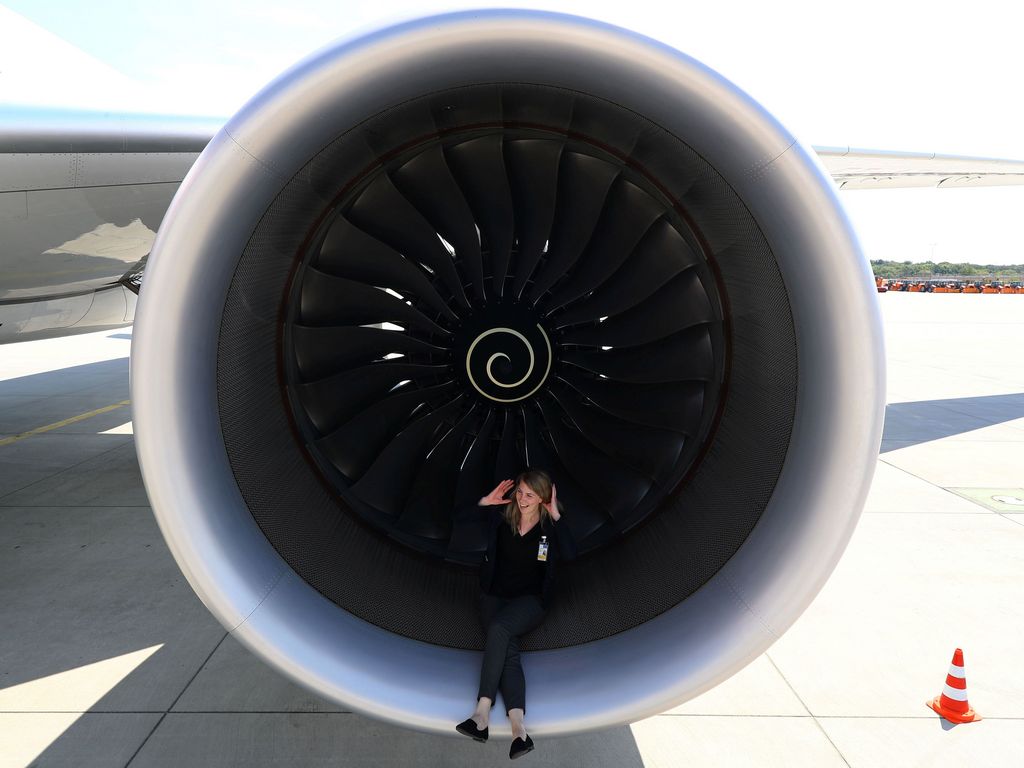
PR agent Elsa Goette sits in a Rolls-Royce engine of an Airbus A350-900 of Ethiopian Airlines. Reuters[/caption]Rolls-Royce said on 15 July it had drawn up plans for an electric vertical take-off and landing (EVTOL) vehicle, or flying taxi, which could carry four to five people at speeds of up to 250 miles per hour for approximately 500 miles.The company, which makes engines for planes, helicopters and ships, joins a variety of companies racing to develop flying taxis, which could revolutionise the way people travel.Long the stuff of science fiction and futuristic cartoons such as The Jetsons, aviation and technology leaders are working to make electric-powered flying taxis a reality, including Airbus, US ride-sharing firm Uber and a range of start-ups including one backed by Google co-founder Larry Page, called Kitty Hawk.Rolls-Royce’s design will be showcased in digital form at the Farnborough Airshow, which starts on 16 July. The company is looking for an airframer and a partner to provide aspects of the electrical system to help commercialise the project.Rolls-Royce said in a statement it was well-placed to play a leading role in the “personal air mobility” market.“The initial concept vehicle uses gas turbine technology to generate electricity to power six electric propulsors specially designed to have a low noise profile,” the company said, adding the design used its existing M250 gas turbine.Rolls’s design would not require re-charging because the battery is charged by the gas turbine, it said, adding it could use existing infrastructures such as heliports and airports.

Why AI notetakers are raising serious privacy and security concerns
China's low-cost AI models are changing the global AI race. Here's why Silicon Valley is worried
China's Kimi K3 challenges US AI leaders with frontier-level performance at lower cost
How did Instagram run ads promoting child abuse in India?
Why has India halted WhatsApp’s username feature before launch?