


Researchers use AI to design a device that can improve dialysis by optimising blood flow
When the kidneys stop working properly, dialysis can be used to remove waste products and excess fluid from the blood by diverting it to a machine.

Scientists have used an artificial intelligence (AI) system to design a device that may ultimately improve dialysis for patients by optimising blood flow in veins. Researchers, including those from Imperial College London in the UK, used computer modelling techniques - normally employed to simulate how unsteady air pockets flow over a plane - to model how unsteady currents in blood flows in the veins of patients undergoing dialysis.[caption id="attachment_4129727" align="alignleft" width="380"]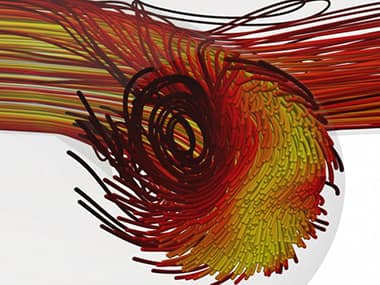 A model of the improved blood flow[/caption]When the kidneys stop working properly, dialysis can be used to remove waste products and excess fluid from the blood by diverting it to a machine to be cleaned. To connect this machine to the patient a special junction must be formed between an artery and a vein in the patients wrist or upper arm. This junction is called an arterio-venous fistulae (AVF). The study, published in the journal Physics of Fluids, used modelling techniques from the aerospace industry to train a computer, using machine learning algorithms.The AI then went ahead and optimised the shape of an AVF so that the unsteadiness in the blood flow could be suppressed. The prototype device developed to hold the AVF in the optimal shape has so far undergone preliminary tests in pigs, which have been successful, researchers said. "We routinely use computer simulations to study air flow over aeroplanes. These same techniques, can now be used to optimise medical devices, including AVF," said Peter Vincent, from Imperial College London.Haemodialysis is a life-sustaining treatment used by millions of patients worldwide who have kidney failure. These patients are dependent on arterio-venous fistula (AVF) procedures to clean their blood, researchers said. However, dysfunction and failure in the AVF is a real problem for these patients, leading to a large number of hospital admissions and extra operations, they said."This technology offers great promise for these patients. By improving outcomes from AVF surgery, it could potentially reduce the need for repeated operations, which could and lead to better quality dialysis," said Richard Corbett from Hammersmith Hospital in the UK. "This technology offers great promise for these patients. By improving outcomes from AVF surgery, it could potentially reduce the need for repeated operations, which could and lead to better quality dialysis," Hammersmith said.

Why AI notetakers are raising serious privacy and security concerns
China's low-cost AI models are changing the global AI race. Here's why Silicon Valley is worried
China's Kimi K3 challenges US AI leaders with frontier-level performance at lower cost
How did Instagram run ads promoting child abuse in India?
Why has India halted WhatsApp’s username feature before launch?