


Researcher develop a prototype sensor which can speed up antibiotic treatment
The new sensing approach is based on a quartz-crystal resonator whose vibrations vary in measurable ways when particles on the surface change.

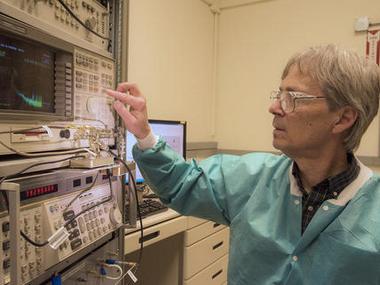
NIST physicist Ward Johnson observes signals generated by bacteria coating quartz crystals. NIST[/caption]The new sensor, developed by researchers at the National Institute of Standards and Technology (NIST) in the US, quickly senses mechanical fluctuations of bacterial cells and any changes induced by an antibiotic and provides results in less than an hour, much faster than conventional antimicrobial tests, which typically require days to grow colonies of bacterial cells.Improperly prescribed antibiotics and antibiotic-resistant bacteria pose serious threats to public health.The new sensing approach is based on a quartz-crystal resonator whose vibrations vary in measurable ways when particles on the surface change.
Tags

Why AI notetakers are raising serious privacy and security concerns
China's low-cost AI models are changing the global AI race. Here's why Silicon Valley is worried
China's Kimi K3 challenges US AI leaders with frontier-level performance at lower cost
How did Instagram run ads promoting child abuse in India?
Why has India halted WhatsApp’s username feature before launch?