


Now a smartphone case that reduces cancer risk!
A new smartphone case, made up of same material as NASA spacecraft, claims to reduce cellphone radiation and cancer risks as it cuts the exposure by up to 95 per cent.

A new smartphone case, made up of same material as NASA spacecraft, claims to reduce cellphone radiation and cancer risks as it cuts the exposure by up to 95 per cent.
Although it still remains unclear as to exactly how bad the problem of cellphone radiation is, the WHO has already reclassified it as "potentially carcinogenic for humans."
[caption id="attachment_430880" align="alignleft" width="380"]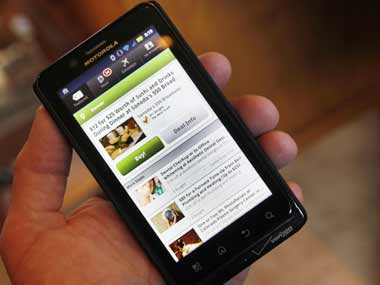 Reuters[/caption]
The manufacturer claims to resolve the problems associated with mobile devices of emitting microwave energy as majority of it is absorbed by the heads and bodies of phone users while making calls.
The accessory, which is available for a range of different smartphones, claims to redirect radiation away from the user and reduce exposure by up to 95 per cent.
 More from News Analysis
According to the company's Chief Technology Officer, Ryan McCaughey, their invention doesn't make mere empty promises to ward off those deadly radiations, and the case has been rigorously tested to check its effectiveness.
"The scale we base our research is the industry standard of SAR, or specific absorption rate. All cell phones are measured to this standard, and what we do is compare the effect of a cellphone on SAR with and without the Pong case," McCaughey was quoted by news.com.au as saying.
PTI

Why AI notetakers are raising serious privacy and security concerns
China's low-cost AI models are changing the global AI race. Here's why Silicon Valley is worried
China's Kimi K3 challenges US AI leaders with frontier-level performance at lower cost
How did Instagram run ads promoting child abuse in India?
Why has India halted WhatsApp’s username feature before launch?