


NASA is attempting to contact the IMAGE satellite which was lost in 2005 using Deep Space Network
The satellite, known as IMAGE, was launched on 25 March 2000, and contact was unexpectedly lost on 18 December 2005

US space agency NASA on 29 January said that it's attempting to contact a satellite it lost more than a decade ago after it was discovered possibly still alive by an amateur astronomer earlier this month.
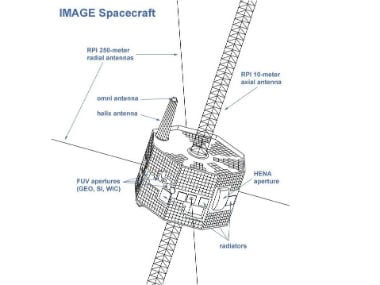
"We are attempting to contact the IMAGE satellite via the Deep Space Network after an amateur astronomer reported making contact in mid-January," NASA tweeted.
The satellite, known as Imager for Magnetopause-to-Aurora Global Exploration (IMAGE), was launched on 25 March 2000, and contact was unexpectedly lost on 18 December 2005, Xinhua reported.
It was the first satellite mission dedicated to imaging the Earth's magnetosphere, the region of space controlled by the Earth's magnetic field and containing extremely tenuous plasmas of both solar and terrestrial origin.
 More from News Analysis
At that time, NASA said the most likely explanation of the failure was due to an induced "instant trip" of the solid-state power controller supplying power to the transponder.
Earlier this month, an amateur astronomer called Scott Tilley wrote on his blog that he picked up a signal from a satellite labelled "2000-017A, 26113" which he knew corresponded to the IMAGE satellite.
NASA said it has acquired time on the Deep Space Network to focus on the source and determine whether the signal is indeed IMAGE.
"This process must take into consideration the vintage nature of the spacecraft, and includes locating appropriate software and commands to potentially operate the mission," the US space agency added.
If IMAGE is revived, its orbit will be well positioned to monitor Earth's northern auroral zone, said Patricia Reiff, a space plasma physicist at Rice University who was also a co-investigator on the mission.
"It is really invaluable for now-casting space weather and really understanding the global response of the magnetosphere to solar storms," Reiff added

Why AI notetakers are raising serious privacy and security concerns
China's low-cost AI models are changing the global AI race. Here's why Silicon Valley is worried
China's Kimi K3 challenges US AI leaders with frontier-level performance at lower cost
How did Instagram run ads promoting child abuse in India?
Why has India halted WhatsApp’s username feature before launch?