


MIT researchers break water-air barrier so submarines can talk to airplanes
It's been impossible to communicate directly between the two mediums, water and air, until now.

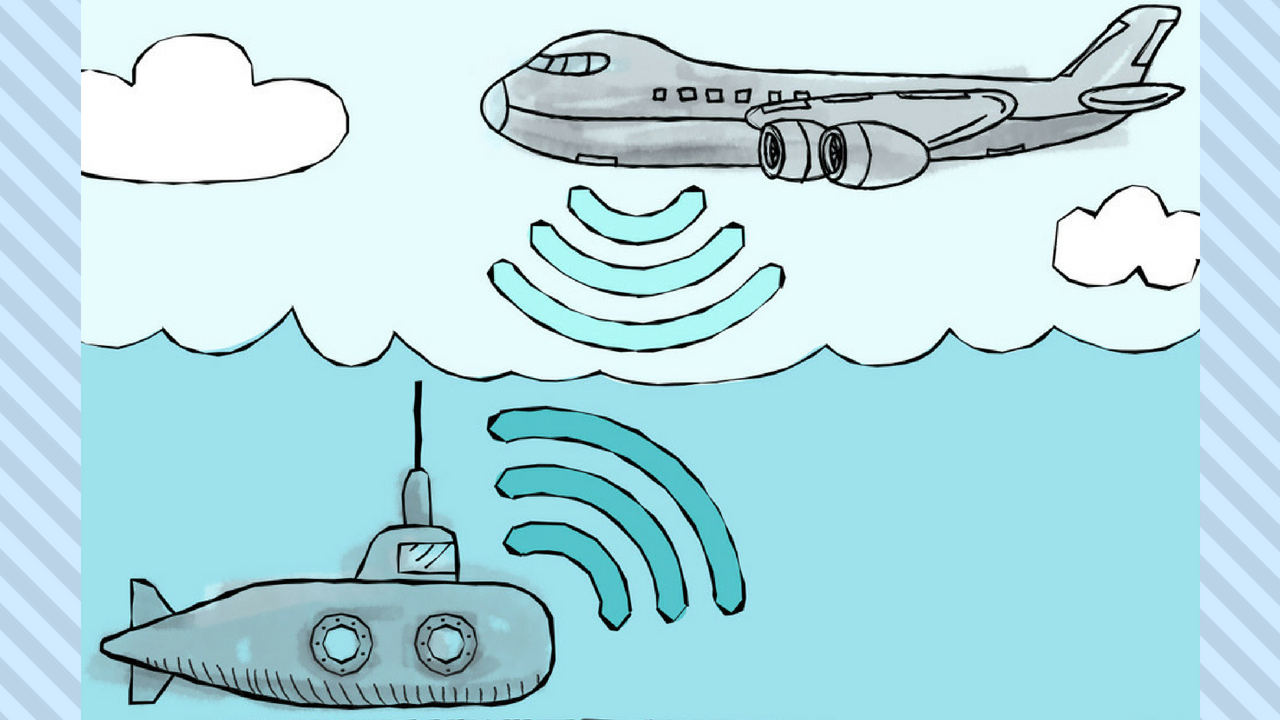
Wireless communication breaks through water-air barrier. Image: MIT[/caption]Above water, communication happens using radio waves, which can travel hundreds of kilometres. Underwater however, radio waves do not work. They travel just a few inches and finally die. This is why sound waves are used by submarines and divers to send messages. Since the two mediums use completely different forms of waves, it’s been difficult to figure out a solution. Plus, the surface of the ocean is a tough barrier for any kind of signal to cross.Researchers at MIT seem to have developed a solution called TARF, which involves underwater sound waves to create vibrations which can be detected on the surface. Here’s how it works. An underwater transmitter directs a sonar signal to the water’s surface. This causes causing tiny vibrations on the surface of the water. Above the water surface, a highly sensitive receiver reads these vibrations or disturbances and finally decodes the sonar signal. What is great is that TARF doesn’t really require a perfectly still water surface.Check out a video that they posted.

Why AI notetakers are raising serious privacy and security concerns
China's low-cost AI models are changing the global AI race. Here's why Silicon Valley is worried
China's Kimi K3 challenges US AI leaders with frontier-level performance at lower cost
How did Instagram run ads promoting child abuse in India?
Why has India halted WhatsApp’s username feature before launch?