
Advertisement


Sections
Microsoft presents a Rube Goldberg-esque contraption for storing data in DNA
If one could manipulate the sequence of DNA base pairs, one could store data in DNA.

While you sit and gloat over your 256 GB phone with its 48 MP camera, do spare a thought for the poor engineers who have to figure out how to store all this data you’re generating. At last count, it was estimated that we humans generate about 2.5 quintillion bytes of data per day. That’s 2.5 billion gigabytes.Where does it all go? How is it all stored?The data that’s not on your phone ends up in the “cloud”. A somewhat abstract term that describes a networked storage mechanism that’s accessible over the internet. These cloud servers are, essentially, massive warehouses that draw an enormous amount of power and generate a lot of heat. They’re packed to the brim with data storage devices and bustling engineers in all shapes and forms.But what if you could replace all of this with a silent, almost ascetic environment? What if a data warehouse could be shrunk down to the size of a pea? Well, Microsoft has done just that, after a fashion.Working with the University of Washington, Microsoft has developed an automated DNA data storage and retrieval mechanism. Yes, that DNA, deoxyribonucleic acid, the structure that forms the template for virtually all life as we know it.
via GIPHYEventually, this very same DNA could end up as the template to the structure for our digital lives. But we’re getting ahead of ourselves.What Microsoft and University of Washington researchers have done is build a Rube Goldberg contraption of sorts that can read and write from and to DNA without any human intervention.
How’d they do it, exactly? And why does it matter?
Digital data is binary, consisting of 1s and 0s. A combination of eight 1s and 0s make up a “byte” and each byte can represent, say a certain character of the alphabet (a-z or A-Z), number (0-9) or special character (!@#$%^&*). 1,024 bytes form a megabyte, 1,024 megabytes form a gigabyte, and so on. Given that data is binary, digital data can literally be stored in any medium that’s capable of maintaining two states, regardless of what those states are.These states could be voltage (high and low), temperature (hot and cold), magnetic polarity (north and south) and even varying sound levels (loud or quiet). It’s so simple to transmit digital data that you could very well clap to transmit a digital photo. All you’d need is an instrument (a mic) to hear the variation in volume level and software to interpret your clapping as binary data. Such a mechanism would be ludicrously slow and inefficient, not to mention how mind-numbingly dull it would be to share photos this way, but that’s beside the point.via GIPHYClearly, the issue then is about speed and efficiency, which is why we have chosen to store data in magnets (hard disks) and transmit it via electricity (voltage).Getting back to the subject of DNA, DNA is essentially a structure for data storage in all things living. Four chemical bases — adenine (A), guanine (G), cytosine (C) and thymine (T) — make up the code that gives structure to all life. As with binary digital data, the sequence of the A, C, G, T bases is the information needed for life to exist. In theory, you could pack in over 200 petabytes (PB) of data into a single gram of DNA. Including backups, Facebook is estimated to be storing over 300 PB of data in vast data centre warehouses scattered all over the world.[caption id="attachment_6328771" align="alignnone" width="1024"]
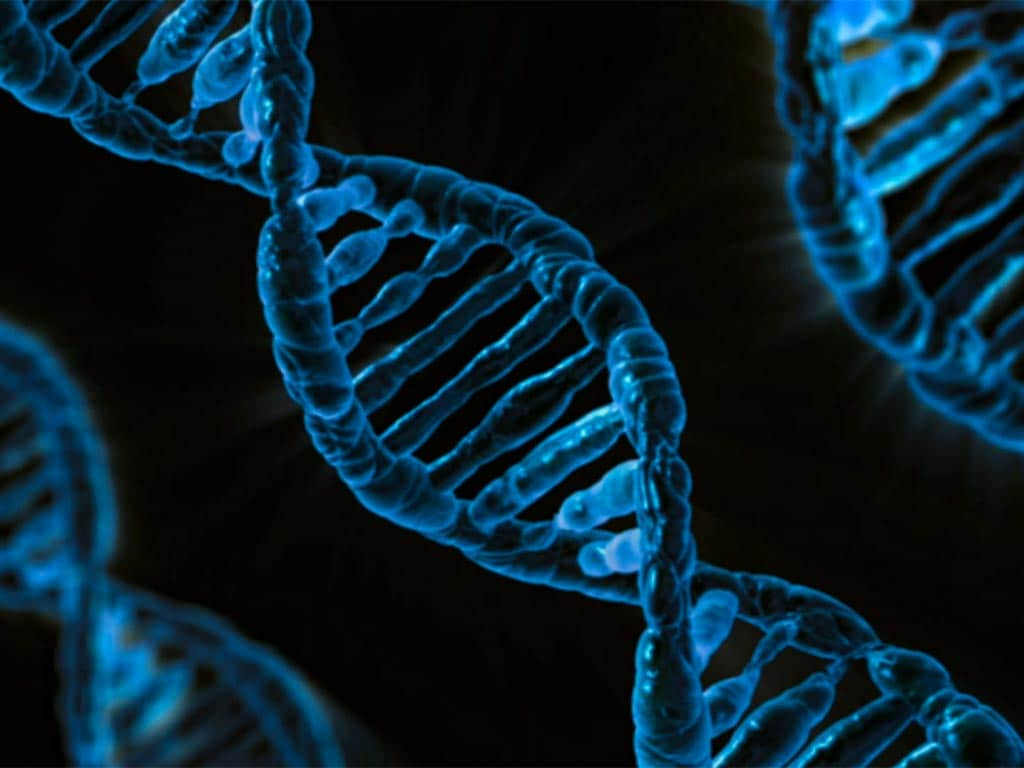
A few grams of DNA can store almost as much data as Facebook can in its vast, global network of data centres.[/caption]If one could manipulate the sequence of these base pairs, one could store data in DNA. Many scientists and researchers have already tried and succeeded in doing just that.However, the process essentially involves a bunch of highly trained scientists running around with flasks and pipettes and carefully measuring out quantities of chemicals. This is hardly the ideal setting for a data centre serving the needs of seven billion humans.
It’s a revolution! Or is it?
Microsoft’s just solved the world’s data problems. Or has it? Sadly, the answer to that is no, it hasn’t. This fancy automated system of their’s managed to store a 5-byte message — which simply reads ‘HELLO’ — and retrieve it in 21 hours.In the 15 seconds you spent reading the above paragraph, netizens consumed 300,000,000,000,000 bytes of data. In 21 hrs, they will consume a whopping 1,512,000,000,000,000,000 bytes of data (30 percent of it is porn, in case you’re wondering).
via GIPHYWhile you’re lamenting that measly 1 MB/s that your ISP has deigned to give you, this DNA-based system will only serve you at 0.00000006 MB/s.Microsoft’s Rube Goldberg contraption isn’t the future just yet, but it’s certainly a byte-sized teaser of an exciting one.
First Published:Mar 26, 2019, 14:14:26 IST
Advertisement
Advertisement

Why AI notetakers are raising serious privacy and security concerns
AI notetakers promise effortless meeting summaries, but experts warn they could expose confidential conversations, corporate secrets and personal voiceprints. As businesses increasingly adopt AI-powered meeting assistants, questions over data storage, privacy, consent and legal risks are becoming impossible to ignore
5 min read
China's low-cost AI models are changing the global AI race. Here's why Silicon Valley is worried
As Chinese firms continue to improve performance while keeping prices low, the AI race is no longer just about building the smartest model—it is increasingly becoming a battle over who can deliver the best value
2 min read
China's Kimi K3 challenges US AI leaders with frontier-level performance at lower cost
Chinese artificial intelligence startup Moonshot AI has unveiled its latest open-weight AI model, Kimi K3, with early results suggesting it could compete with some of the world's most advanced AI systems developed by leading US companies
2 min read
How did Instagram run ads promoting child abuse in India?
India has issued a notice to Meta after an investigation alleged that Instagram displayed paid advertisements promoting child sexual abuse material. MeitY ordered Meta to remove such Instagram ads and explain within seven days how they were approved
8 min read
Why has India halted WhatsApp’s username feature before launch?
India has halted WhatsApp’s planned username feature, citing concerns about cybercrime, impersonation, and law enforcement challenges. As Meta races to address security concerns, here’s why MeitY has paused the rollout, what the feature does, and how it could influence privacy and online safety in India
3 min read
Advertisement
Advertisement