
Advertisement


Sections
Joy Of Missing Out: Here's what's it like to live without internet and smartphone in 2019
Living with limited internet access is one thing. Living with zero internet access is quite another.

Imagine this:You were on the internet ever since it entered mainstream conscious. Your first email account was on Hotmail. Orkut was your first brush with social networking. And you were quite well versed with the functions and semantics of Yahoo Messenger and its various chatrooms.As the years passed, your life grew in two dimensions – in the physical world you went to college, made new friends, discovered partying, travelled, found a job, and found love. Meanwhile in the virtual world, while the experience of your journey was vastly different, the results remained the same – you made friends, found jobs, found love, and sometimes even found out that your lover was cheating on you.The photo albums of our childhood with their sepia-tinted memories are a thing of the past, pun intended. Now, every time you want to revisit your days of glory, all you have to do is log on to Facebook and scroll down your timeline. Why, now Facebook even sends you reminders of important memories – even if you are currently trying to forget some of them. At any given point your browser has a minimum of 20 open tabs. You see every waking moment through internet-eyes. Is that frame Instagram worthy? Is this quote Facebook-worthy? How can I squeeze this amazing joke into a micro-sized tweet?Your proudest possession is your smartphone. In the secrecy of the loo, you kiss its cover and thank your stars that yours is the latest model with the highest resolution selfie camera.On those rare vacation days to hill stations with limited coverage, you outwardly marvel about life without internet, while internally your fingers cringe to swipe over keypads.Then one day, you wake up in the middle of nowhere. In place of your smartphone is a punch-each-key-multiple-times-to-form-a-word type of basic phone. You walk around the five-acre community that is your new home and find network coverage in exactly three spots. You dial your mother’s number. Two minutes into a very patchy conversation, the call is cut. And refuses to connect again. You sigh, walk to your bag, take out a pen and notepad, and start writing a letter.[caption id="attachment_5908851" align="alignnone" width="1024"]![Representational image.]() Representational image.[/caption]The above anecdote, ladies and gentlemen, is my life.When I first decided to volunteer at this community in Javadhu Hills, network coverage was the least of my concerns. This was to be my first extended stay away from the city. My first time away from family and friends. My first time eating meals cooked on firewood, washing my own clothes, chopping megatons of vegetables and scrubbing 50 vessels every day. It was while washing my clothes and tying a saree in the bathroom that I realised how privileged I was. Back home, there were machines that took care of your every need. And I could always tie the saree in the bedroom without worrying about it getting wet.With every passing day, I fell in love with the place. It also taught me something about the wild. I learnt to tell time by the Sun’s position. I switched off my alarm forever – the roosters here were much more effective. I cut down my wardrobe to seven sets and I learnt to survive on Rs 3,000 per month.[caption id="attachment_5908921" align="alignnone" width="1024"]
Representational image.[/caption]The above anecdote, ladies and gentlemen, is my life.When I first decided to volunteer at this community in Javadhu Hills, network coverage was the least of my concerns. This was to be my first extended stay away from the city. My first time away from family and friends. My first time eating meals cooked on firewood, washing my own clothes, chopping megatons of vegetables and scrubbing 50 vessels every day. It was while washing my clothes and tying a saree in the bathroom that I realised how privileged I was. Back home, there were machines that took care of your every need. And I could always tie the saree in the bedroom without worrying about it getting wet.With every passing day, I fell in love with the place. It also taught me something about the wild. I learnt to tell time by the Sun’s position. I switched off my alarm forever – the roosters here were much more effective. I cut down my wardrobe to seven sets and I learnt to survive on Rs 3,000 per month.[caption id="attachment_5908921" align="alignnone" width="1024"]![Javadhu Hills. Image: Government of Tamil Nadu]() Javadhu Hills. Image: Government of Tamil Nadu[/caption]Every day also taught me how privileged I was. Washing machines, 24*7 electricity, gas stoves, bus facilities, there are so many things we city people take for granted. Most important amongst those – the internet.With a smartphone in almost every Indian hand, the babies and grandmas of today are so much more internet-savvy than some of us. In the city, your work life and social life are heavily affected if you are a self-chosen Luddite. You might end up going to a meeting and missing a lot of contexts that would have been exchanged on a WhatsApp group. Or missed a party invite. “Babe! I’m so sorry I forgot you aren’t on WhatsApp. Get on it, na!” your friend will say.It was in June 2019 that I moved out of Chennai after having spent over a decade in the city. Lucky for me, the technological transition wasn’t too difficult. I had migrated to a basic phone while in the city itself. Now THAT was a huge challenge! When you let go of your smartphone, you unlearn so much.Where once I Uber-ed and Ola-ed around town, now I had the bus routes memorised and was secretly patting my back on my carbon footprint progress. The absence of Swiggy and Zomato meant that I had mastered a bunch of cook-for-one recipes and had become good friends with the neighbourhood idli-vada anna. No more impulse buys on Amazon and Flipkart meant that I had enough saved for mini-vacations every so often. On the bus, I initiated and enjoyed many conversations with co-passengers. As for music, my basic phone supported 32 GB storage and the sound quality was pretty decent.My fingers hurt less. My mind felt fresh. My eyes were relaxed and my heart felt light. Every day, I saw more of the city than I’d ever imagined – a jacaranda tree in full bloom at a signal that I would walk by every afternoon, jasmine carpets in the street behind my house, two brown puppies in the nearby playground, and the playground itself! These daily discoveries would constantly remind me about how dumb these ‘smart’ phones were making us.When I first started off as a journalist, smartphones weren’t that big a thing. Today, news breaks through the internet and if you don’t own a phone that was smart, then you are just plain stupid.Five years of full-time journalism had me disillusioned and exhausted. Education seemed like a much pleasant option. But I continued to write. And the more I wrote, the more I realised how blessed I was to have had the courage to get off a smartphone. No TV at home. The rare Netflix binges. I read more. I walked more. I wrote more. And I even took up sketching.So, as I said earlier, the switch to the village life wasn’t all that tough.But living with limited internet access is one thing. Living with zero internet access is quite another.Even if I could pay ten thousand bucks here, I still wouldn’t have internet. The articles that I send in have to be typed three days in advance because the nearest internet centre is 8 km away and the trips to town are limited. If my articles involved research, then I’d have to bribe the person who was driving me with a plate of vadas and maybe some biryani.When I was asked to write this article, the editor mentioned a recent term JOMO. When he expanded the abbreviation, I laughed at the irony that so blissful is my current state, that I didn’t even know it stood for Joy Of Missing Out.[caption id="attachment_5911831" align="alignnone" width="1280"]
Javadhu Hills. Image: Government of Tamil Nadu[/caption]Every day also taught me how privileged I was. Washing machines, 24*7 electricity, gas stoves, bus facilities, there are so many things we city people take for granted. Most important amongst those – the internet.With a smartphone in almost every Indian hand, the babies and grandmas of today are so much more internet-savvy than some of us. In the city, your work life and social life are heavily affected if you are a self-chosen Luddite. You might end up going to a meeting and missing a lot of contexts that would have been exchanged on a WhatsApp group. Or missed a party invite. “Babe! I’m so sorry I forgot you aren’t on WhatsApp. Get on it, na!” your friend will say.It was in June 2019 that I moved out of Chennai after having spent over a decade in the city. Lucky for me, the technological transition wasn’t too difficult. I had migrated to a basic phone while in the city itself. Now THAT was a huge challenge! When you let go of your smartphone, you unlearn so much.Where once I Uber-ed and Ola-ed around town, now I had the bus routes memorised and was secretly patting my back on my carbon footprint progress. The absence of Swiggy and Zomato meant that I had mastered a bunch of cook-for-one recipes and had become good friends with the neighbourhood idli-vada anna. No more impulse buys on Amazon and Flipkart meant that I had enough saved for mini-vacations every so often. On the bus, I initiated and enjoyed many conversations with co-passengers. As for music, my basic phone supported 32 GB storage and the sound quality was pretty decent.My fingers hurt less. My mind felt fresh. My eyes were relaxed and my heart felt light. Every day, I saw more of the city than I’d ever imagined – a jacaranda tree in full bloom at a signal that I would walk by every afternoon, jasmine carpets in the street behind my house, two brown puppies in the nearby playground, and the playground itself! These daily discoveries would constantly remind me about how dumb these ‘smart’ phones were making us.When I first started off as a journalist, smartphones weren’t that big a thing. Today, news breaks through the internet and if you don’t own a phone that was smart, then you are just plain stupid.Five years of full-time journalism had me disillusioned and exhausted. Education seemed like a much pleasant option. But I continued to write. And the more I wrote, the more I realised how blessed I was to have had the courage to get off a smartphone. No TV at home. The rare Netflix binges. I read more. I walked more. I wrote more. And I even took up sketching.So, as I said earlier, the switch to the village life wasn’t all that tough.But living with limited internet access is one thing. Living with zero internet access is quite another.Even if I could pay ten thousand bucks here, I still wouldn’t have internet. The articles that I send in have to be typed three days in advance because the nearest internet centre is 8 km away and the trips to town are limited. If my articles involved research, then I’d have to bribe the person who was driving me with a plate of vadas and maybe some biryani.When I was asked to write this article, the editor mentioned a recent term JOMO. When he expanded the abbreviation, I laughed at the irony that so blissful is my current state, that I didn’t even know it stood for Joy Of Missing Out.[caption id="attachment_5911831" align="alignnone" width="1280"]![Digital Detox]() Digital Detox[/caption]As I write this, the hills are turning misty, I can count 11 different bird calls, and a flock of cranes has just lifted off towards the forest.As I write this, I think about the zillion phone calls I have made, the thousands of WhatsApp conversations, the daily Facebook chats, the constant Twitter and Instagram checks, and the habitual Google searches – I think of these various necessities that had once made up my existence.I then look at my phone. No network coverage, it says.I hear a cuckoo call. I put my phone aside, walk out, smile at the cuckoo, and sing to myself, “Oh, What a wonderful world”.The author is a volunteer at the Cuckoo Forest School in Javadhu Hills. Apart from counting stars and making up non sense verse, she enjoys drawing, colouring and singing to her cat.
Digital Detox[/caption]As I write this, the hills are turning misty, I can count 11 different bird calls, and a flock of cranes has just lifted off towards the forest.As I write this, I think about the zillion phone calls I have made, the thousands of WhatsApp conversations, the daily Facebook chats, the constant Twitter and Instagram checks, and the habitual Google searches – I think of these various necessities that had once made up my existence.I then look at my phone. No network coverage, it says.I hear a cuckoo call. I put my phone aside, walk out, smile at the cuckoo, and sing to myself, “Oh, What a wonderful world”.The author is a volunteer at the Cuckoo Forest School in Javadhu Hills. Apart from counting stars and making up non sense verse, she enjoys drawing, colouring and singing to her cat.
 Representational image.[/caption]The above anecdote, ladies and gentlemen, is my life.When I first decided to volunteer at this community in Javadhu Hills, network coverage was the least of my concerns. This was to be my first extended stay away from the city. My first time away from family and friends. My first time eating meals cooked on firewood, washing my own clothes, chopping megatons of vegetables and scrubbing 50 vessels every day. It was while washing my clothes and tying a saree in the bathroom that I realised how privileged I was. Back home, there were machines that took care of your every need. And I could always tie the saree in the bedroom without worrying about it getting wet.With every passing day, I fell in love with the place. It also taught me something about the wild. I learnt to tell time by the Sun’s position. I switched off my alarm forever – the roosters here were much more effective. I cut down my wardrobe to seven sets and I learnt to survive on Rs 3,000 per month.[caption id="attachment_5908921" align="alignnone" width="1024"]
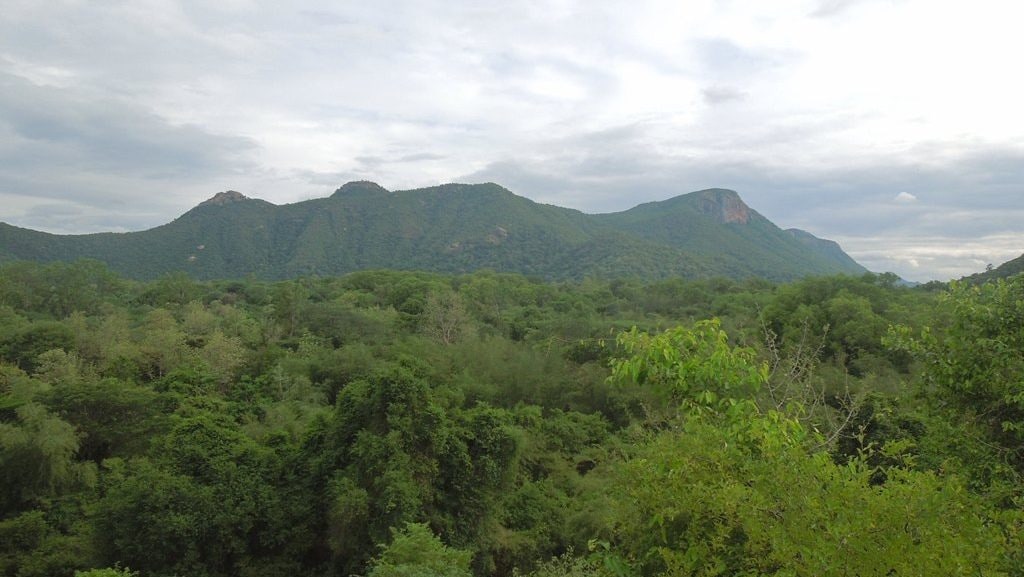 Javadhu Hills. Image: Government of Tamil Nadu[/caption]Every day also taught me how privileged I was. Washing machines, 24*7 electricity, gas stoves, bus facilities, there are so many things we city people take for granted. Most important amongst those – the internet.With a smartphone in almost every Indian hand, the babies and grandmas of today are so much more internet-savvy than some of us. In the city, your work life and social life are heavily affected if you are a self-chosen Luddite. You might end up going to a meeting and missing a lot of contexts that would have been exchanged on a WhatsApp group. Or missed a party invite. “Babe! I’m so sorry I forgot you aren’t on WhatsApp. Get on it, na!” your friend will say.It was in June 2019 that I moved out of Chennai after having spent over a decade in the city. Lucky for me, the technological transition wasn’t too difficult. I had migrated to a basic phone while in the city itself. Now THAT was a huge challenge! When you let go of your smartphone, you unlearn so much.Where once I Uber-ed and Ola-ed around town, now I had the bus routes memorised and was secretly patting my back on my carbon footprint progress. The absence of Swiggy and Zomato meant that I had mastered a bunch of cook-for-one recipes and had become good friends with the neighbourhood idli-vada anna. No more impulse buys on Amazon and Flipkart meant that I had enough saved for mini-vacations every so often. On the bus, I initiated and enjoyed many conversations with co-passengers. As for music, my basic phone supported 32 GB storage and the sound quality was pretty decent.My fingers hurt less. My mind felt fresh. My eyes were relaxed and my heart felt light. Every day, I saw more of the city than I’d ever imagined – a jacaranda tree in full bloom at a signal that I would walk by every afternoon, jasmine carpets in the street behind my house, two brown puppies in the nearby playground, and the playground itself! These daily discoveries would constantly remind me about how dumb these ‘smart’ phones were making us.
 Digital Detox[/caption]As I write this, the hills are turning misty, I can count 11 different bird calls, and a flock of cranes has just lifted off towards the forest.As I write this, I think about the zillion phone calls I have made, the thousands of WhatsApp conversations, the daily Facebook chats, the constant Twitter and Instagram checks, and the habitual Google searches – I think of these various necessities that had once made up my existence.I then look at my phone. No network coverage, it says.I hear a cuckoo call. I put my phone aside, walk out, smile at the cuckoo, and sing to myself, “Oh, What a wonderful world”.The author is a volunteer at the Cuckoo Forest School in Javadhu Hills. Apart from counting stars and making up non sense verse, she enjoys drawing, colouring and singing to her cat.
First Published:Jan 17, 2019, 10:57:00 IST
Advertisement
Advertisement

Why AI notetakers are raising serious privacy and security concerns
AI notetakers promise effortless meeting summaries, but experts warn they could expose confidential conversations, corporate secrets and personal voiceprints. As businesses increasingly adopt AI-powered meeting assistants, questions over data storage, privacy, consent and legal risks are becoming impossible to ignore
5 min read
China's low-cost AI models are changing the global AI race. Here's why Silicon Valley is worried
As Chinese firms continue to improve performance while keeping prices low, the AI race is no longer just about building the smartest model—it is increasingly becoming a battle over who can deliver the best value
2 min read
China's Kimi K3 challenges US AI leaders with frontier-level performance at lower cost
Chinese artificial intelligence startup Moonshot AI has unveiled its latest open-weight AI model, Kimi K3, with early results suggesting it could compete with some of the world's most advanced AI systems developed by leading US companies
2 min read
How did Instagram run ads promoting child abuse in India?
India has issued a notice to Meta after an investigation alleged that Instagram displayed paid advertisements promoting child sexual abuse material. MeitY ordered Meta to remove such Instagram ads and explain within seven days how they were approved
8 min read
Why has India halted WhatsApp’s username feature before launch?
India has halted WhatsApp’s planned username feature, citing concerns about cybercrime, impersonation, and law enforcement challenges. As Meta races to address security concerns, here’s why MeitY has paused the rollout, what the feature does, and how it could influence privacy and online safety in India
3 min read
Advertisement
Advertisement