
Advertisement


Sections
Interstellar Technologies to conduct Japan's first private rocket launch on 29 July
The company will be launching a private rocket named Momo from a launch facility on the Japanese island of Hokkaido.

Interstellar Technologies, a Japanese aerospace company, is all set to launch the country's first ever private rocket. The group began as a bunch of hobbyists in 1997 and five years later, they became a corporation.[caption id="attachment_3862613" align="alignleft" width="380"]![Image Courtesy: istellartech]() Image Courtesy: istellartech[/caption]In the last decade or so Interstellar Technology has been developing rocket engines and boosters. However, on 29 July the company will be launching a private rocket named Momo from a launch facility on the Japanese island of Hokkaido.The user guide of the rocket tells us that the machine stands 8.5 metres tall, has a diameter of 0.5 metres and weighs approximately 900 kg. There are three stages of the rocket. The first stage would be an accelerated flight upwards to nearly 40 km ,which will be taking around 100 seconds. The second phase is the payload separation with inertial flight to an altitude of nearly 120 km, where the payload and rocket separate to fall back to a height of 40 km. The final stage is the deceleration of both the rocket and payload till they are safely in the ocean. This entire process takes approximately 10 minutes.[caption id="attachment_3862739" align="alignnone" width="850"]
Image Courtesy: istellartech[/caption]In the last decade or so Interstellar Technology has been developing rocket engines and boosters. However, on 29 July the company will be launching a private rocket named Momo from a launch facility on the Japanese island of Hokkaido.The user guide of the rocket tells us that the machine stands 8.5 metres tall, has a diameter of 0.5 metres and weighs approximately 900 kg. There are three stages of the rocket. The first stage would be an accelerated flight upwards to nearly 40 km ,which will be taking around 100 seconds. The second phase is the payload separation with inertial flight to an altitude of nearly 120 km, where the payload and rocket separate to fall back to a height of 40 km. The final stage is the deceleration of both the rocket and payload till they are safely in the ocean. This entire process takes approximately 10 minutes.[caption id="attachment_3862739" align="alignnone" width="850"]![Image Courtesy: istellartech]() Image: istellartech[/caption]The Momo can deliver a payload of 10 kg to an altitude of 130 km and 20 kg to 120 Km. It is a liquid-fuel rocket using ethanol as fuel and liquid oxygen as the oxidiser, which provides a much gentler thrust of 12 kN. In comparison, the SpaceX's Falcon rocket generates a thrust of 845 kN.The payload can later be recovered from the ocean. The external cylinders of the fuel tank can be used for advertising as well. The company plans to enter into the orbital flights business by 2020.
Image: istellartech[/caption]The Momo can deliver a payload of 10 kg to an altitude of 130 km and 20 kg to 120 Km. It is a liquid-fuel rocket using ethanol as fuel and liquid oxygen as the oxidiser, which provides a much gentler thrust of 12 kN. In comparison, the SpaceX's Falcon rocket generates a thrust of 845 kN.The payload can later be recovered from the ocean. The external cylinders of the fuel tank can be used for advertising as well. The company plans to enter into the orbital flights business by 2020.
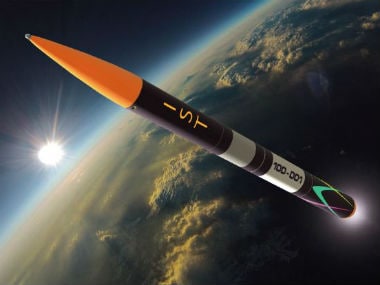 Image Courtesy: istellartech[/caption]In the last decade or so Interstellar Technology has been developing rocket engines and boosters. However, on 29 July the company will be launching a private rocket named Momo from a launch facility on the Japanese island of Hokkaido.The user guide of the rocket tells us that the machine stands 8.5 metres tall, has a diameter of 0.5 metres and weighs approximately 900 kg. There are three stages of the rocket. The first stage would be an accelerated flight upwards to nearly 40 km ,which will be taking around 100 seconds. The second phase is the payload separation with inertial flight to an altitude of nearly 120 km, where the payload and rocket separate to fall back to a height of 40 km. The final stage is the deceleration of both the rocket and payload till they are safely in the ocean. This entire process takes approximately 10 minutes.[caption id="attachment_3862739" align="alignnone" width="850"]
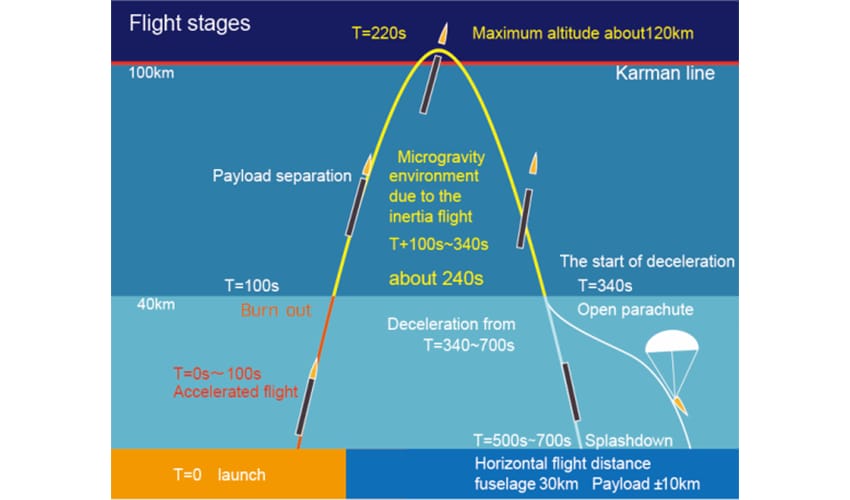 Image: istellartech[/caption]The Momo can deliver a payload of 10 kg to an altitude of 130 km and 20 kg to 120 Km. It is a liquid-fuel rocket using ethanol as fuel and liquid oxygen as the oxidiser, which provides a much gentler thrust of 12 kN. In comparison, the SpaceX's Falcon rocket generates a thrust of 845 kN.The payload can later be recovered from the ocean. The external cylinders of the fuel tank can be used for advertising as well. The company plans to enter into the orbital flights business by 2020.
First Published:Jul 27, 2017, 15:31:00 IST
Advertisement
Advertisement

Why AI notetakers are raising serious privacy and security concerns
AI notetakers promise effortless meeting summaries, but experts warn they could expose confidential conversations, corporate secrets and personal voiceprints. As businesses increasingly adopt AI-powered meeting assistants, questions over data storage, privacy, consent and legal risks are becoming impossible to ignore
5 min read
China's low-cost AI models are changing the global AI race. Here's why Silicon Valley is worried
As Chinese firms continue to improve performance while keeping prices low, the AI race is no longer just about building the smartest model—it is increasingly becoming a battle over who can deliver the best value
2 min read
China's Kimi K3 challenges US AI leaders with frontier-level performance at lower cost
Chinese artificial intelligence startup Moonshot AI has unveiled its latest open-weight AI model, Kimi K3, with early results suggesting it could compete with some of the world's most advanced AI systems developed by leading US companies
2 min read
How did Instagram run ads promoting child abuse in India?
India has issued a notice to Meta after an investigation alleged that Instagram displayed paid advertisements promoting child sexual abuse material. MeitY ordered Meta to remove such Instagram ads and explain within seven days how they were approved
8 min read
Why has India halted WhatsApp’s username feature before launch?
India has halted WhatsApp’s planned username feature, citing concerns about cybercrime, impersonation, and law enforcement challenges. As Meta races to address security concerns, here’s why MeitY has paused the rollout, what the feature does, and how it could influence privacy and online safety in India
3 min read
Advertisement
Advertisement