


Indian scientists discover that cardamonin is effective in preventing and controlling colorectal cancer
Researchers conducted studies on mouse induced with colorectal cancer using drugs as well as human cancer cell lines, and cardamonin was effective.

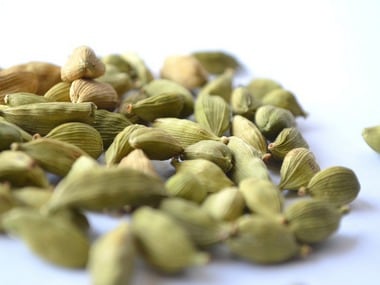
Cardamom seeds. Image Credits PDPics/Pixabay[/caption]Researchers at the Rajiv Gandhi Centre for Biotechnology in Kerala and Manipal University in Karnataka conducted studies on mouse induced with colorectal cancer using drugs as well as human cancer cell lines, and have found cardamonin to be effective.The cardamom chemical was given as a protective agent before the development of cancer as a dietary intervention and also after the animals developed colorectal cancer. In both the situations, it was effective. Researchers then figured out the mechanism of action of this phytochemical and identified its role in altering the MicroRNAs or miRNAs in the cell. miRNAs are short stretches of genetic material (RNA) that do not code for a protein but have regulatory functions.“Cardamonin modulates certain micro RNAs that collectively regulate the reactive oxygen production,” explained Dr Kuzhuvelil B. Harikumar, who led the research. Reactive oxygen when produced lead to cell death. Cardamonin increases their production which results in the death of unwanted cancer cells.“Along with further identifying the critical micro RNAs which regulate reactive oxygen-dependent genes, we are also interested in checking the synergy between the cardamonin and FDA approved chemotherapeutic drugs for a possible combination therapy. Exploring certain chemically synthesized analogues of cardamonin with increased cytotoxicity is one of our prime focuses,” Dr Harikumar told India Science Wire.Colorectal cancer is cancer of the colon or the rectum, and is currently the third most common cause of cancer in men and second most in women. Dietary and lifestyle habits are to be blamed for it.The research team included Shirley James, Jayasekharan S. Aparna, Aswathy Mary Paul, Manendra Babu Lankadasari, Sabira Mohammed, Valsalakumari S. Binu, Thankayyan R. Santhoshkumar, Girijadevi Reshmi and Kuzhuvelil B. Harikumar. The findings have been published in journal Scientific Reports.India Science Wire

Why AI notetakers are raising serious privacy and security concerns
China's low-cost AI models are changing the global AI race. Here's why Silicon Valley is worried
China's Kimi K3 challenges US AI leaders with frontier-level performance at lower cost
How did Instagram run ads promoting child abuse in India?
Why has India halted WhatsApp’s username feature before launch?