
Advertisement


Sections
Hands on with the HP Envy x2 and Asus NovaGo: The world’s first always-connected PCs
Qualcomm’s always-connected PC platform is in a nascent stage, but if the devices we saw today are anything to go by, the future is certainly promising.

PCs have been dying for years now. A lack of innovation, increasingly powerful mobile devices and cloud computing have been slowly but surely killing off what little value the PC has left.The latest innovation in this space, one that we feel has the potential to transform the PC as we know it comes not from PC king Intel, but from mobile giant Qualcomm. Perhaps it’s only fitting that Qualcomm is leading the charge now.Qualcomm’s always-connected PC platform, built in partnership with Microsoft, is in a nascent stage, but if the devices we saw today are anything to go by, the future is certainly promising.Features and specificationsAt the event, we saw the launch of two devices, the HP Envy x2 and the Asus NovaGo. Both devices are powered by Qualcomm’s Snapdragon 835 platform and come in variants offering up to 8 GB RAM and 256 GB of storage. Both promise 20+ hours of battery life while playing back video and boast of weeks of standby time.[caption id="attachment_4244511" align="alignnone" width="1024"]![At a mere 6.9 mm, the HP ENVY x2 is even slimmer than an iPhone 8.]() At a mere 6.9 mm, the HP ENVY x2 is even slimmer than an iPhone 8.[/caption]They’re both loaded with Windows 10 S, including full support for Windows Ink and related apps. Both devices ship with pens for sketching.The Envy offers a 12.3-inch screen to the NovaGo’s 13.3 inch one. Both offer a WUXGA+ resolution of 1920x1280.Build and DesignThe Envy x2 and NovaGo differ in form factor. The x2 is a tablet with a detachable keyboard and a pen, much like Microsoft’s Surface Pro lineup, while the NovaGo goes for a more traditional, 2-in-1 laptop design with a 360-degree hinge.[caption id="attachment_4244379" align="alignnone" width="1280"]
At a mere 6.9 mm, the HP ENVY x2 is even slimmer than an iPhone 8.[/caption]They’re both loaded with Windows 10 S, including full support for Windows Ink and related apps. Both devices ship with pens for sketching.The Envy offers a 12.3-inch screen to the NovaGo’s 13.3 inch one. Both offer a WUXGA+ resolution of 1920x1280.Build and DesignThe Envy x2 and NovaGo differ in form factor. The x2 is a tablet with a detachable keyboard and a pen, much like Microsoft’s Surface Pro lineup, while the NovaGo goes for a more traditional, 2-in-1 laptop design with a 360-degree hinge.[caption id="attachment_4244379" align="alignnone" width="1280"]![The NovaGo is a $599 device featuring a 360-degree hinge. Image: tech2/Anirudh Regidi]() The NovaGo is a $599 device featuring a 360-degree hinge. Image: tech2/Anirudh Regidi[/caption]The NovaGo offers more ports, featuring 2x USB ports on one side and a full-sized HDMI port and microSD card slot on the other. The x2, like Apple’s 12-inch MacBook, only has 1x USB-C port. Unlike Apple’s MacBook, the x2 will be bundled with a USB-C adapter that will expand functionality.From our initial impressions, the HP device felt premium and the NovaGo more like a solid workhorse. The NovaGo was also the heavier of the two, weighing in at 1.3 kg. The x2 weighs a mere 700 g.[caption id="attachment_4244489" align="alignnone" width="1280"]
The NovaGo is a $599 device featuring a 360-degree hinge. Image: tech2/Anirudh Regidi[/caption]The NovaGo offers more ports, featuring 2x USB ports on one side and a full-sized HDMI port and microSD card slot on the other. The x2, like Apple’s 12-inch MacBook, only has 1x USB-C port. Unlike Apple’s MacBook, the x2 will be bundled with a USB-C adapter that will expand functionality.From our initial impressions, the HP device felt premium and the NovaGo more like a solid workhorse. The NovaGo was also the heavier of the two, weighing in at 1.3 kg. The x2 weighs a mere 700 g.[caption id="attachment_4244489" align="alignnone" width="1280"]![The NovaGo looks and feels like an ultrabook. Image: tech2/Anirudh Regidi]() The NovaGo looks and feels like an ultrabook. Image: tech2/Anirudh Regidi[/caption]We’ve nothing against either device in terms of build or design. The choice will entirely depend on your use-case.PerformanceWe only got to spend a few minutes with the devices, but we can tell you right now that performance was quite impressive.Basic Windows functions were quick to respond and apps also loaded quickly. Pen response was very good and we noticed no lag when sketching in an app like Paint3D.[caption id="attachment_4244493" align="alignnone" width="1280"]
The NovaGo looks and feels like an ultrabook. Image: tech2/Anirudh Regidi[/caption]We’ve nothing against either device in terms of build or design. The choice will entirely depend on your use-case.PerformanceWe only got to spend a few minutes with the devices, but we can tell you right now that performance was quite impressive.Basic Windows functions were quick to respond and apps also loaded quickly. Pen response was very good and we noticed no lag when sketching in an app like Paint3D.[caption id="attachment_4244493" align="alignnone" width="1280"]![Both devices fully support Windows Ink. Image: tech2/Anirudh Regidi]() Both devices fully support Windows Ink. Image: tech2/Anirudh Regidi[/caption]Even more impressive was a Powerpoint demo we experienced, where we could easily manipulate and animate a 3D object within a presentation.The experience wasn’t perfect and there was a bit of lag now and then, but it wasn’t as bad as we thought it would be.We couldn’t try out heavier tasks on the device, so we can’t tell you for sure if it can handle 50 Chrome tabs or any kind of video editing. More on that in our full review.[caption id="attachment_4244505" align="alignnone" width="1280"]
Both devices fully support Windows Ink. Image: tech2/Anirudh Regidi[/caption]Even more impressive was a Powerpoint demo we experienced, where we could easily manipulate and animate a 3D object within a presentation.The experience wasn’t perfect and there was a bit of lag now and then, but it wasn’t as bad as we thought it would be.We couldn’t try out heavier tasks on the device, so we can’t tell you for sure if it can handle 50 Chrome tabs or any kind of video editing. More on that in our full review.[caption id="attachment_4244505" align="alignnone" width="1280"]![The single USB-C port on the HP might be a problem, but at least you get a bundled dongle.]() The single USB-C port on the HP might be a problem, but at least you get a bundled dongle.[/caption]Both devices offer 20+ hours of battery life, but nobody could confirm whether the devices supported Qualcomm’s Quick Charge standards.Pricing and availabilityThe devices will be available in ‘Spring 2018’, which translates to some time around March next year.Pricing is only available for the Asus NovaGo, which will be available in two variants. A 4 GB RAM / 64 GB storage variant will go for $599 while an 8 GB RAM / 256 GB internal storage variant will be available for $799.We’re likely to learn more about the pricing structure of the HP Envy x2 around CES next year, where Lenovo is also expected to debut their take on the always-connected PC.Disclaimer: The correspondent was invited by Qualcomm India for the Snapdragon Summit at Hawaii, USA. All travel and accommodation expenses were taken care of by Qualcomm.
The single USB-C port on the HP might be a problem, but at least you get a bundled dongle.[/caption]Both devices offer 20+ hours of battery life, but nobody could confirm whether the devices supported Qualcomm’s Quick Charge standards.Pricing and availabilityThe devices will be available in ‘Spring 2018’, which translates to some time around March next year.Pricing is only available for the Asus NovaGo, which will be available in two variants. A 4 GB RAM / 64 GB storage variant will go for $599 while an 8 GB RAM / 256 GB internal storage variant will be available for $799.We’re likely to learn more about the pricing structure of the HP Envy x2 around CES next year, where Lenovo is also expected to debut their take on the always-connected PC.Disclaimer: The correspondent was invited by Qualcomm India for the Snapdragon Summit at Hawaii, USA. All travel and accommodation expenses were taken care of by Qualcomm.
 At a mere 6.9 mm, the HP ENVY x2 is even slimmer than an iPhone 8.[/caption]They’re both loaded with Windows 10 S, including full support for Windows Ink and related apps. Both devices ship with pens for sketching.The Envy offers a 12.3-inch screen to the NovaGo’s 13.3 inch one. Both offer a WUXGA+ resolution of 1920x1280.Build and DesignThe Envy x2 and NovaGo differ in form factor. The x2 is a tablet with a detachable keyboard and a pen, much like Microsoft’s Surface Pro lineup, while the NovaGo goes for a more traditional, 2-in-1 laptop design with a 360-degree hinge.[caption id="attachment_4244379" align="alignnone" width="1280"]
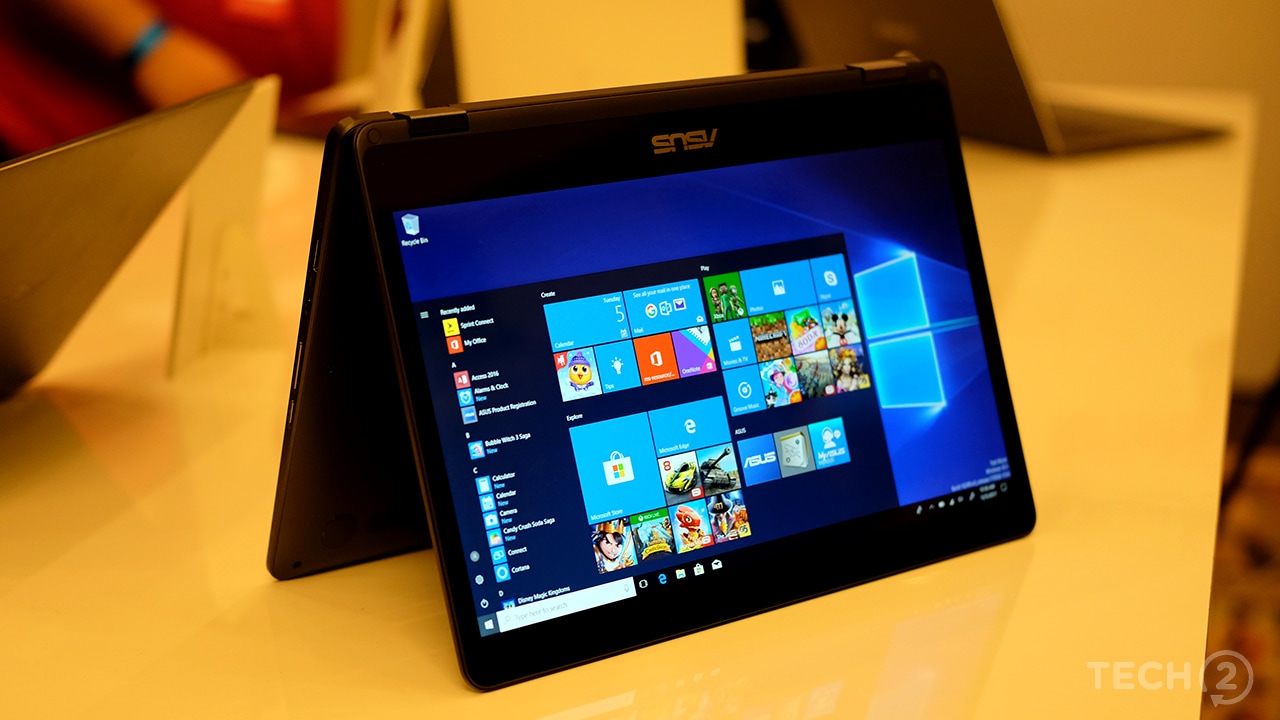 The NovaGo is a $599 device featuring a 360-degree hinge. Image: tech2/Anirudh Regidi[/caption]The NovaGo offers more ports, featuring 2x USB ports on one side and a full-sized HDMI port and microSD card slot on the other. The x2, like Apple’s 12-inch MacBook, only has 1x USB-C port. Unlike Apple’s MacBook, the x2 will be bundled with a USB-C adapter that will expand functionality.From our initial impressions, the HP device felt premium and the NovaGo more like a solid workhorse. The NovaGo was also the heavier of the two, weighing in at 1.3 kg. The x2 weighs a mere 700 g.[caption id="attachment_4244489" align="alignnone" width="1280"]
 The NovaGo looks and feels like an ultrabook. Image: tech2/Anirudh Regidi[/caption]We’ve nothing against either device in terms of build or design. The choice will entirely depend on your use-case.PerformanceWe only got to spend a few minutes with the devices, but we can tell you right now that performance was quite impressive.Basic Windows functions were quick to respond and apps also loaded quickly. Pen response was very good and we noticed no lag when sketching in an app like Paint3D.[caption id="attachment_4244493" align="alignnone" width="1280"]
 Both devices fully support Windows Ink. Image: tech2/Anirudh Regidi[/caption]Even more impressive was a Powerpoint demo we experienced, where we could easily manipulate and animate a 3D object within a presentation.The experience wasn’t perfect and there was a bit of lag now and then, but it wasn’t as bad as we thought it would be.We couldn’t try out heavier tasks on the device, so we can’t tell you for sure if it can handle 50 Chrome tabs or any kind of video editing. More on that in our full review.[caption id="attachment_4244505" align="alignnone" width="1280"]
 The single USB-C port on the HP might be a problem, but at least you get a bundled dongle.[/caption]Both devices offer 20+ hours of battery life, but nobody could confirm whether the devices supported Qualcomm’s Quick Charge standards.Pricing and availabilityThe devices will be available in ‘Spring 2018’, which translates to some time around March next year.Pricing is only available for the Asus NovaGo, which will be available in two variants. A 4 GB RAM / 64 GB storage variant will go for $599 while an 8 GB RAM / 256 GB internal storage variant will be available for $799.We’re likely to learn more about the pricing structure of the HP Envy x2 around CES next year, where Lenovo is also expected to debut their take on the always-connected PC.Disclaimer: The correspondent was invited by Qualcomm India for the Snapdragon Summit at Hawaii, USA. All travel and accommodation expenses were taken care of by Qualcomm.
First Published:Dec 06, 2017, 16:25:47 IST
Advertisement
Advertisement

Why AI notetakers are raising serious privacy and security concerns
AI notetakers promise effortless meeting summaries, but experts warn they could expose confidential conversations, corporate secrets and personal voiceprints. As businesses increasingly adopt AI-powered meeting assistants, questions over data storage, privacy, consent and legal risks are becoming impossible to ignore
5 min read
China's low-cost AI models are changing the global AI race. Here's why Silicon Valley is worried
As Chinese firms continue to improve performance while keeping prices low, the AI race is no longer just about building the smartest model—it is increasingly becoming a battle over who can deliver the best value
2 min read
China's Kimi K3 challenges US AI leaders with frontier-level performance at lower cost
Chinese artificial intelligence startup Moonshot AI has unveiled its latest open-weight AI model, Kimi K3, with early results suggesting it could compete with some of the world's most advanced AI systems developed by leading US companies
2 min read
How did Instagram run ads promoting child abuse in India?
India has issued a notice to Meta after an investigation alleged that Instagram displayed paid advertisements promoting child sexual abuse material. MeitY ordered Meta to remove such Instagram ads and explain within seven days how they were approved
8 min read
Why has India halted WhatsApp’s username feature before launch?
India has halted WhatsApp’s planned username feature, citing concerns about cybercrime, impersonation, and law enforcement challenges. As Meta races to address security concerns, here’s why MeitY has paused the rollout, what the feature does, and how it could influence privacy and online safety in India
3 min read
Advertisement
Advertisement