
Advertisement


Sections
Google Pixel 4 will not come to India and Twitter is not taking this news well
Pixel 4 features a soli chip that uses a 60 GHz frequency band and it's not allowed for public use in India.

Google launched several products yesterday (15 October) that included Pixel 4, Pixel 4 XL, Pixel buds, Nest Wi-Fi router and PixelBook Go. The highlight of the event were, of course, the smartphones — Pixel 4 and Pixel 4 XL — which are the first to use soli radar chips. This chip will not only make the face unlock process faster but will also let you perform tasks on the phone by hand gestures — play music, games and so on.But the sad thing is that Soli chip is the very reason that the Pixel 4 won't be launching in India, Google confirmed the same. The reason is that the chip uses a 60 GHz frequency band that isn't allowed for public or commercial use in India.[caption id="attachment_7504141" align="alignnone" width="1024"]![Google Touts Privacy Options, but Still Depends on Your Data Image: YouTube/Mde by Google.]()
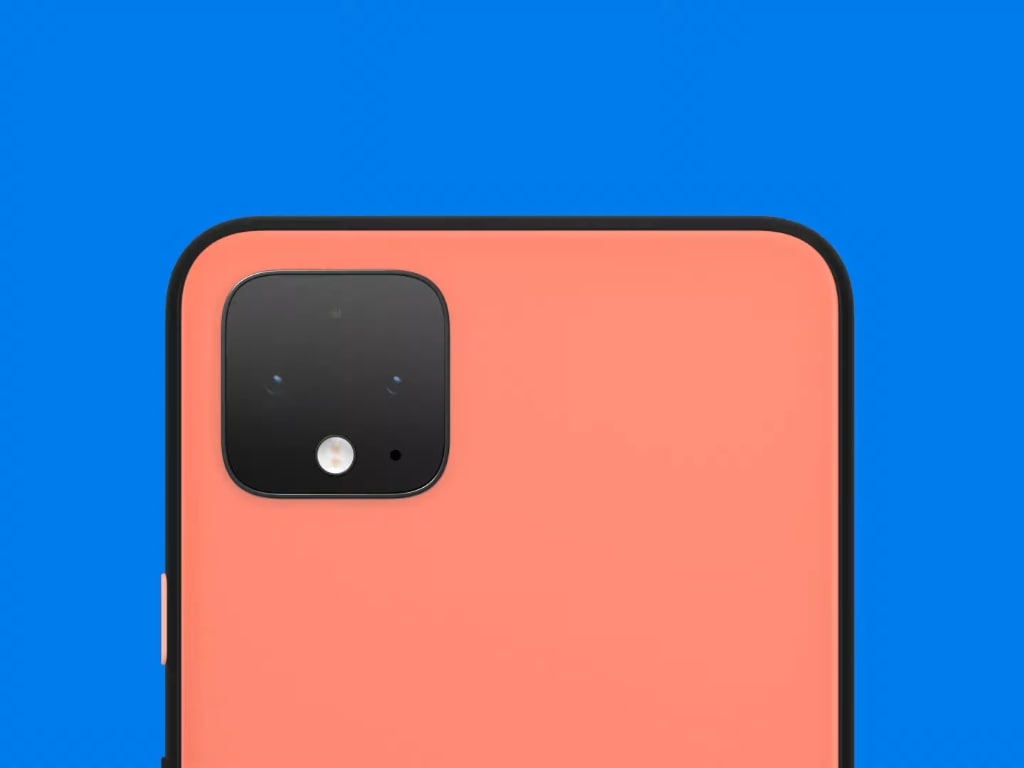
Pixel 4 features a soli chip that uses a 60 GHz frequency band and it's not allowed for public use in India. Image: YouTube/Mde by Google.[/caption]As usual, people turned to Twitter to vent out their feelings about the Pixel 4, and the tweets make it clear that people aren't too happy about it.
We have also reached out to telecos in India to know more about this matter and what it means for Google in the Indian markets. We will keep you updated!Also read:Nest Wi-Fi router with Google Assistant also works as a smart speakerGoogle won't be releasing the Pixel 4 and 4 XL in India due to onboard Soli chipGoogle launches the second-gen Pixel Buds with a re-engineered design for $179Pixel 4 XL vs Galaxy Note 10 Plus vs iPhone 11 Pro Max vs OnePlus 7T Pro: Can Google up the flagship game?Google launches the Pixel 4 and Pixel 4 XL at a starting price of $799Google announces the Pixelbook Go laptop powered by Chrome OS at $649First Published:Oct 16, 2019, 10:37:52 IST
Advertisement
Advertisement

Why AI notetakers are raising serious privacy and security concerns
AI notetakers promise effortless meeting summaries, but experts warn they could expose confidential conversations, corporate secrets and personal voiceprints. As businesses increasingly adopt AI-powered meeting assistants, questions over data storage, privacy, consent and legal risks are becoming impossible to ignore
5 min read
China's low-cost AI models are changing the global AI race. Here's why Silicon Valley is worried
As Chinese firms continue to improve performance while keeping prices low, the AI race is no longer just about building the smartest model—it is increasingly becoming a battle over who can deliver the best value
2 min read
China's Kimi K3 challenges US AI leaders with frontier-level performance at lower cost
Chinese artificial intelligence startup Moonshot AI has unveiled its latest open-weight AI model, Kimi K3, with early results suggesting it could compete with some of the world's most advanced AI systems developed by leading US companies
2 min read
How did Instagram run ads promoting child abuse in India?
India has issued a notice to Meta after an investigation alleged that Instagram displayed paid advertisements promoting child sexual abuse material. MeitY ordered Meta to remove such Instagram ads and explain within seven days how they were approved
8 min read
Why has India halted WhatsApp’s username feature before launch?
India has halted WhatsApp’s planned username feature, citing concerns about cybercrime, impersonation, and law enforcement challenges. As Meta races to address security concerns, here’s why MeitY has paused the rollout, what the feature does, and how it could influence privacy and online safety in India
3 min read
Advertisement
Advertisement