
Advertisement


Sections
Google Chrome will be updated to include a native ad-blocker from 15 February; here's how it works
Google will evaluate, inform and then allow websites to fix the problems before blocking the ads. The evaluation will result in either a pass, warning or failing.

Google will finally roll out a built-in ad-blocking feature as part of its Chrome browser.[caption id="attachment_4269773" align="alignleft" width="380"]![Image: Google]() Image: Google[/caption]This comes months after the company initially announced plans to bake ad-blocking capabilities inside the browser to combat the menace of unoptimised ads that has taken over the internet. Google plans to remove annoying ads from the internet while pushing website owners to improve the way they implement advertisement on their websites.According to a detailed blog post on the Chromium Blog, the company maintained that it is not planning to block all advertisements from web pages. Instead, it will only target bad ads as per standards set by the ‘Coalition for Better Ads.’ Examples of bad ads include full-page ads, flashy ads, and ads that will start auto-playing videos and music in the background. According to the post, the company will block pop-up, ads, auto-playing ads, large sticky ads and prestitial ads that come with a countdown before allowing you to access content on a website as well.One thing to note about this blocking is that it is more aggressive when it comes to mobile websites, blocking pop-up ads, prestitial ads, auto-playing ads, poststitial ads with a countdown, any ad that takes more than 30 percent density on the page, flashing animated ads, large sticky ads and full-screen scroll over ads.[caption id="attachment_4351501" align="alignnone" width="960"]
Image: Google[/caption]This comes months after the company initially announced plans to bake ad-blocking capabilities inside the browser to combat the menace of unoptimised ads that has taken over the internet. Google plans to remove annoying ads from the internet while pushing website owners to improve the way they implement advertisement on their websites.According to a detailed blog post on the Chromium Blog, the company maintained that it is not planning to block all advertisements from web pages. Instead, it will only target bad ads as per standards set by the ‘Coalition for Better Ads.’ Examples of bad ads include full-page ads, flashy ads, and ads that will start auto-playing videos and music in the background. According to the post, the company will block pop-up, ads, auto-playing ads, large sticky ads and prestitial ads that come with a countdown before allowing you to access content on a website as well.One thing to note about this blocking is that it is more aggressive when it comes to mobile websites, blocking pop-up ads, prestitial ads, auto-playing ads, poststitial ads with a countdown, any ad that takes more than 30 percent density on the page, flashing animated ads, large sticky ads and full-screen scroll over ads.[caption id="attachment_4351501" align="alignnone" width="960"]![Image: Google]() Image: Google[/caption]For the uninitiated prestitial ads refer to ads that come before content loads on a website. Poststitial ads appear after the user takes some action, such as trying to navigate to some other page, and before the navigation, an ad appears on the page.Google will evaluate, inform and then allow websites to fix the problems before blocking advertisements. The evaluation will happen on Better Ads standards with the result either being a pass, a warning or failing. Google will also point out the ad design problems of a website, if any, in addition to the type of ads on the website. If a website fails and has a number of violations as per the Better Ads standards, then Google will notify the website owner and then automatically start blocking the website after 30 days.Lastly, Google will filter the ads at a network-level after checking it against EasyList filter. The post pointed out that about 42 percent of the websites that were failing at standards had already resolved their issues.
Image: Google[/caption]For the uninitiated prestitial ads refer to ads that come before content loads on a website. Poststitial ads appear after the user takes some action, such as trying to navigate to some other page, and before the navigation, an ad appears on the page.Google will evaluate, inform and then allow websites to fix the problems before blocking advertisements. The evaluation will happen on Better Ads standards with the result either being a pass, a warning or failing. Google will also point out the ad design problems of a website, if any, in addition to the type of ads on the website. If a website fails and has a number of violations as per the Better Ads standards, then Google will notify the website owner and then automatically start blocking the website after 30 days.Lastly, Google will filter the ads at a network-level after checking it against EasyList filter. The post pointed out that about 42 percent of the websites that were failing at standards had already resolved their issues.
 Image: Google[/caption]This comes months after the company initially announced plans to bake ad-blocking capabilities inside the browser to combat the menace of unoptimised ads that has taken over the internet. Google plans to remove annoying ads from the internet while pushing website owners to improve the way they implement advertisement on their websites.According to a detailed blog post on the Chromium Blog, the company maintained that it is not planning to block all advertisements from web pages. Instead, it will only target bad ads as per standards set by the ‘Coalition for Better Ads.’ Examples of bad ads include full-page ads, flashy ads, and ads that will start auto-playing videos and music in the background. According to the post, the company will block pop-up, ads, auto-playing ads, large sticky ads and prestitial ads that come with a countdown before allowing you to access content on a website as well.One thing to note about this blocking is that it is more aggressive when it comes to mobile websites, blocking pop-up ads, prestitial ads, auto-playing ads, poststitial ads with a countdown, any ad that takes more than 30 percent density on the page, flashing animated ads, large sticky ads and full-screen scroll over ads.[caption id="attachment_4351501" align="alignnone" width="960"]
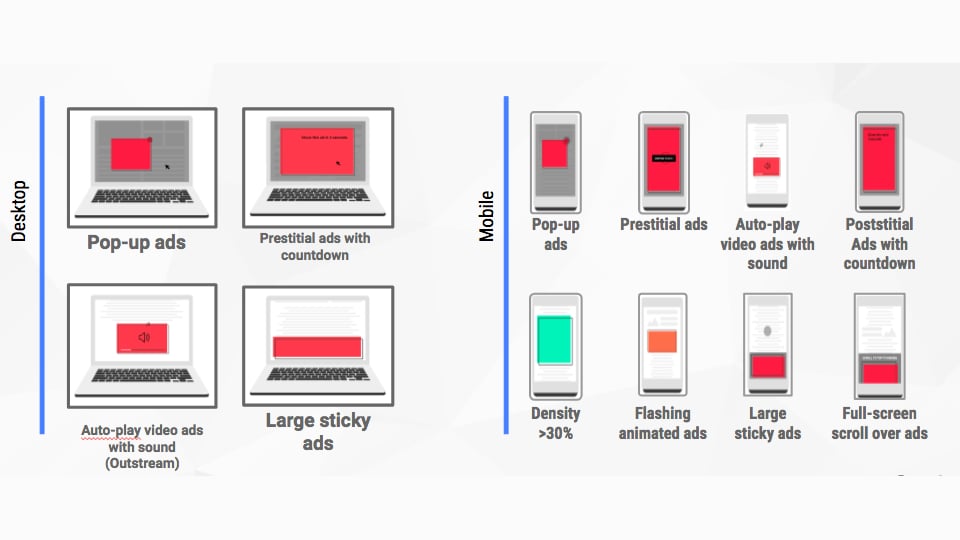 Image: Google[/caption]For the uninitiated prestitial ads refer to ads that come before content loads on a website. Poststitial ads appear after the user takes some action, such as trying to navigate to some other page, and before the navigation, an ad appears on the page.
First Published:Feb 14, 2018, 20:49:15 IST
Advertisement
Advertisement

Why AI notetakers are raising serious privacy and security concerns
AI notetakers promise effortless meeting summaries, but experts warn they could expose confidential conversations, corporate secrets and personal voiceprints. As businesses increasingly adopt AI-powered meeting assistants, questions over data storage, privacy, consent and legal risks are becoming impossible to ignore
5 min read
China's low-cost AI models are changing the global AI race. Here's why Silicon Valley is worried
As Chinese firms continue to improve performance while keeping prices low, the AI race is no longer just about building the smartest model—it is increasingly becoming a battle over who can deliver the best value
2 min read
China's Kimi K3 challenges US AI leaders with frontier-level performance at lower cost
Chinese artificial intelligence startup Moonshot AI has unveiled its latest open-weight AI model, Kimi K3, with early results suggesting it could compete with some of the world's most advanced AI systems developed by leading US companies
2 min read
How did Instagram run ads promoting child abuse in India?
India has issued a notice to Meta after an investigation alleged that Instagram displayed paid advertisements promoting child sexual abuse material. MeitY ordered Meta to remove such Instagram ads and explain within seven days how they were approved
8 min read
Why has India halted WhatsApp’s username feature before launch?
India has halted WhatsApp’s planned username feature, citing concerns about cybercrime, impersonation, and law enforcement challenges. As Meta races to address security concerns, here’s why MeitY has paused the rollout, what the feature does, and how it could influence privacy and online safety in India
3 min read
Advertisement
Advertisement