
Advertisement


Sections
Foldable smartphones explained: Huawei's Mate X vs Samsung Galaxy Fold
There are two types of folding smartphones, but Android smartphone brands love to experiment.

Smartphones with folding displays or ‘foldables’ are a new category of mobile devices that promise to merge the best parts of a smartphone and tablet into one device. And at this year’s Mobile World Congress, there are plenty of announcements from different smartphone brands populating this nascent category.While the Royole FlexPai was the first device to go on sale with a foldable display and was showcased recently at CES 2019, it is far less polished in comparison to Samsung’s recently unveiled Galaxy Fold or Huawei’s just announced Mate X foldable. We also expected Xiaomi to showcase a 5G capable foldable device, but except for the Mi Mix 3 5G there was nothing new and interesting showcased at its launch event.[caption id="attachment_6147671" align="alignnone" width="1024"]![The Huawei Mate X. Image: Reuters]() The Huawei Mate X. Image: Reuters[/caption]What is a foldable?Google’s Android developer blog first referred to these devices with foldable displays as “foldables”. Simply put, these are devices that will let you run apps in two configurations (smartphone or tablets) and switch between them seamlessly using ‘screen continuity’.When a user opens up a folded display, optimised apps switch from a portrait mobile layout to a tablet-friendly landscape layout either on the same display (if it folds out) or from a vertical display on the outside to a horizontal one on the inside of the foldable.From what we have seen so far, there are three categories of folding devices.Outward Fold[caption id="attachment_6149871" align="alignnone" width="1280"]
The Huawei Mate X. Image: Reuters[/caption]What is a foldable?Google’s Android developer blog first referred to these devices with foldable displays as “foldables”. Simply put, these are devices that will let you run apps in two configurations (smartphone or tablets) and switch between them seamlessly using ‘screen continuity’.When a user opens up a folded display, optimised apps switch from a portrait mobile layout to a tablet-friendly landscape layout either on the same display (if it folds out) or from a vertical display on the outside to a horizontal one on the inside of the foldable.From what we have seen so far, there are three categories of folding devices.Outward Fold[caption id="attachment_6149871" align="alignnone" width="1280"]![The Royole FlexPai foldable features an outward folding single display. Image: Royole]() The Royole FlexPai foldable features an outward folding single display. Image: Royole[/caption]Until now, China-based Royole unveiled its FlexPai, which is an outward folding device where the display has to be folded out to showcase a tablet-like interface with scaled up apps that display more information or data. Huawei’s Mate X takes a similar approach with an outward fold as well. The advantage of an outward folding display is that they can fold out flat when viewed in a tablet layout. The display also, in theory, is less prone to creases as it rests on the folding mechanism.
The Royole FlexPai foldable features an outward folding single display. Image: Royole[/caption]Until now, China-based Royole unveiled its FlexPai, which is an outward folding device where the display has to be folded out to showcase a tablet-like interface with scaled up apps that display more information or data. Huawei’s Mate X takes a similar approach with an outward fold as well. The advantage of an outward folding display is that they can fold out flat when viewed in a tablet layout. The display also, in theory, is less prone to creases as it rests on the folding mechanism.![The Samsung Galaxy Fold. Image: Samsung]() The Samsung Galaxy Fold. Image: Samsung[/caption]The Galaxy Fold opens up like a book. While it may seem simple, the mechanism to support an inward folding display will be complicated as it has to protect the display by maintaining the central curve. It also needs the strength to protect the display when someone, say, accidentally sits on the phone. This is because the display can't fold beyond a certain point.This also results in a thicker smartphone design, but the design does protect the display from scratches.Twin foldXiaomi recently teased a prototype device that has two folds, resulting in a left, right and central portion. Teased by company Co-Founder Lin Bin, the blurry video showcases a unique-looking device that has a fold on either side of the main viewing area. Both sides fold out to form a tablet-like display widening the viewing area. The device then can be folded back into a compact smartphone-like form factor and placed into a pocket.Since Xiaomi has not made its folding device official just yet, and Oppo only showcased a prototype, let’s take a look at what the new production-ready foldables from Huawei and Samsung have on offer and how they compare.It’s wise to note that this is not a comparison to judge performance but just to give our readers an idea about what’s different between the two unreleased devices that were launched around MWC 2019.
The Samsung Galaxy Fold. Image: Samsung[/caption]The Galaxy Fold opens up like a book. While it may seem simple, the mechanism to support an inward folding display will be complicated as it has to protect the display by maintaining the central curve. It also needs the strength to protect the display when someone, say, accidentally sits on the phone. This is because the display can't fold beyond a certain point.This also results in a thicker smartphone design, but the design does protect the display from scratches.Twin foldXiaomi recently teased a prototype device that has two folds, resulting in a left, right and central portion. Teased by company Co-Founder Lin Bin, the blurry video showcases a unique-looking device that has a fold on either side of the main viewing area. Both sides fold out to form a tablet-like display widening the viewing area. The device then can be folded back into a compact smartphone-like form factor and placed into a pocket.Since Xiaomi has not made its folding device official just yet, and Oppo only showcased a prototype, let’s take a look at what the new production-ready foldables from Huawei and Samsung have on offer and how they compare.It’s wise to note that this is not a comparison to judge performance but just to give our readers an idea about what’s different between the two unreleased devices that were launched around MWC 2019.
As we can see from the table above, Huawei has the practical (almost bezel-less) folding display that not only folds flat in a larger 8-inch table-like display but also does not have an interfering notch as the Galaxy Fold does.Going purely by the specifications on paper, the Mate X also features a higher sensor pixel count in comparison to the Samsung Galaxy Fold and the same goes for the battery.Samsung’s inward folding display is a more rugged design, though both devices haven’t advertised an IP rating yet. So if you were looking to buy one of these and jump in a pool, you are better off with the recently launched Galaxy S10 or the Mate 20 Pro instead.One detail to note about the launch was that Samsung did showcase the UI of the device, which according to them was developed with the Android developer community. At the same time, out of the two devices, Samsung has barely given out any details about the Fold’s size and weight, even though it looks compact in comparison to the Mate X’s larger footprint. The Mate X does weigh at a little above a quarter of a kilo (298 grams).What remains to be seen is how apps will react and how well third-party apps will transition from a smartphone layout/configuration to a tablet interface. What also remains to be seen, as mentioned in my article about the Galaxy Fold, is how soon developers will jump to support these apps, a fragmentation issue that has plagued the Android platform for long.Everyone’s waited years to see something new come from the smartphone industry and make these mobile computing devices interesting and fun after the iPhone inspired all smartphone-makers to ditch their creativity and courage.And after all the camera popping action, foldables sure sound interesting even if they cost upwards of $1,500. While many of us will not be able to afford these ultra-premium devices, those who have been waiting for an iPhone XS Max equivalent (budget-wise), will now finally have a choice.
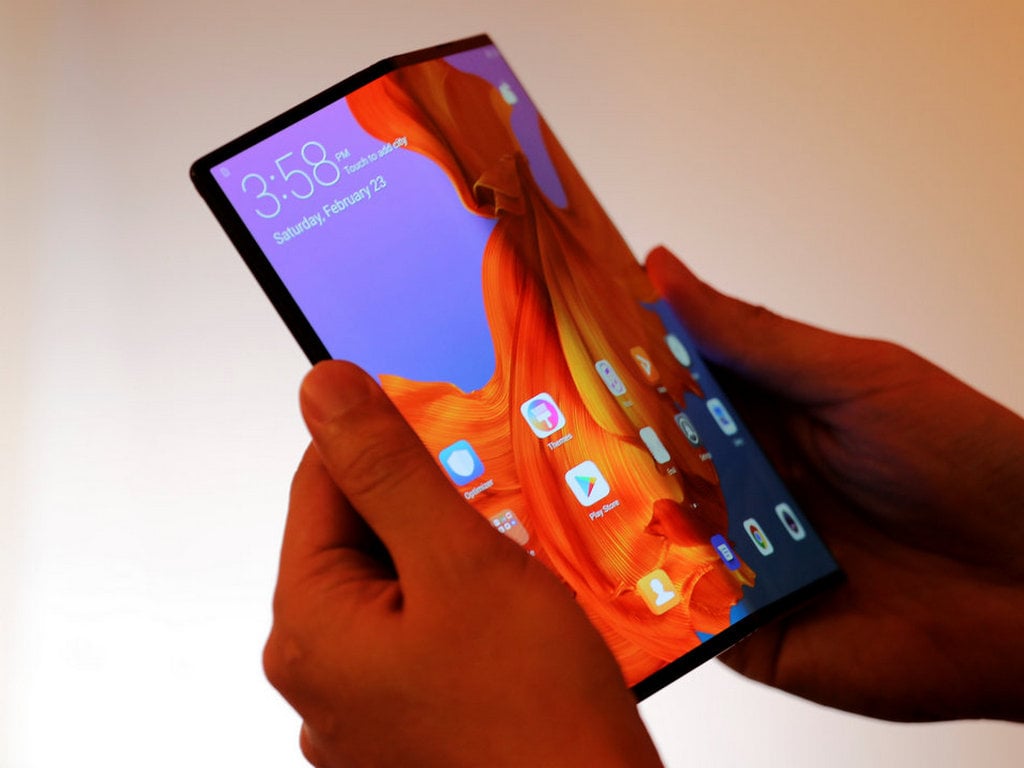 The Huawei Mate X. Image: Reuters[/caption]What is a foldable?Google’s Android developer blog first referred to these devices with foldable displays as “foldables”. Simply put, these are devices that will let you run apps in two configurations (smartphone or tablets) and switch between them seamlessly using ‘screen continuity’.When a user opens up a folded display, optimised apps switch from a portrait mobile layout to a tablet-friendly landscape layout either on the same display (if it folds out) or from a vertical display on the outside to a horizontal one on the inside of the foldable.From what we have seen so far, there are three categories of folding devices.Outward Fold[caption id="attachment_6149871" align="alignnone" width="1280"]
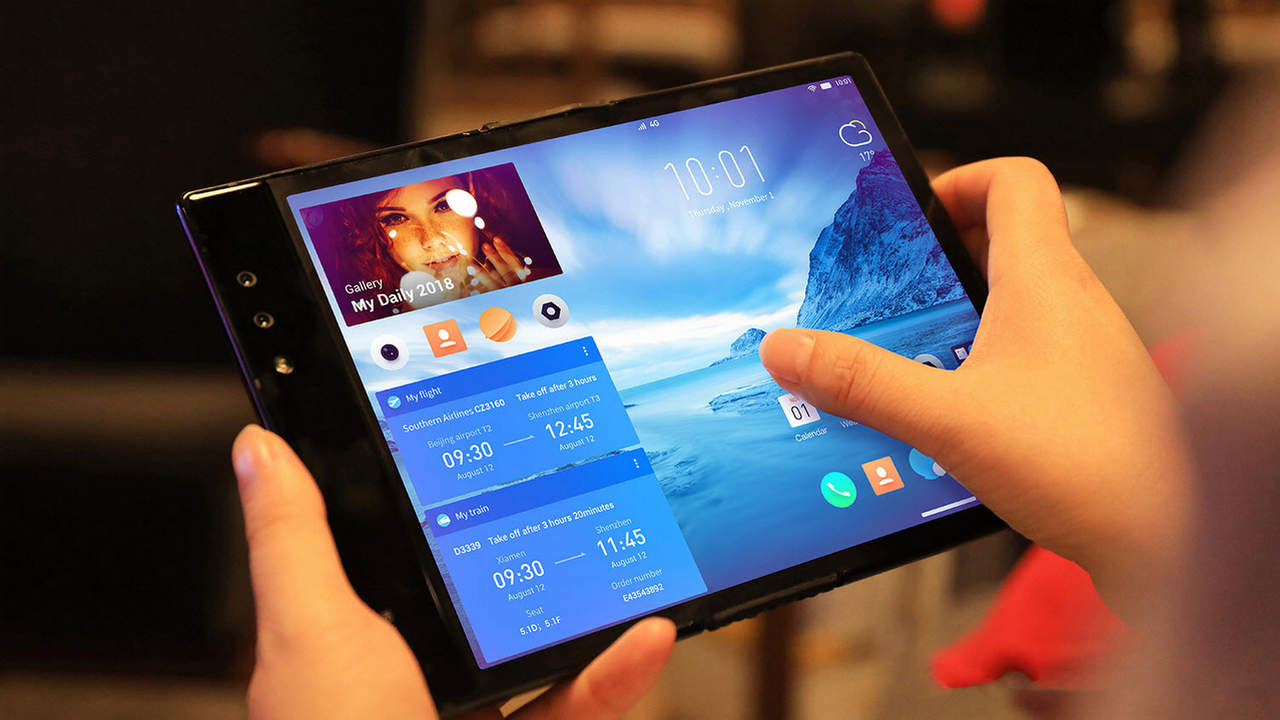 The Royole FlexPai foldable features an outward folding single display. Image: Royole[/caption]Until now, China-based Royole unveiled its FlexPai, which is an outward folding device where the display has to be folded out to showcase a tablet-like interface with scaled up apps that display more information or data. Huawei’s Mate X takes a similar approach with an outward fold as well. The advantage of an outward folding display is that they can fold out flat when viewed in a tablet layout. The display also, in theory, is less prone to creases as it rests on the folding mechanism.
The downside of this folding mechanism is that it always leaves the rear-facing side of the fold (when closed) exposed to scratches, because you will have to keep that phone down on a table or a bench, and that surface may not necessarily be smooth. Another issue that you must think about is how you'd mount a case on such a device. Do you use tempered glass screen protectors everywhere? What happens to the bendy bit?Inward FoldNext up is inward fold, which is the more complicated of the two. Samsung took this approach with its Galaxy Fold device, one that features a smaller display on the outside of the fold and a larger one on the inside.[caption id="attachment_6129331" align="alignnone" width="1280"]
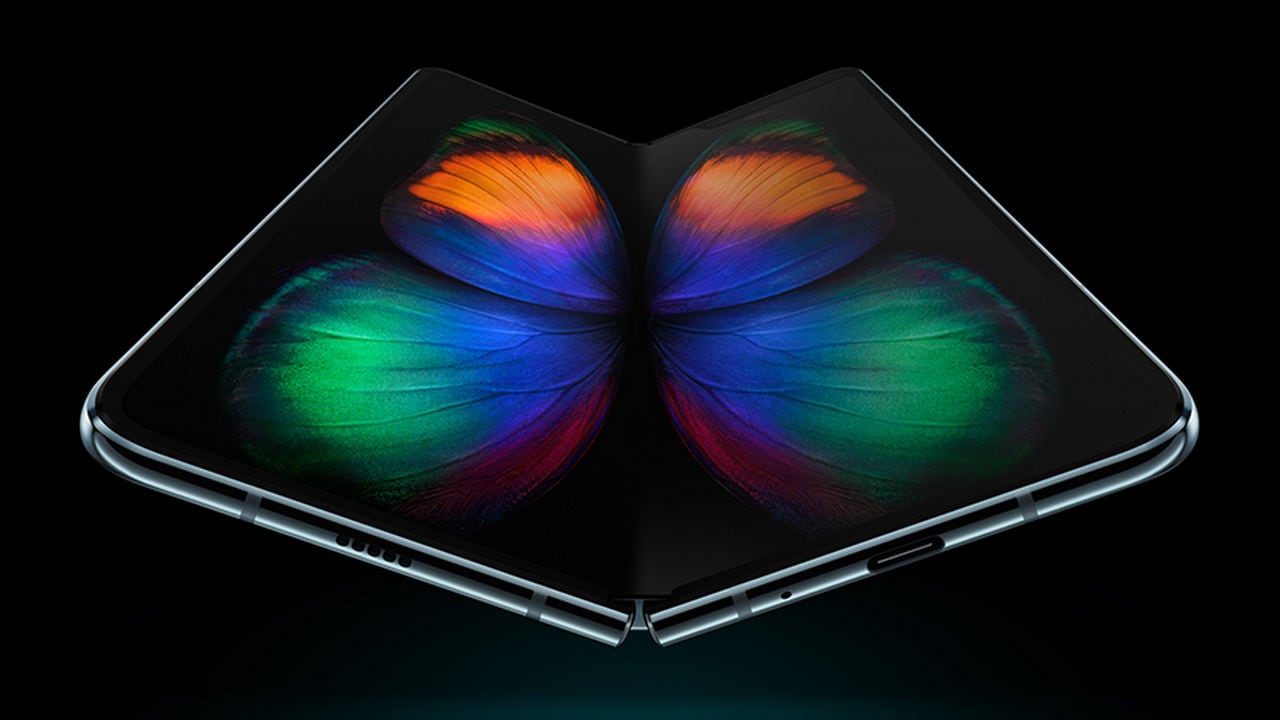 The Samsung Galaxy Fold. Image: Samsung[/caption]The Galaxy Fold opens up like a book. While it may seem simple, the mechanism to support an inward folding display will be complicated as it has to protect the display by maintaining the central curve. It also needs the strength to protect the display when someone, say, accidentally sits on the phone. This is because the display can't fold beyond a certain point.This also results in a thicker smartphone design, but the design does protect the display from scratches.Twin foldXiaomi recently teased a prototype device that has two folds, resulting in a left, right and central portion. Teased by company Co-Founder Lin Bin, the blurry video showcases a unique-looking device that has a fold on either side of the main viewing area. Both sides fold out to form a tablet-like display widening the viewing area. The device then can be folded back into a compact smartphone-like form factor and placed into a pocket.Since Xiaomi has not made its folding device official just yet, and Oppo only showcased a prototype, let’s take a look at what the new production-ready foldables from Huawei and Samsung have on offer and how they compare.It’s wise to note that this is not a comparison to judge performance but just to give our readers an idea about what’s different between the two unreleased devices that were launched around MWC 2019.
| Smartphone | Samsung Galaxy Fold | Huawei Mate X |
| Display Size (inch) | 7.3 + 4.6 | 8 |
| Resolution (pixels) | 1536 x 2152 + 840 x 1960 | 2480 x 2200 |
| Pixel Density (PPI) | 414 + 463 | 414 |
| Display Type | Dynamic AMOLED + Super AMOLED | AMOLED |
| Dimensions(mm) | NA | Folded: 161.3 x 78.3 x 11 Unfolded: 161.3 x 146.2 x 5.4 |
| Weight (gm) | NA | 295 |
| Dual SIM | NA | Yes |
| SIM Type | NA | Nano SIM |
| Connectivity Types | GSM/HSPA+/LTE | GSM/HSPA+/LTE |
| Processor | Qualcomm Snapdragon 855/Exynos 9820 | HiSilicon Kirin 980 |
| CPU Cores | Octa-core | Octa-core |
| CPU Clock Speed (GHz) | 1 x Qualcomm Kryo @ 2.8 GHz + 3 x Qualcomm Kryo @ 2.4 GHz + 4 x Qualcomm Kryo 1.8 GHz / 2 x Mongoose M4 @ 2.7 GHz + 2 x Cortex A75 @ 2.3 GHz + 4 x Cortex A55 @ 1.9 GHz | 2 x Cortex-A76 @ 2.6 GHz + 2 x Cortex-A76 @ 1.92 GHz + 4 x Cortex-A55 @ 1.8 GHz |
| GPU | Adreno 640 / Mali-G76 MP12 | Mali-G76 MP10 |
| RAM | 12 GB | 8 GB |
| Ruggedness | NA | NA |
| On-Board Memory | 512 GB | 512 GB |
| Expandable Memory | No | 256 GB (NM Card) |
| Sensors | NA | Gravity Sensor, Ambient Light Sensor, Proximity Sensor, Gyroscope, Compass, Fingerprint Sensor, Hall sensor, Barometer, Infrared sensor, colour temprature sensor |
| Primary Camera | 12 MP, f/1.5-f/2.4 + 12 MP, f/2.2 + 16 MP, f/2.2 | 40 MP, f/1.8 + 16 MP f/2.2 + 8 MP, f/2.4 + ToF system |
| Optical Image Stabilization | Yes + Yes + No | NA |
| Camera Array | Triple Camera | Triple Camera |
| Autofocus System | Super Speed Dual Pixel + PDAF | NA |
| Secondary Camera | 10 MP f/2.2 + 8 MP f/1.9 + 10 MP f/2.2 Cover camera | No |
| Video Capture | NA | NA |
| Flash | LED | LED |
| OS Version | Android 9 Pie | Android 9 Pie (EMUI 9.1) |
| AI (Smart Assistant) | Google Assistant + Bixby | Google Assistant |
| GPS | Yes | Yes |
| Wi-Fi | NA | 802.11a/b/g/n/ac, 2.4 GHz + 5 GHz |
| Bluetooth | NA | 5.0, BLE, SBC, AAC, aptX, aptX HD, LDAC and HWA Audio |
| NFC | NA | NFC |
| Infrared | NA | Yes |
| Fingerprint Scanner | Yes | Yes |
| 3.5 mm jack | No | No |
| Radio | NA | NA |
| USB Type | NA | Type-C |
| USB Standard | NA | USB v3.1 |
| Battery (mAh) | 4,380 | 4,500 |
| Fast charging | Yes, Fast Charging | Yes, 55 W SuperCharge |
| Colours | Space Silver, Cosmos Black, Martian Green, Astro Blue | Interstellar Blue |
| Prices in India | $1,980 | $2,609 |
First Published:Feb 25, 2019, 19:46:42 IST
Advertisement
Advertisement

Why AI notetakers are raising serious privacy and security concerns
AI notetakers promise effortless meeting summaries, but experts warn they could expose confidential conversations, corporate secrets and personal voiceprints. As businesses increasingly adopt AI-powered meeting assistants, questions over data storage, privacy, consent and legal risks are becoming impossible to ignore
5 min read
China's low-cost AI models are changing the global AI race. Here's why Silicon Valley is worried
As Chinese firms continue to improve performance while keeping prices low, the AI race is no longer just about building the smartest model—it is increasingly becoming a battle over who can deliver the best value
2 min read
China's Kimi K3 challenges US AI leaders with frontier-level performance at lower cost
Chinese artificial intelligence startup Moonshot AI has unveiled its latest open-weight AI model, Kimi K3, with early results suggesting it could compete with some of the world's most advanced AI systems developed by leading US companies
2 min read
How did Instagram run ads promoting child abuse in India?
India has issued a notice to Meta after an investigation alleged that Instagram displayed paid advertisements promoting child sexual abuse material. MeitY ordered Meta to remove such Instagram ads and explain within seven days how they were approved
8 min read
Why has India halted WhatsApp’s username feature before launch?
India has halted WhatsApp’s planned username feature, citing concerns about cybercrime, impersonation, and law enforcement challenges. As Meta races to address security concerns, here’s why MeitY has paused the rollout, what the feature does, and how it could influence privacy and online safety in India
3 min read
Advertisement
Advertisement