


Facebook to now ban white nationalism, white separatism on its platform
Facebook said that earlier it didn't associate white nationalism with white supremacy.

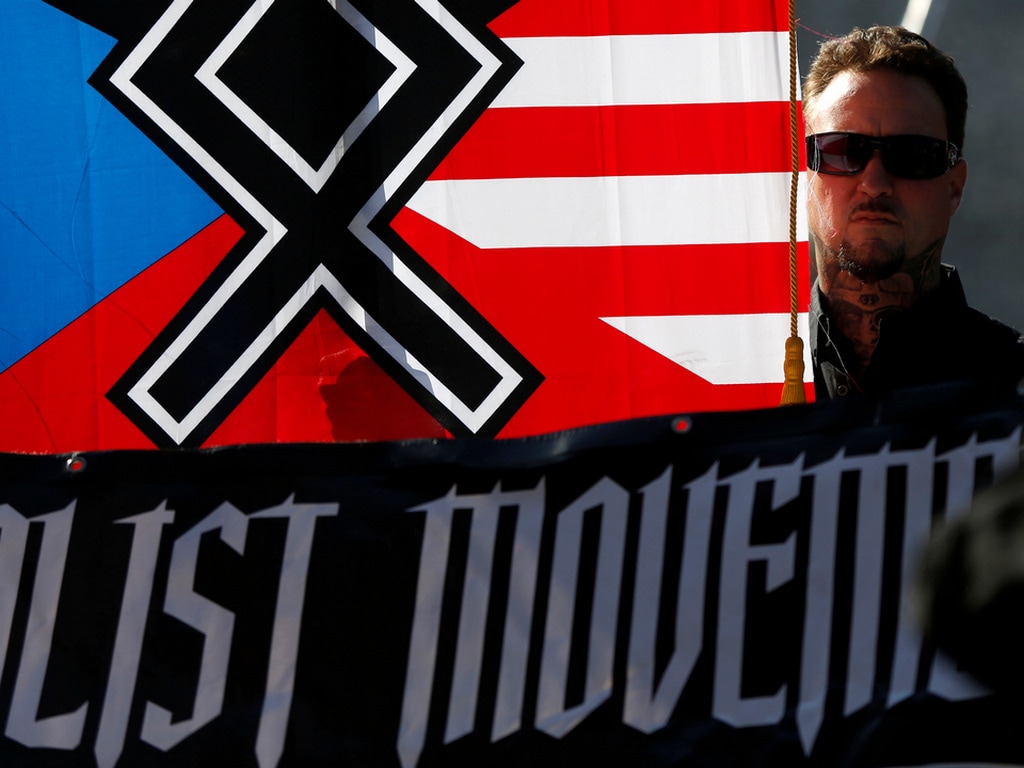
Members of the National Socialist Movement. Reuters[/caption]In its blog post, Facebook has mentioned that "Our policies have long prohibited hateful treatment of people based on characteristics such as race, ethnicity or religion — and that has always included white supremacy."Facebook said that it didn't associate white nationalism with white supremacy as the company was thinking the former pertained to a broader spectrum of nationalism such as the American pride and Basque separatism. It also said last year that white nationalism “doesn’t seem to be always associated with racism (at least not explicitly).”Now the social media giant has said that going forward white people will be able to demonstrate pride in their ethnic heritage but support or praise for white nationalism will not be tolerated on the platform.As per a report by the Motherboard phrases such as “I am a proud white nationalist” and “Immigration is tearing this country apart; white separatism is the only answer” are going to be removed from the platform or banned before publishing.This new policy has been worked upon by Facebook COO Sheryl Sandberg and three dozen other Facebook employees, says the report.Apart from that Facebook plans on directing users with white nationalist ideologies to a non-profit group called Life After Hate that can help said users to leave hate groups.Representative Bennie Thompson, the chairman of the US House Committee on Homeland Security, welcomed the new approach but lamented that Facebook had not made the change sooner.“This should have happened long ago,” Thompson said in a statement. “For too long, Facebook has allowed hate speech – and the violence that it can inspire – to propagate on its platform. Since billions use its service, we must demand more from them.”With inputs from Reuters

Why AI notetakers are raising serious privacy and security concerns
China's low-cost AI models are changing the global AI race. Here's why Silicon Valley is worried
China's Kimi K3 challenges US AI leaders with frontier-level performance at lower cost
How did Instagram run ads promoting child abuse in India?
Why has India halted WhatsApp’s username feature before launch?