
Advertisement


Sections
Facebook places 'voting info' label on US President Donald Trump's post on mail-in voting
The Facebook label does not dispute Trump's claim and redirects users to details from a US government website on how to vote in the 2020 elections.

Facebook Inc on Tuesday placed a "voting info" label on a post by US President Donald Trump that said mail-in voting would lead to a "CORRUPT ELECTION."The label is the most recent of several placed on posts by Republican Trump and Democratic presidential candidate Joe Biden since the company launched a policy to add information to posts by federal candidates and elected officials.[caption id="attachment_8150501" align="alignnone" width="1280"]![File image of US president Donald Trump. AP]() File image of US President Donald Trump. Image: AP[/caption]"Mail-In Voting, unless changed by the courts, will lead to the most CORRUPT ELECTION in our Nation's History! #RIGGEDELECTION," Trump wrote.
File image of US President Donald Trump. Image: AP[/caption]"Mail-In Voting, unless changed by the courts, will lead to the most CORRUPT ELECTION in our Nation's History! #RIGGEDELECTION," Trump wrote.
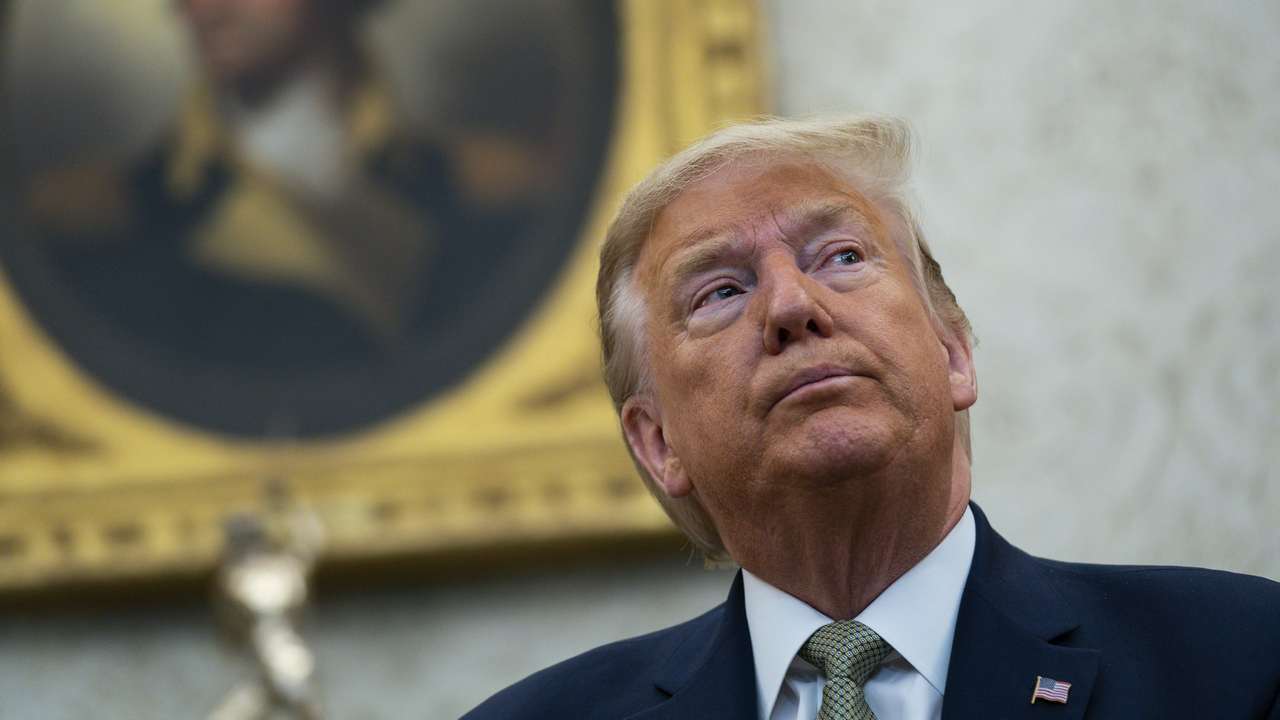 File image of US President Donald Trump. Image: AP[/caption]"Mail-In Voting, unless changed by the courts, will lead to the most CORRUPT ELECTION in our Nation's History! #RIGGEDELECTION," Trump wrote.
Mail-In Voting, unless changed by the courts, will lead to the most CORRUPT ELECTION in our Nation’s History! #RIGGEDELECTION Posted by Donald J. Trump on Tuesday, 21 July 2020Voting by mail is not new in the United States — nearly 1 in 4 voters cast 2016 presidential ballots that way. Routine methods and the decentralized nature of US elections make it very hard to interfere with mailed ballots, experts say.Facebook has drawn heat from employees and lawmakers over its decision not to act on inflammatory posts by the president, including one about mail-in ballots that Twitter affixed with a fact-checking label.Facebook started adding links to authoritative information last week to all posts relating to voting by federal candidates and elected officials. The company declined to comment Tuesday.Facebook Chief Executive Mark Zuckerberg said in June the labels are not "a judgment of whether the posts themselves are accurate, but we want people to have access to authoritative information either way."Facebook runs a third-party fact-checking program but it exempts politicians' posts and ads from fact-checkers' review.Twitter, which labels misleading content related to election integrity, said that Trump's Tuesday tweet did not violate its rules and would not be labeled. It said it would not take action on broad, non-specific statements about the integrity of elections or civic processes.The White House declined to comment.
First Published:Jul 22, 2020, 00:15:17 IST
Advertisement
Advertisement

Why AI notetakers are raising serious privacy and security concerns
AI notetakers promise effortless meeting summaries, but experts warn they could expose confidential conversations, corporate secrets and personal voiceprints. As businesses increasingly adopt AI-powered meeting assistants, questions over data storage, privacy, consent and legal risks are becoming impossible to ignore
5 min read
China's low-cost AI models are changing the global AI race. Here's why Silicon Valley is worried
As Chinese firms continue to improve performance while keeping prices low, the AI race is no longer just about building the smartest model—it is increasingly becoming a battle over who can deliver the best value
2 min read
China's Kimi K3 challenges US AI leaders with frontier-level performance at lower cost
Chinese artificial intelligence startup Moonshot AI has unveiled its latest open-weight AI model, Kimi K3, with early results suggesting it could compete with some of the world's most advanced AI systems developed by leading US companies
2 min read
How did Instagram run ads promoting child abuse in India?
India has issued a notice to Meta after an investigation alleged that Instagram displayed paid advertisements promoting child sexual abuse material. MeitY ordered Meta to remove such Instagram ads and explain within seven days how they were approved
8 min read
Why has India halted WhatsApp’s username feature before launch?
India has halted WhatsApp’s planned username feature, citing concerns about cybercrime, impersonation, and law enforcement challenges. As Meta races to address security concerns, here’s why MeitY has paused the rollout, what the feature does, and how it could influence privacy and online safety in India
3 min read
Advertisement
Advertisement