
Advertisement


Sections
FaceApp's privacy policy on photos uploaded is not sitting well with users, Twitter reacts
FaceApp "may use information" they receive to "provide personalized content & information to you and others".

The viral face changing app called FaceApp, which has been becoming viral for the past few days, is not exactly the most privacy-driven product. The app is made by a Russian company that sends photos from your device to its servers and also has the rights to retain the image for as long as it deems necessary.[caption id="attachment_7011811" align="alignnone" width="1280"]![FaceApp.]()
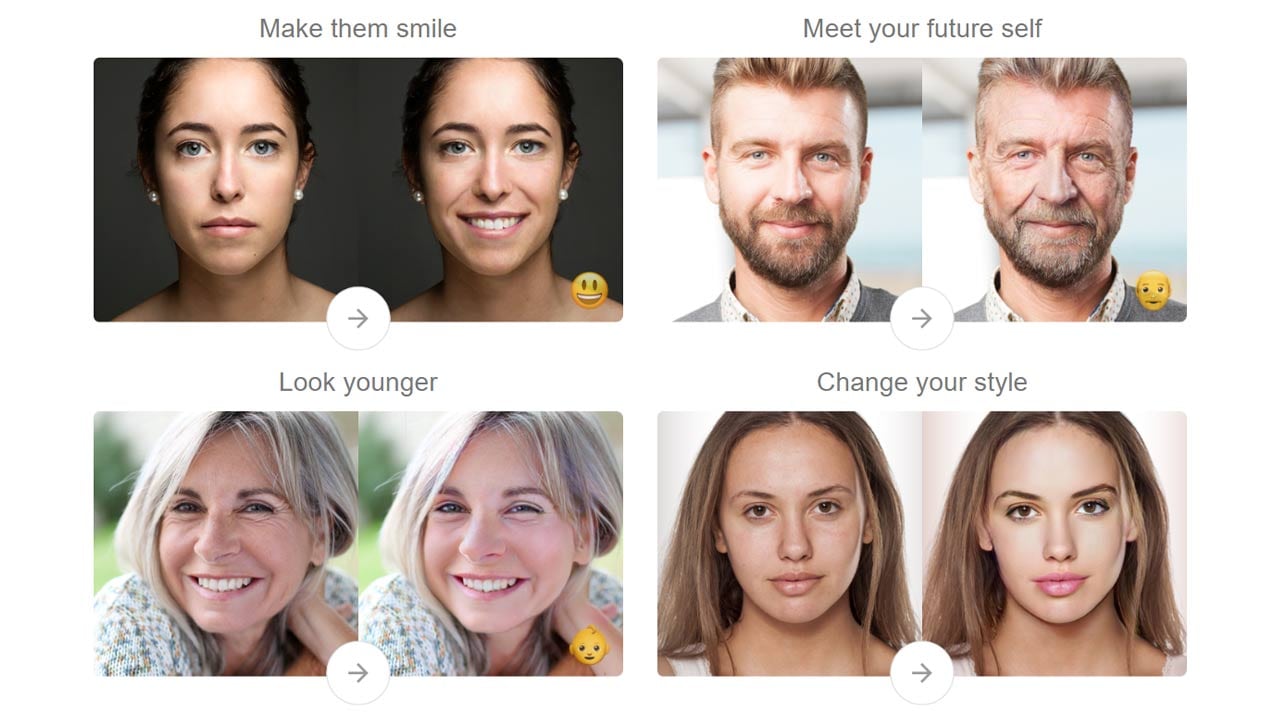
FaceApp.[/caption]Many Twitter users have thrown caution in the wind regarding the way FaceApp handles user data. Elliot Alderson, who has earlier given details on a possible data breach of the Aadhaar database, says that FaceApp heavily uses Firebase, Facebook SDK and AccountKit which he says are tools that can be used to track users' online.
(Also Read: FaceApp does have privacy issues, but they're not much worse than Snapchat's)The privacy policy of the app also mentions that FaceApp "may use information" they receive to "provide personalized content & information to you and others, which could include online ads or other forms of marketing.” FaceApp’s terms of service explicitly states “a perpetual, irrevocable, nonexclusive, royalty-free, worldwide, fully-paid, transferable sub-licensable license to use, reproduce, modify, adapt, publish, translate, create derivative works from, distribute, publicly perform and display your User Content and any name, username or likeness provided in connection with your User Content in all media formats and channels now known or later developed, without compensation to you.”Many users had said that FaceApp collects your entire camera roll and uploads them to its cloud servers but security researcher Jane Manchun Wong has said that only the photo which is clicked for the purpose of using a filter is uploaded to the cloud. There is, however, no method for users to delete this photo although the company claims that it itself deletes the photos within 48 hours of uploading.While the app is certainly Russian based, the servers are located in the US on Amazon's cloud service called AWS. "People give photos to lots of different apps. I think this is probably getting attention because it's Russian developers," said Christine Bannan, consumer protection counsel at the nonprofit Electronic Privacy Information CenterFirst Published:Jul 18, 2019, 12:03:19 IST
Advertisement
Advertisement

Why AI notetakers are raising serious privacy and security concerns
AI notetakers promise effortless meeting summaries, but experts warn they could expose confidential conversations, corporate secrets and personal voiceprints. As businesses increasingly adopt AI-powered meeting assistants, questions over data storage, privacy, consent and legal risks are becoming impossible to ignore
5 min read
China's low-cost AI models are changing the global AI race. Here's why Silicon Valley is worried
As Chinese firms continue to improve performance while keeping prices low, the AI race is no longer just about building the smartest model—it is increasingly becoming a battle over who can deliver the best value
2 min read
China's Kimi K3 challenges US AI leaders with frontier-level performance at lower cost
Chinese artificial intelligence startup Moonshot AI has unveiled its latest open-weight AI model, Kimi K3, with early results suggesting it could compete with some of the world's most advanced AI systems developed by leading US companies
2 min read
How did Instagram run ads promoting child abuse in India?
India has issued a notice to Meta after an investigation alleged that Instagram displayed paid advertisements promoting child sexual abuse material. MeitY ordered Meta to remove such Instagram ads and explain within seven days how they were approved
8 min read
Why has India halted WhatsApp’s username feature before launch?
India has halted WhatsApp’s planned username feature, citing concerns about cybercrime, impersonation, and law enforcement challenges. As Meta races to address security concerns, here’s why MeitY has paused the rollout, what the feature does, and how it could influence privacy and online safety in India
3 min read
Advertisement
Advertisement