
Advertisement


Sections
CES 2020: Google Assistant to get longform reading in more human-like voice, deeper smart home integration
This longform reading feature will initially be available for articles and websites, however, it may soon be expanded to reading your emails.

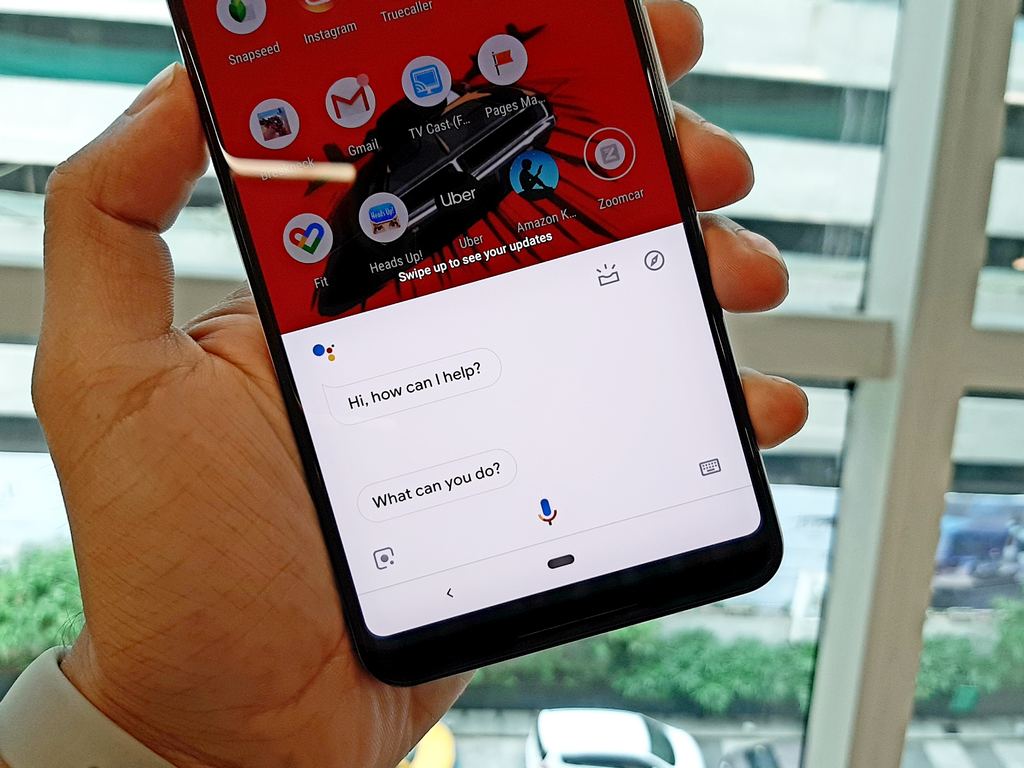
At the ongoing Consumer Electronics Show (CES) at Las Vegas, Google made a few important announcements about its smart assistant. Google says that Google Assistant is now used by 500 million monthly active users. Google also previewed a few features that will be coming to the Google Assistant in 2020.Google says that this year, the voice assistant will get a new voice that will read articles and web pages aloud in a more natural and human-like voice.[caption id="attachment_7393041" align="alignnone" width="1024"]![Google Assistant on Pixel 3]() Google Assistant on Pixel 3[/caption]Google Assistant is also getting a new feature where saying “Hey Google, read it” or “Hey Google, read this page” will trigger it to read or translate text from an article or webpage into 42 languages. Initially, this longform reading feature will only be available for articles and websites, however, according to a report by VentureBeat, it may soon be expanded to reading your emails.At the electronics show, Google also said that it wants more TV manufacturers to uses microphones for far-field voice recognition so that functionalities similar to smart speakers can be added to the, like voice commands to play music, check the weather, or ask a question.Google also announced that later this year, the smart assistant will also get 'Scheduled Actions', which will allow it to turn on/off or start/stop a smart device at the time of your choosing. Essentially, it's a feature a lot of you IoT devices' apps offers, however, with Google Assistant integration, you will be able to do the same with just a command.Google Assistant will also be getting a few security features like saying "Hey Google, that wasn't for you" will trigger deleting a mistaken recording. Additionally, saying “Hey Google, are you listening to me?” will automatically trigger a deep link to privacy settings to the user in the Home mobile app so user don’t have to look for the same.
Google Assistant on Pixel 3[/caption]Google Assistant is also getting a new feature where saying “Hey Google, read it” or “Hey Google, read this page” will trigger it to read or translate text from an article or webpage into 42 languages. Initially, this longform reading feature will only be available for articles and websites, however, according to a report by VentureBeat, it may soon be expanded to reading your emails.At the electronics show, Google also said that it wants more TV manufacturers to uses microphones for far-field voice recognition so that functionalities similar to smart speakers can be added to the, like voice commands to play music, check the weather, or ask a question.Google also announced that later this year, the smart assistant will also get 'Scheduled Actions', which will allow it to turn on/off or start/stop a smart device at the time of your choosing. Essentially, it's a feature a lot of you IoT devices' apps offers, however, with Google Assistant integration, you will be able to do the same with just a command.Google Assistant will also be getting a few security features like saying "Hey Google, that wasn't for you" will trigger deleting a mistaken recording. Additionally, saying “Hey Google, are you listening to me?” will automatically trigger a deep link to privacy settings to the user in the Home mobile app so user don’t have to look for the same.
 Google Assistant on Pixel 3[/caption]Google Assistant is also getting a new feature where saying “Hey Google, read it” or “Hey Google, read this page” will trigger it to read or translate text from an article or webpage into 42 languages. Initially, this longform reading feature will only be available for articles and websites, however, according to a report by VentureBeat, it may soon be expanded to reading your emails.At the electronics show, Google also said that it wants more TV manufacturers to uses microphones for far-field voice recognition so that functionalities similar to smart speakers can be added to the, like voice commands to play music, check the weather, or ask a question.Google also announced that later this year, the smart assistant will also get 'Scheduled Actions', which will allow it to turn on/off or start/stop a smart device at the time of your choosing. Essentially, it's a feature a lot of you IoT devices' apps offers, however, with Google Assistant integration, you will be able to do the same with just a command.Google Assistant will also be getting a few security features like saying "Hey Google, that wasn't for you" will trigger deleting a mistaken recording. Additionally, saying “Hey Google, are you listening to me?” will automatically trigger a deep link to privacy settings to the user in the Home mobile app so user don’t have to look for the same.
First Published:Jan 08, 2020, 10:05:59 IST
Advertisement
Advertisement

Why AI notetakers are raising serious privacy and security concerns
AI notetakers promise effortless meeting summaries, but experts warn they could expose confidential conversations, corporate secrets and personal voiceprints. As businesses increasingly adopt AI-powered meeting assistants, questions over data storage, privacy, consent and legal risks are becoming impossible to ignore
5 min read
China's low-cost AI models are changing the global AI race. Here's why Silicon Valley is worried
As Chinese firms continue to improve performance while keeping prices low, the AI race is no longer just about building the smartest model—it is increasingly becoming a battle over who can deliver the best value
2 min read
China's Kimi K3 challenges US AI leaders with frontier-level performance at lower cost
Chinese artificial intelligence startup Moonshot AI has unveiled its latest open-weight AI model, Kimi K3, with early results suggesting it could compete with some of the world's most advanced AI systems developed by leading US companies
2 min read
How did Instagram run ads promoting child abuse in India?
India has issued a notice to Meta after an investigation alleged that Instagram displayed paid advertisements promoting child sexual abuse material. MeitY ordered Meta to remove such Instagram ads and explain within seven days how they were approved
8 min read
Why has India halted WhatsApp’s username feature before launch?
India has halted WhatsApp’s planned username feature, citing concerns about cybercrime, impersonation, and law enforcement challenges. As Meta races to address security concerns, here’s why MeitY has paused the rollout, what the feature does, and how it could influence privacy and online safety in India
3 min read
Advertisement
Advertisement