
Advertisement


Sections
Apple shipped most number of smartphones in the premium segment in 2019
Meanwhile, the overall mobile phone market declined 12.3 percent year-on-year in 2019.

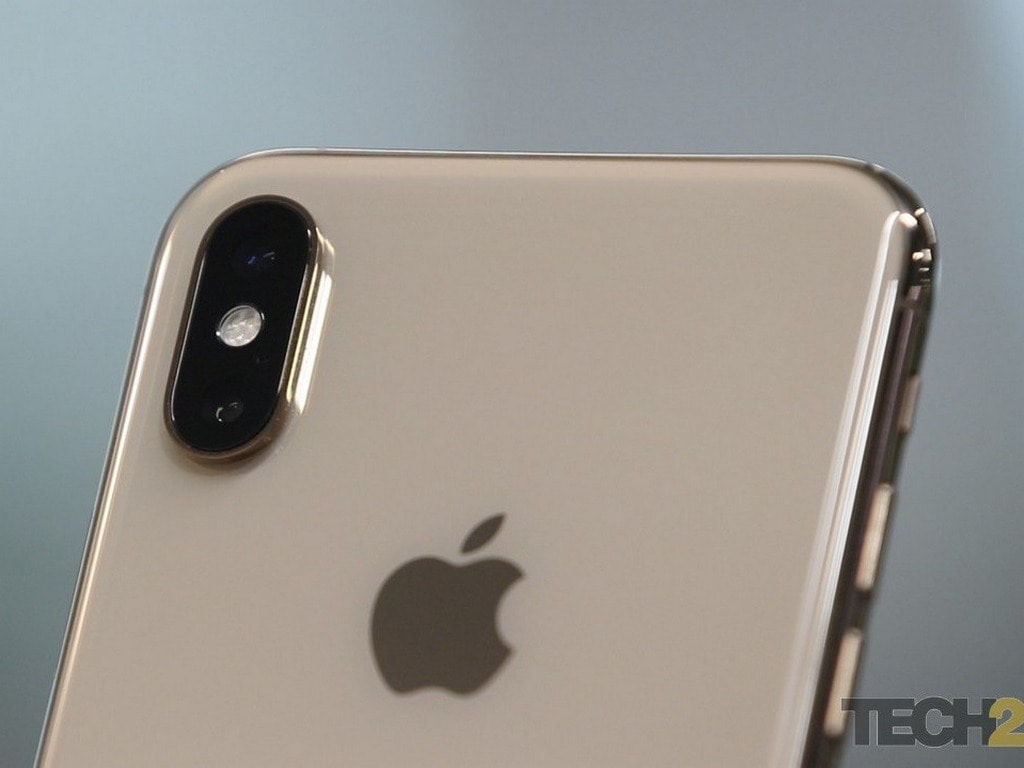 iPhone. Representative image.[/caption]Samsung followed in the tally with 20.3 percent share, Vivo (15.6 percent), Oppo (10.7 percent) and realme (10.6 percent).A total of 36.9 million smartphone units were shipped in the fourth quarter of 2019, registering 5.5 per cent year-on-year growth, but a 20.8 percent sequential decline.In the December quarter, Xiaomi registered a 15.9 percent y-o-y growth and had 29 percent share, followed by Vivo (18.8 percent), Samsung (15.5 percent), Oppo (13 percent) and realme (12.8 percent).
"This is an extremely exhilarating moment for us at Xiaomi India, as we become the leader in the overall mobile phone market across smartphones and feature phones. It has helped us come closer to our mission of providing innovation for all, and Q4 witnessed several people adopting the smartphone," Xiaomi Vice-President and India Managing Director Manu Jain said.He added that the company is committed to gaining users'' sustained trust and appreciation through constant innovation across products, business models and infrastructure."IDC expects India''s smartphone market to see modest single-digit growth in 2020 as well," IDC India Research Director (Client Devices and IPDS) Navkendar Singh said.
He added that as organic growth becomes challenging with increasing replacement cycles, it is imperative for the smartphone ecosystem to really put its energy and focus on enabling migration of the massive feature phone user base in India.This needs to be done in addition to continuing to offer compelling propositions at the mid-premium segment to boost faster upgrades, he said."During the year, we will see launches with newer concepts like under-display cameras, gaming-centric features, and higher refresh rate screens clubbed with efforts by the brands to open new revenue areas like OS monetisation and financing services etc," he added.IDC said the year 2019 also witnessed longer inventory cycles in the offline channel as online exclusive models held back offline sales, resulting in a meager 1.6 percent annual growth in the offline channel."The online growth momentum continued through the year with a record share of 41.7 percent in 2019, growing by 18.4 percent y-o-y annually due to deep discounts, cashback offers, buyback/exchange schemes, and complete protection offers clubbed with attractive financing schemes like no-cost EMIs across major model line-ups and brands," IDC India Associate Research Manager (Client Devices) Upasana Joshi said.In 2019, the average selling prices (ASPs) of smartphones rose 2.8 percent y-o-y to USD 163 (about Rs 11,600). The sub-USD 200 segment still accounted for 79 percent of the market.The mid-range segment of USD 200-500 accounted for the strongest annual growth of 55.2 percent and accounted for 19.3 percent of the overall smartphone market.The mid-premium (USD 300-500) segment was led by Vivo with 28 percent share, followed by OnePlus at 20.2 percent.In the premium (USD 500 and above) segment, Apple surpassed Samsung for the leadership position with a share of 47.4 percent in 2019, driven by aggressive price drops on previous-generation models, offers, strong e-tailer sales momentum, and a lower iPhone 11 launch price compared to the iPhone XR (review), IDC said.The feature phone segment continued to decline y-o-y by 21.1 percent with shipments of 30.1 million units in the fourth quarter.However, the Diwali offer (Rs 699) launched by Reliance Jio in the festive month of October helped clear off existing channel inventories of 4G-enabled Jio Phones, IDC said.Disclaimer: Reliance Industries Ltd. is the sole beneficiary of Independent Media Trust which controls Network18 Media & Investments Ltd which publishes Firstpost
First Published:Feb 17, 2020, 14:56:07 IST
Advertisement
Advertisement

Why AI notetakers are raising serious privacy and security concerns
AI notetakers promise effortless meeting summaries, but experts warn they could expose confidential conversations, corporate secrets and personal voiceprints. As businesses increasingly adopt AI-powered meeting assistants, questions over data storage, privacy, consent and legal risks are becoming impossible to ignore
5 min read
China's low-cost AI models are changing the global AI race. Here's why Silicon Valley is worried
As Chinese firms continue to improve performance while keeping prices low, the AI race is no longer just about building the smartest model—it is increasingly becoming a battle over who can deliver the best value
2 min read
China's Kimi K3 challenges US AI leaders with frontier-level performance at lower cost
Chinese artificial intelligence startup Moonshot AI has unveiled its latest open-weight AI model, Kimi K3, with early results suggesting it could compete with some of the world's most advanced AI systems developed by leading US companies
2 min read
How did Instagram run ads promoting child abuse in India?
India has issued a notice to Meta after an investigation alleged that Instagram displayed paid advertisements promoting child sexual abuse material. MeitY ordered Meta to remove such Instagram ads and explain within seven days how they were approved
8 min read
Why has India halted WhatsApp’s username feature before launch?
India has halted WhatsApp’s planned username feature, citing concerns about cybercrime, impersonation, and law enforcement challenges. As Meta races to address security concerns, here’s why MeitY has paused the rollout, what the feature does, and how it could influence privacy and online safety in India
3 min read
Advertisement
Advertisement