
Advertisement


Sections
Apple explains why it appears to be sending some browsing data to China's Tencent
Apple says it does not send any data to Tencent or Google, instead, it receives a list of bad websites from both companies.

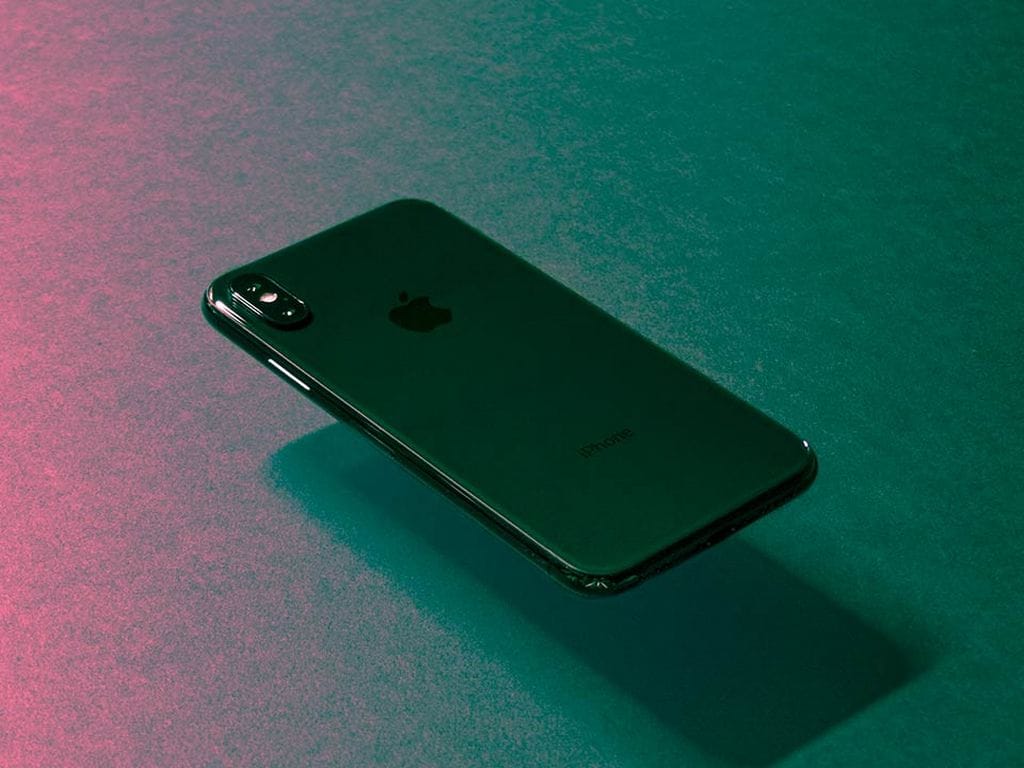
Apple, a company that often positions itself as a champion of human rights and privacy, was recently reported to have been sending some IP addresses from users of its Safari browser on iOS to China's Tencent.Essentially, Safari has a feature called “Fraudulent Website Warning” in iOS and macOS, which is meant to enhance online security by cross-referencing URLs against a blacklist service provided by safe browsing providers such as Google and Tencent.[caption id="attachment_7311001" align="alignnone" width="1024"]![Representational Image,]() Representational Image.[/caption]Per the report by Reclaim The Net, this setting can be accessed on an iOS device by heading to Safari > About Privacy & Security. There under the “Fraudulent Website Warning”, Apple acknowledges that it may send your IP address to safe browsing providers like Google and Tencent."...Before visiting a website, Safari may send information calculated from the website address to Google Safe Browsing and Tencent Safe Browsing to check if the website is fraudulent. These safe browsing providers may also log your IP address."Also, it was found that the “Fraudulent Website Warning” feature is on by default. Which means that the data sharing may have affected any/all users unaware of the feature. And if the user toggles the feature off, this makes browsing sessions less secure and leaves users vulnerable to accessing fraudulent websites. So the user loses both ways.Meanwhile, in a statement to Bloomberg, Apple responded to the report saying that it actually does not send information to Google or Tencent. Instead, it receives a list of bad websites from both companies, which Apple uses to protect its users as they surf the web.Apple says that it sometimes collects information about website that users visit but that is only if it requests more information to check if a questionable website is malicious. The URL, or website address being checked, "is never shared with a safe browsing provider," Apple said.Whether identifiable data is shared or not, Apple and big tech are currently in the spotlight for either directly or indirectly taking the trouble to placate China and turn a blind eye to the communist regime's handling of the pro-democracy protests in Hong Kong. Apple recently deleted an app that allowed protesters in Hong Kong to track the location of law enforcement, deleted the Taiwan flag emoji from the China region, and agreed to store iCloud encryption keys in China.
Representational Image.[/caption]Per the report by Reclaim The Net, this setting can be accessed on an iOS device by heading to Safari > About Privacy & Security. There under the “Fraudulent Website Warning”, Apple acknowledges that it may send your IP address to safe browsing providers like Google and Tencent."...Before visiting a website, Safari may send information calculated from the website address to Google Safe Browsing and Tencent Safe Browsing to check if the website is fraudulent. These safe browsing providers may also log your IP address."Also, it was found that the “Fraudulent Website Warning” feature is on by default. Which means that the data sharing may have affected any/all users unaware of the feature. And if the user toggles the feature off, this makes browsing sessions less secure and leaves users vulnerable to accessing fraudulent websites. So the user loses both ways.Meanwhile, in a statement to Bloomberg, Apple responded to the report saying that it actually does not send information to Google or Tencent. Instead, it receives a list of bad websites from both companies, which Apple uses to protect its users as they surf the web.Apple says that it sometimes collects information about website that users visit but that is only if it requests more information to check if a questionable website is malicious. The URL, or website address being checked, "is never shared with a safe browsing provider," Apple said.Whether identifiable data is shared or not, Apple and big tech are currently in the spotlight for either directly or indirectly taking the trouble to placate China and turn a blind eye to the communist regime's handling of the pro-democracy protests in Hong Kong. Apple recently deleted an app that allowed protesters in Hong Kong to track the location of law enforcement, deleted the Taiwan flag emoji from the China region, and agreed to store iCloud encryption keys in China.
 Representational Image.[/caption]Per the report by Reclaim The Net, this setting can be accessed on an iOS device by heading to Safari > About Privacy & Security. There under the “Fraudulent Website Warning”, Apple acknowledges that it may send your IP address to safe browsing providers like Google and Tencent."...Before visiting a website, Safari may send information calculated from the website address to Google Safe Browsing and Tencent Safe Browsing to check if the website is fraudulent. These safe browsing providers may also log your IP address."Also, it was found that the “Fraudulent Website Warning” feature is on by default. Which means that the data sharing may have affected any/all users unaware of the feature. And if the user toggles the feature off, this makes browsing sessions less secure and leaves users vulnerable to accessing fraudulent websites. So the user loses both ways.Meanwhile, in a statement to Bloomberg, Apple responded to the report saying that it actually does not send information to Google or Tencent. Instead, it receives a list of bad websites from both companies, which Apple uses to protect its users as they surf the web.Apple says that it sometimes collects information about website that users visit but that is only if it requests more information to check if a questionable website is malicious. The URL, or website address being checked, "is never shared with a safe browsing provider," Apple said.Whether identifiable data is shared or not, Apple and big tech are currently in the spotlight for either directly or indirectly taking the trouble to placate China and turn a blind eye to the communist regime's handling of the pro-democracy protests in Hong Kong. Apple recently deleted an app that allowed protesters in Hong Kong to track the location of law enforcement, deleted the Taiwan flag emoji from the China region, and agreed to store iCloud encryption keys in China.
First Published:Oct 15, 2019, 09:26:26 IST
Advertisement
Advertisement

Why AI notetakers are raising serious privacy and security concerns
AI notetakers promise effortless meeting summaries, but experts warn they could expose confidential conversations, corporate secrets and personal voiceprints. As businesses increasingly adopt AI-powered meeting assistants, questions over data storage, privacy, consent and legal risks are becoming impossible to ignore
5 min read
China's low-cost AI models are changing the global AI race. Here's why Silicon Valley is worried
As Chinese firms continue to improve performance while keeping prices low, the AI race is no longer just about building the smartest model—it is increasingly becoming a battle over who can deliver the best value
2 min read
China's Kimi K3 challenges US AI leaders with frontier-level performance at lower cost
Chinese artificial intelligence startup Moonshot AI has unveiled its latest open-weight AI model, Kimi K3, with early results suggesting it could compete with some of the world's most advanced AI systems developed by leading US companies
2 min read
How did Instagram run ads promoting child abuse in India?
India has issued a notice to Meta after an investigation alleged that Instagram displayed paid advertisements promoting child sexual abuse material. MeitY ordered Meta to remove such Instagram ads and explain within seven days how they were approved
8 min read
Why has India halted WhatsApp’s username feature before launch?
India has halted WhatsApp’s planned username feature, citing concerns about cybercrime, impersonation, and law enforcement challenges. As Meta races to address security concerns, here’s why MeitY has paused the rollout, what the feature does, and how it could influence privacy and online safety in India
3 min read
Advertisement
Advertisement