
Advertisement


Sections
After FaceApp, new AI tool turns selfies into creepy classical portraits
Researchers promise they won’t use your data, and any images you send are “immediately” deleted after use.

The last week on social media was like living in the future: All our friends were suddenly 80-years-old. However, the trend that's riding over netizens this week is moving back to the past. Way, way back!Researchers at the MIT-IBM Watson AI Lab have created an online AI tool that turns your 2019 selfies into archaic portraits. They are calling it an artistic transformation. The tool is available on aiportraits.com.[caption id="attachment_7038501" align="alignnone" width="1024"]![Image: airportraits]() Image: airportraits[/caption]The tool uses an algorithm trained on 45,000 classical portraits, which helps it to turn your face into an oil, watercolor, or ink portrait. There’s a huge number of styles included in this database, covering artists from Rembrandt to Titian to Van Gogh, with each input producing a unique portrait.Apparently, the AI algorithm does not just copy the lines of your facial features and give it an effect of a portrait, it uses your facial lines as a base to generate an entirely new portrait. The algorithm is made of two neural networks, one learns to recognize portraits of people (Discriminator), and the other learns to generate them (Generator).(Also read: Google's new art project PoemPortrait overlays your selfies with poems using AI)If you are thinking about Google's Art and Culture app right now, hold on a second. You may remember it to be similar, but the Google app did not create a portrait out of your selfie, it simply matched it with your doppelgänger in one of several art museums worldwide.[caption id="attachment_7038431" align="alignnone" width="1200"]
Image: airportraits[/caption]The tool uses an algorithm trained on 45,000 classical portraits, which helps it to turn your face into an oil, watercolor, or ink portrait. There’s a huge number of styles included in this database, covering artists from Rembrandt to Titian to Van Gogh, with each input producing a unique portrait.Apparently, the AI algorithm does not just copy the lines of your facial features and give it an effect of a portrait, it uses your facial lines as a base to generate an entirely new portrait. The algorithm is made of two neural networks, one learns to recognize portraits of people (Discriminator), and the other learns to generate them (Generator).(Also read: Google's new art project PoemPortrait overlays your selfies with poems using AI)If you are thinking about Google's Art and Culture app right now, hold on a second. You may remember it to be similar, but the Google app did not create a portrait out of your selfie, it simply matched it with your doppelgänger in one of several art museums worldwide.[caption id="attachment_7038431" align="alignnone" width="1200"]![Image: airportraits.com]() Image: airportraits.com[/caption]Coming back to aiportraits, the algorithm apparently picks up certain elements from a picture to use a specific style in the portrait. Researchers say that the algorithm “decides upon a Renaissance style, highlighting the elegance of the aquiline nose, the smoothness of the forehead.”Of course, by this point, you are also wondering about how safe this tool is considering we just recently learnt about the privacy loopholes that came with using FaceApp. However, researchers behind aiportraits promise they won’t use your data for any other purpose, and any images you send are “immediately” deleted after use. Can we trust them? Who knows, at this point!
Image: airportraits.com[/caption]Coming back to aiportraits, the algorithm apparently picks up certain elements from a picture to use a specific style in the portrait. Researchers say that the algorithm “decides upon a Renaissance style, highlighting the elegance of the aquiline nose, the smoothness of the forehead.”Of course, by this point, you are also wondering about how safe this tool is considering we just recently learnt about the privacy loopholes that came with using FaceApp. However, researchers behind aiportraits promise they won’t use your data for any other purpose, and any images you send are “immediately” deleted after use. Can we trust them? Who knows, at this point!
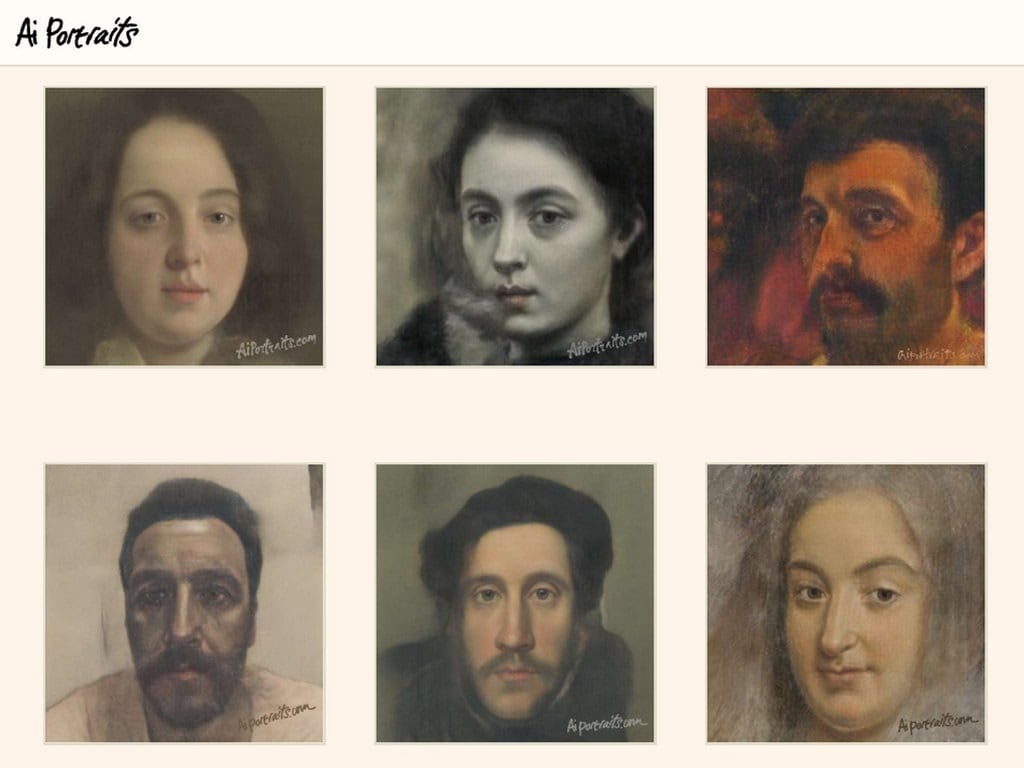 Image: airportraits[/caption]The tool uses an algorithm trained on 45,000 classical portraits, which helps it to turn your face into an oil, watercolor, or ink portrait. There’s a huge number of styles included in this database, covering artists from Rembrandt to Titian to Van Gogh, with each input producing a unique portrait.Apparently, the AI algorithm does not just copy the lines of your facial features and give it an effect of a portrait, it uses your facial lines as a base to generate an entirely new portrait. The algorithm is made of two neural networks, one learns to recognize portraits of people (Discriminator), and the other learns to generate them (Generator).(Also read: Google's new art project PoemPortrait overlays your selfies with poems using AI)If you are thinking about Google's Art and Culture app right now, hold on a second. You may remember it to be similar, but the Google app did not create a portrait out of your selfie, it simply matched it with your doppelgänger in one of several art museums worldwide.[caption id="attachment_7038431" align="alignnone" width="1200"]
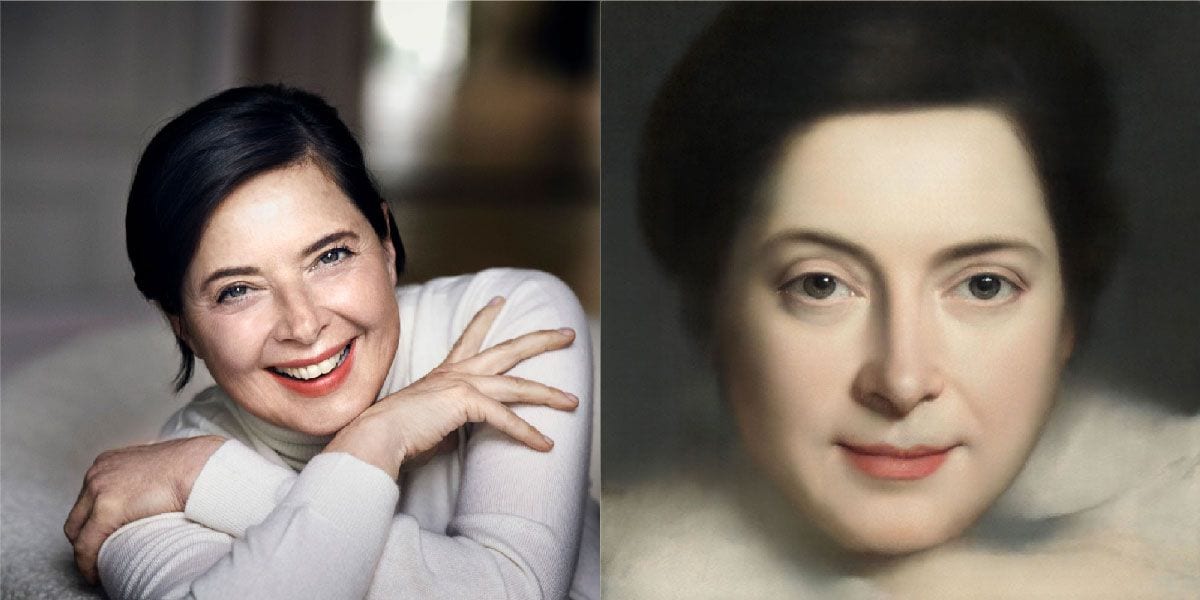 Image: airportraits.com[/caption]Coming back to aiportraits, the algorithm apparently picks up certain elements from a picture to use a specific style in the portrait. Researchers say that the algorithm “decides upon a Renaissance style, highlighting the elegance of the aquiline nose, the smoothness of the forehead.”Of course, by this point, you are also wondering about how safe this tool is considering we just recently learnt about the privacy loopholes that came with using FaceApp. However, researchers behind aiportraits promise they won’t use your data for any other purpose, and any images you send are “immediately” deleted after use. Can we trust them? Who knows, at this point!
First Published:Jul 23, 2019, 09:12:46 IST
Advertisement
Advertisement

Why AI notetakers are raising serious privacy and security concerns
AI notetakers promise effortless meeting summaries, but experts warn they could expose confidential conversations, corporate secrets and personal voiceprints. As businesses increasingly adopt AI-powered meeting assistants, questions over data storage, privacy, consent and legal risks are becoming impossible to ignore
5 min read
China's low-cost AI models are changing the global AI race. Here's why Silicon Valley is worried
As Chinese firms continue to improve performance while keeping prices low, the AI race is no longer just about building the smartest model—it is increasingly becoming a battle over who can deliver the best value
2 min read
China's Kimi K3 challenges US AI leaders with frontier-level performance at lower cost
Chinese artificial intelligence startup Moonshot AI has unveiled its latest open-weight AI model, Kimi K3, with early results suggesting it could compete with some of the world's most advanced AI systems developed by leading US companies
2 min read
How did Instagram run ads promoting child abuse in India?
India has issued a notice to Meta after an investigation alleged that Instagram displayed paid advertisements promoting child sexual abuse material. MeitY ordered Meta to remove such Instagram ads and explain within seven days how they were approved
8 min read
Why has India halted WhatsApp’s username feature before launch?
India has halted WhatsApp’s planned username feature, citing concerns about cybercrime, impersonation, and law enforcement challenges. As Meta races to address security concerns, here’s why MeitY has paused the rollout, what the feature does, and how it could influence privacy and online safety in India
3 min read
Advertisement
Advertisement