
Advertisement


Sections
11 people charged with illegally selling Samsung's foldable screen technology
Samsung has said that it is shocked at the results of the investigation by prosecutors.

Nine people and two companies have reportedly been charged with illegally selling Samsung’s foldable screen technology to a Chinese rival.According to a report by Bloomberg, the chief executive officer of a Samsung supplier and eight of his employees received $13.8 million for a conspiracy to transfer organic light-emitting diode knowledge.The names of the companies and individuals have not been disclosed.Samsung has said that it is “shocked at the results of the investigation by prosecutors, at a time when competitors are intensifying their technological rivalry.”Last month, Samsung unveiled its unnamed foldable smartphone, currently known as the Galaxy F at its developer conference, and the company will apparently manufacture as many as 1 million units of the device. It now appears that the device will be priced in the range of $1,900 to $2,500, which is about Rs 1,35,000 to Rs 1,76,000, which is quite steep.[caption id="attachment_5520881" align="alignnone" width="1280"]![Samsung's folding smartphone. Image: Reuters]()
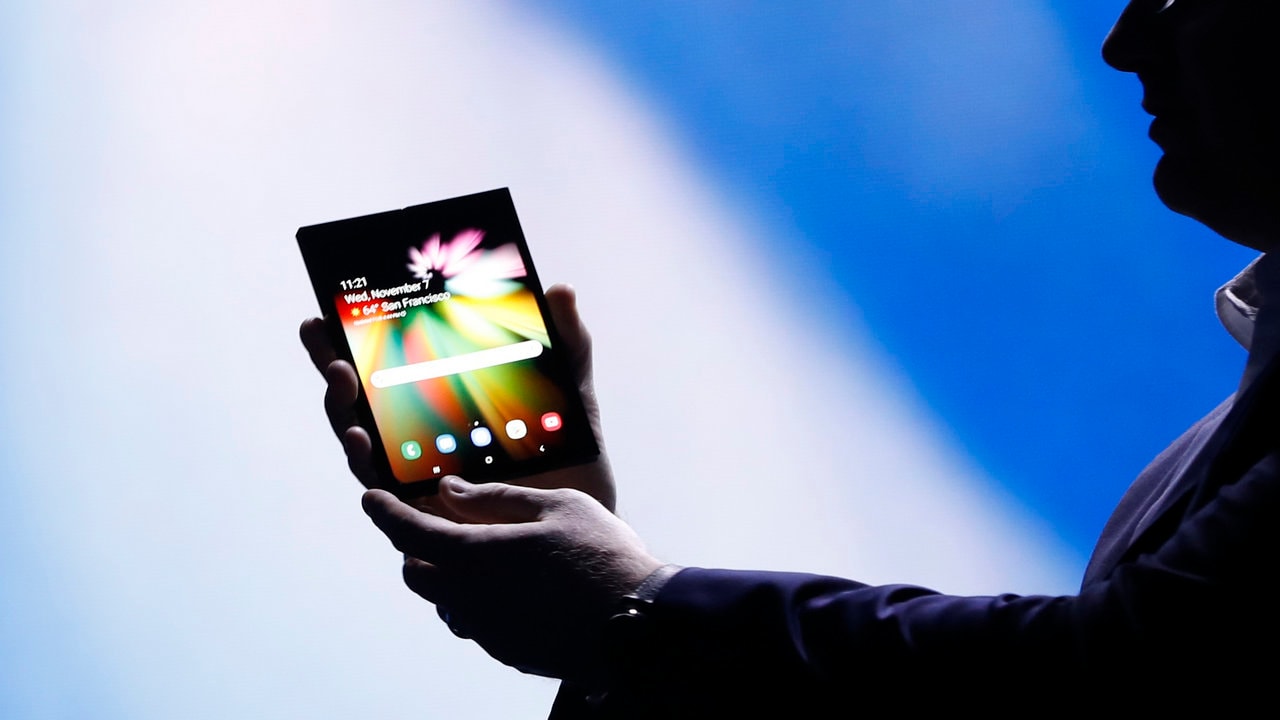
Samsung's folding smartphone. Image: Reuters[/caption]The company CEO DJ Koh recently said that, "possibly when we start selling the foldable phone, it may be a niche market... but definitely, it will expand. I'm positive that we do need a foldable phone."Samsung describes its folding phone technology as Infinity Flex Display and said that mass-production of the device should begin in a "matter of months."The display on the tablet has a resolution of 1536 x 2152 pixels which gives it a 4.2:3 aspect ratio and a screen size of 7.3-inches. When folded, the device is an 840 x 1960 display with a tall aspect ratio of 21:9 and screen size of 4.58-inches.
First Published:Dec 02, 2018, 15:32:23 IST
Advertisement
Advertisement

Why AI notetakers are raising serious privacy and security concerns
AI notetakers promise effortless meeting summaries, but experts warn they could expose confidential conversations, corporate secrets and personal voiceprints. As businesses increasingly adopt AI-powered meeting assistants, questions over data storage, privacy, consent and legal risks are becoming impossible to ignore
5 min read
China's low-cost AI models are changing the global AI race. Here's why Silicon Valley is worried
As Chinese firms continue to improve performance while keeping prices low, the AI race is no longer just about building the smartest model—it is increasingly becoming a battle over who can deliver the best value
2 min read
China's Kimi K3 challenges US AI leaders with frontier-level performance at lower cost
Chinese artificial intelligence startup Moonshot AI has unveiled its latest open-weight AI model, Kimi K3, with early results suggesting it could compete with some of the world's most advanced AI systems developed by leading US companies
2 min read
How did Instagram run ads promoting child abuse in India?
India has issued a notice to Meta after an investigation alleged that Instagram displayed paid advertisements promoting child sexual abuse material. MeitY ordered Meta to remove such Instagram ads and explain within seven days how they were approved
8 min read
Why has India halted WhatsApp’s username feature before launch?
India has halted WhatsApp’s planned username feature, citing concerns about cybercrime, impersonation, and law enforcement challenges. As Meta races to address security concerns, here’s why MeitY has paused the rollout, what the feature does, and how it could influence privacy and online safety in India
3 min read
Advertisement
Advertisement