


Make way for bendable-touch-phones
The latest discovery is expected to change the way electronic circuits are made and replace silicon chips forever.

Graphene, the world’s thinnest and strongest material, is making headlines across the globe after a team of scientists from the University of Manchester demonstrated its potential in electronic circuits. Futurists are already talking about bendable touch phones and paper thin HDTV sets.A wafer thin strip of graphene is strong enough to support the weight of a full grown elephant but is thermodynamically very sensitive to its environment. It was isolated by the scientists at the University of Manchester by sandwiching two sheets of graphene with another two-dimensional material, boron nitride, and thus creating the ‘Big Mac,’ which is expected to replace silicon chips in computers soon.[caption id="attachment_104906" align="alignleft" width="380" caption="Wafer-thin strip of Graphene can support the weight of an full grown elephant"]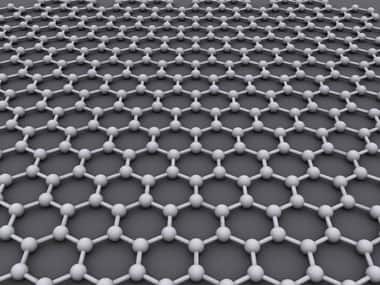 [/caption]In 2004 Andre Geim and Kostya Novoselov from the University of Manchester won the Nobel prize for discovering graphen, and since then most of the ground breaking research surrounding the material has happened at Manchester.The latest discovery is expected to change the way electronic circuits are made and may even replace silicon chips forever.In a separate study, MIT researchers discovered that graphene responds to light. The discovery came after researchers shined a light onto the material and noticed that it could generate a current. It uses current differently to conventional materials because it can absorb a wider energy range.If used as a photodetector, graphene can be used to improve the sensitivity of sensors when it comes to detecting toxins or food contaminants in the environment.According to the MIT news office:“It works very well in infrared light, which can be difficult for other detectors to handle. That could make it an important component of devices from night-vision systems to advanced detectors for new astronomical telescopes.”Last week the Chancellor to the Exchequer of Britain, George Osborne announced a 50million pound grant to the University of Manchester to fund a center to research into the material.Read More:10 things you did not know about grapheneFuture of computing

Google burns cash for first time as AI spending pushes 2026 capex to $205 billion
Tesla sells more cars but makes less money: Why Musk’s AI pivot is squeezing profits
OpenAI launches Presence to bring AI agents into customer support and enterprise workflows
Samsung Galaxy Fold 8 Ultra, Fold 8, Flip 8 launched: Here is how much it costs in India with discounts
Florida pastor sues OpenAI, says ChatGPT's medical advice delayed emergency treatment: Report