


Building a streaming rig for video games: Part 1 - Choosing the right platform
We’re currently in the process of building a PC for streaming games ourselves. Here's what we've settled on so far.

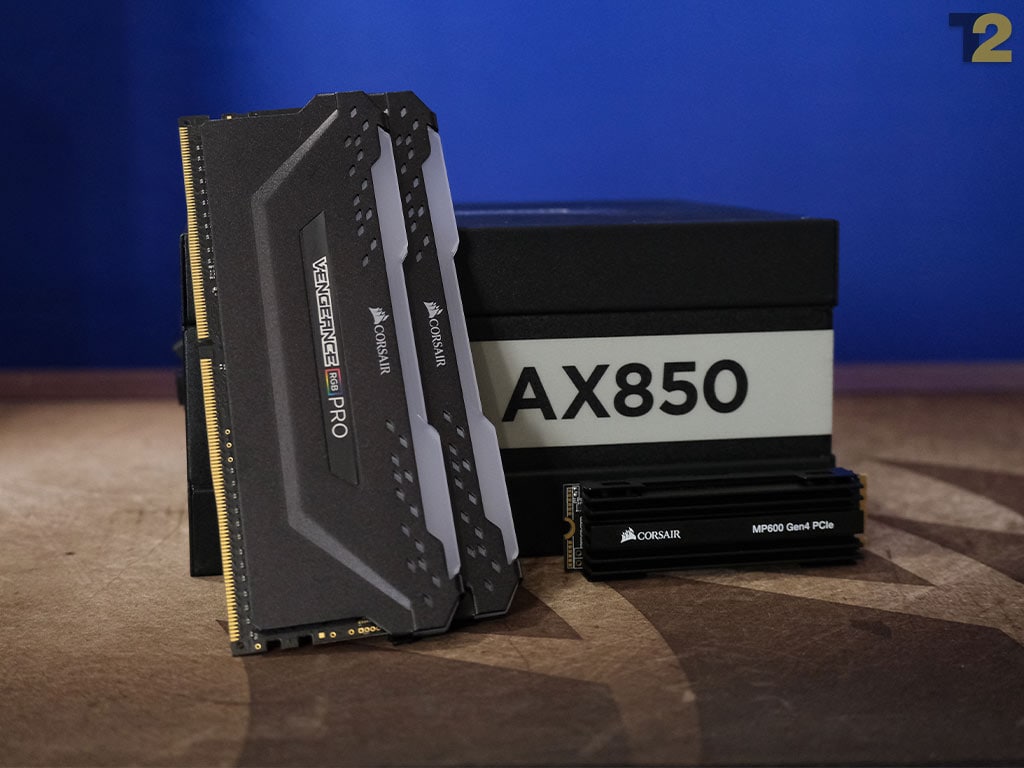
Selecting components for Tech2's streaming rig. Image: Anirudh Regidi/Tech2[/caption]
CPU and GPU: Intel Core i9-9900K, Nvidia RTX 2080
The first step is identifying what we need. To start with, the CPU and GPU are a no-brainer.For the CPU, we had a choice of either the slightly faster 8-core Intel Core i9–9900K or the slower but perhaps more versatile 12-core AMD Ryzen 9 3900X. They’re both fantastic platforms and it’s impossible to really pick between one or the other. We simply settled on the 9900K because it was in stock and easier to get our hands on. Regardless, it is a faster gaming CPU (by a tiny margin) anyway.[caption id="attachment_8072911" align="alignnone" width="1280"]
By default, a single core on the 9900k can boost up to 5 GHz,[/caption]The GPU has to be an Nvidia RTX card. Yes, RTX is overpriced and there are barely any games that support ray-tracing, but we won’t be paying for our GPU and when money isn’t a factor, we would very much like to opt for the very best, most feature packed GPU we can lay on our hands on. For us, that translates to either the RTX 2080 or the 2080 Ti. We intend to be gaming and streaming at 1440p @ 120 Hz, so a powerful GPU is a must.
Power supply: Corsair AX850
Given that we’re going for top-of-the-line hardware, a top-of-the-line PSU is what we need.[caption id="attachment_8072921" align="alignnone" width="1280"]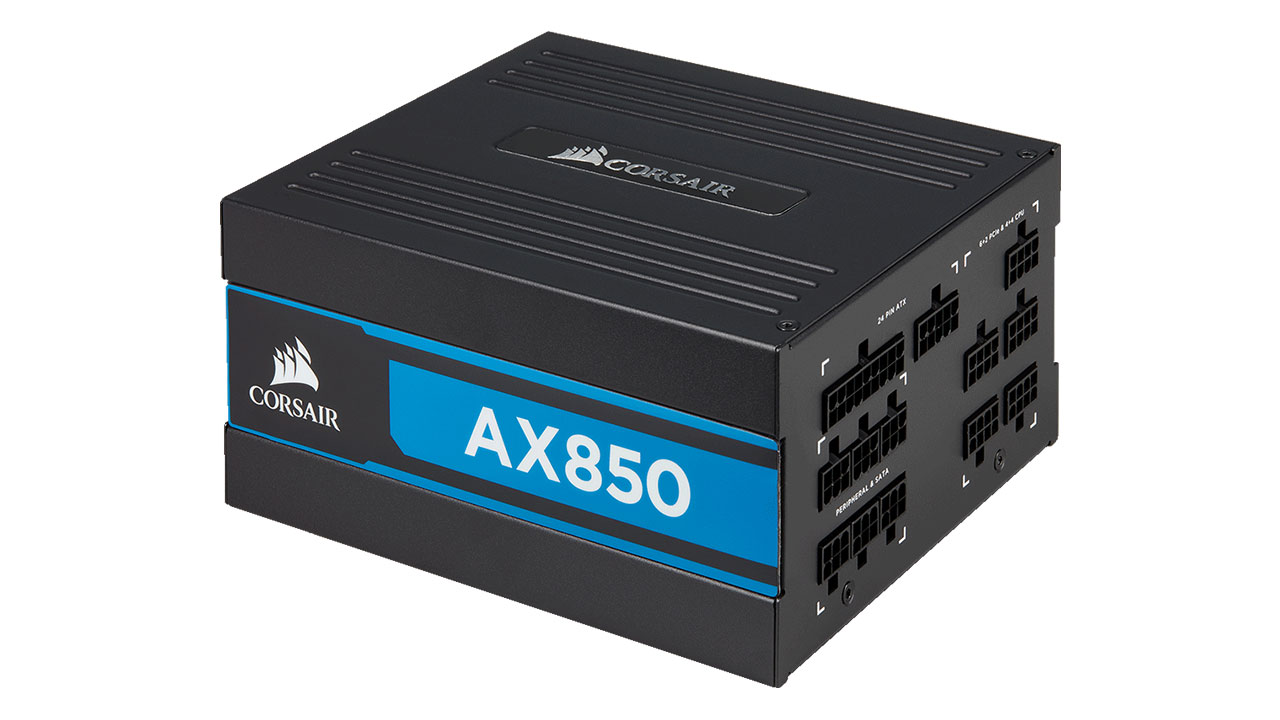
This 80 PLUS Titanium certified PSU is very powerful, and more importantly, modular.[/caption]Corsair was kind enough to offer us their AX850, and we were very happy to accept the offering. The AX850 is a powerful 80 PLUS Titanium certified 850 W PSU, which means its powerful, but also very efficient. It also offers a low-nose fan mode which should help keep noise levels low when streaming and recording games. The 10-year warranty means it’s going to last you a lifetime.The fact that it’s a modular PSU also means that we get a great deal of flexibility when it comes to cable management. The bundled kit includes all the accessories you could ever need, and if, for some reason, we decide to pack in two GPUs, there’ll be power to spare.
RAM: Corsair Vengeance RGB Pro 2x8 GB kit
For RAM, we’ve gone with Corsair’s Vengeance RGB Pro kit. It’s clocked at 3,000 MHz (CL15), which means it’s very fast, and overclockable, if we go that route. Better yet, it’s got some sweet multi-zone RGB for that added bling, and as everyone knows, RGB just makes everything faster. ;)[caption id="attachment_8072931" align="alignnone" width="1280"]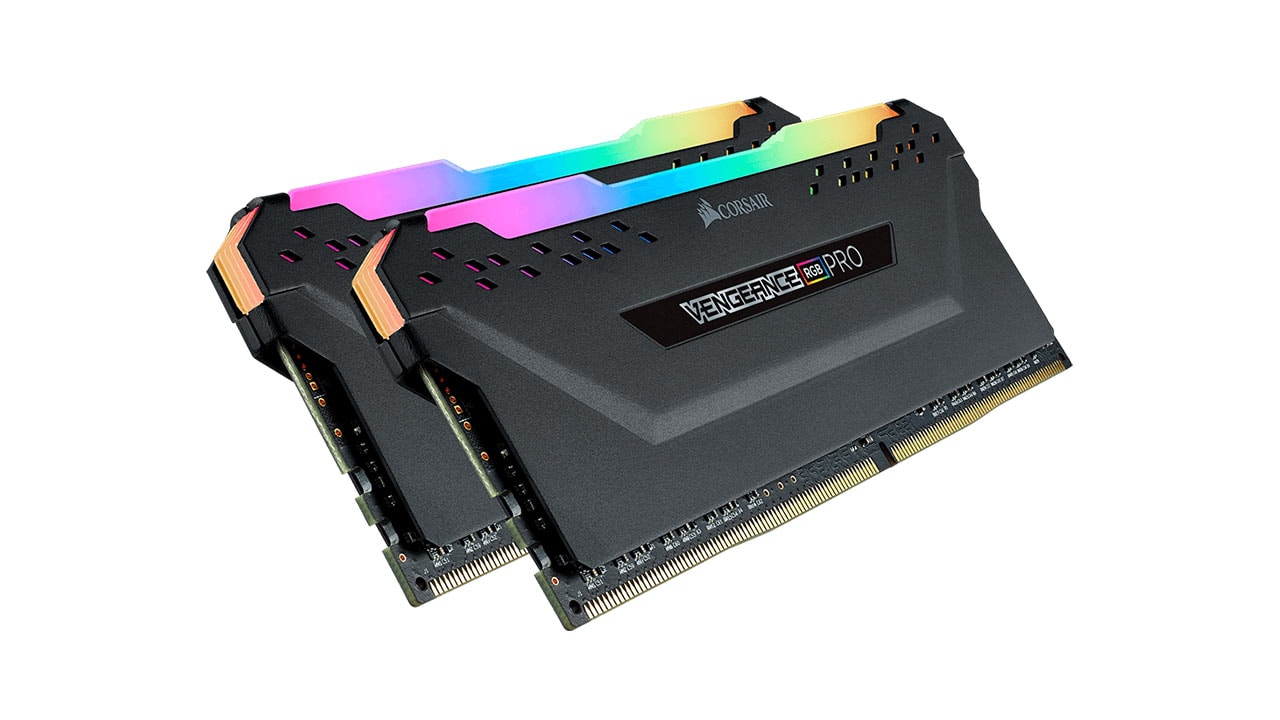
3,000 MHz RAM with multi-zone RGB? Yes, please.[/caption]Since it’s a gaming rig, 16 GB RAM is more than enough.The kit supports XMP 2.0 and comes with a lifetime warranty.
Storage: Corsair MP600 PCIe Gen.4 x4 SSD
For storage, we had to go with an NVMe PCIe Gen.4 device. A standard hard drive will hit read/write speeds of about 150 Mbps. A SATA SSD will hit speeds of about 500 Mbps, which is certainly not bad. An M.2 Gen.3 SSD, on the other hand, can hit a whopping 5,000 Mbps.[caption id="attachment_8072941" align="alignnone" width="1280"]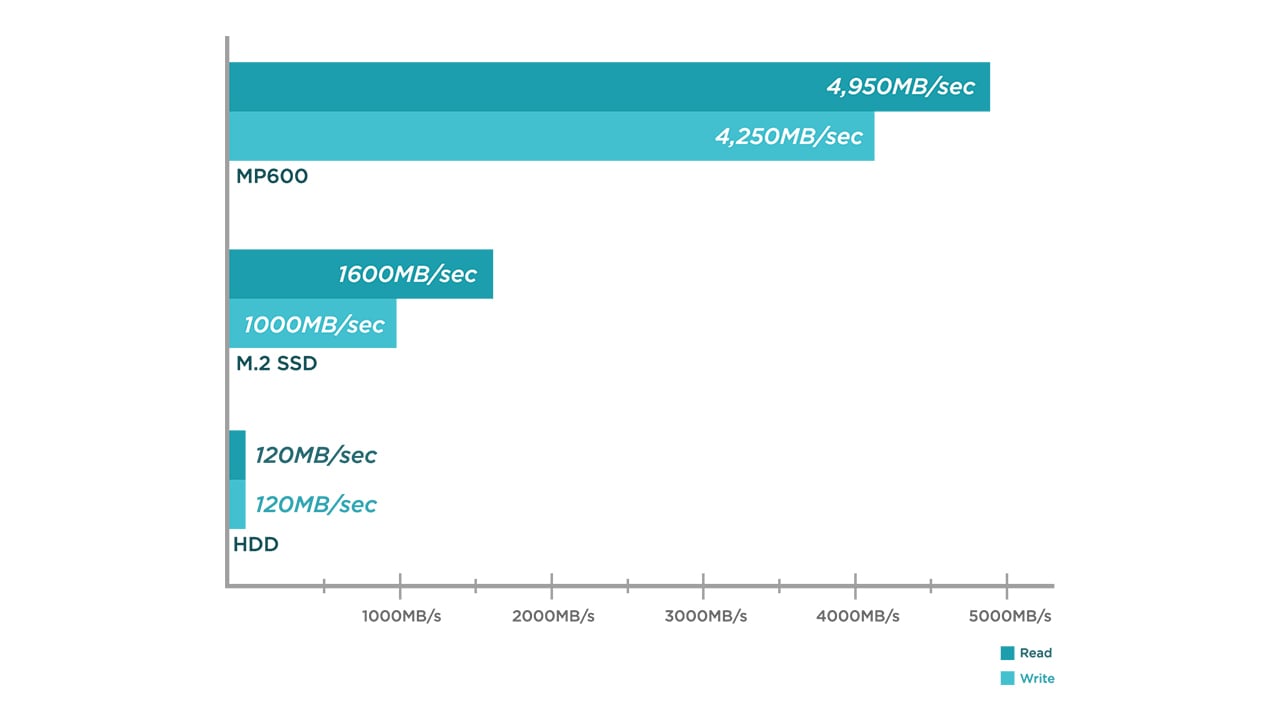
5,000 Mbps read speeds sound ridiculous, and is expensive, but who cares? It's not like we're paying for any of this.[/caption]Will we ever use that bandwidth? It’s highly unlikely. Do we need a Gen.4 SSD, especially when few motherboards even support the speed? Of course not, but we’re future-proofing here and since Gen.4 is the future, we might as well opt for it.Our SSD of choice is the Corsair MP600 in its 1 TB avatar. That’s enough storage for a handful of games and given its specs, we’re not going to be bottlenecked anytime soon.For backup, we’ll be opting for a couple of 2 TB WD RED NAS drives. These drives are meant to be abused over long periods and should be ideal for archiving our game recordings and miscellaneous footage.
Monitor, mobo, cabinet and cooling: WIP
We’re still finalising our choice of monitor, motherboard, cabinet, and cooling. And no, we haven’t yet decided on whether we want to go the liquid cooling route. Liquid cooling is cool, pun intended, but good air cooling is less hassle and just as good, if not better. There’s also less risk of spillage destroying hardware. We’re currently eyeing Noctua’s lineup for the same. Various cabinets are also being evaluated for airflow and storage capacity (few modern cabinets have more than two HDD bays).For the monitor, we’re currently using the BenQ XL2730z, a fast, 144 Hz display that supports 1440p.
Video capture device: Elgato HD60 S

High Stakes Game: Steam’s Best of 2023 highlights which games had gamers all excited last year
Netflix subscribers can now finally play GTA trilogy on Android, iOS devices. Here’s how to download
Grand Theft Auto VI Trailer launch: Here’s all the major easter eggs you missed
GTA 6 may launch in Oct 2024, reveals leaked voice message from Take-Two Interactive CEO Strauss Zelnick
Ready Player One: Esports is India’s sunrise sector, set to become a Rs 1,100 crore industry by 2025