
Advertisement


Sections
Uddhav Thackeray vs Eknath Shinde: Who will get the Shiv Sena's 'bow and arrow' symbol?
The Election Commission will determine who gets the symbol based on the support for each faction by party lawmakers and office-bearers. The poll body can rule in favour of either faction or neither of them

Even as Shiv Sena chief Uddhav Thackeray asked the MLAs of the breakaway faction currently in Guwahati to return and talk to him, reports have emerged that the Eknath Shinde camp is preparing to claim the party’s ‘bow and arrow’ election symbol.The big questions on everyone’s minds at the moment are the same: Who is the ‘real Shiv Sena’? And who will get the symbol?Let’s take a closer look:Experts say the fight for the symbol will come later. First things first though.Speaking to News18, Mumbai-based political analyst Sanjay Jog said, “Right now, the Shinde camp is busy showing that they are the ‘real Shiv Sena’ and that they have the support of 39 legislators who were elected on the party symbol. As they have crossed two-third mark of 55 (Shiv Sena strength in Assembly), they argue they will not face action under the anti-defection law.”"They are claiming that they will not attract any action under the anti-defection law as they have more than two-thirds majority (among the party’s legislature wing),” Jog said.But it’s not just a simple numbers game either.The new faction would not immediately be recognised as a separate party. The anti-defection law protects the rebel legislators as long as they merge with another party, as per DNA.[caption id="attachment_10832501" align="alignnone" width="640"]![Eknath Shinde]() Shiv Sena MLA Eknath Shinde. News18[/caption]“The ‘real Shiv Sena’ will have to have majority support from all office-bearers in the party, legislators, and Members of Parliament. Just having a large number of MLAs on one’s side is not enough for it to be recognized as the party,” a senior party leader who did not wish to be named told News18.So what next?
Shiv Sena MLA Eknath Shinde. News18[/caption]“The ‘real Shiv Sena’ will have to have majority support from all office-bearers in the party, legislators, and Members of Parliament. Just having a large number of MLAs on one’s side is not enough for it to be recognized as the party,” a senior party leader who did not wish to be named told News18.So what next?![Representational Image. PTI]() Representational Image. PTI[/caption]As per Indian Express, in case of a dispute, the EC first examines the support each faction enjoys, both within the party’s organisation and its legislature wing. Then it identifies the top committees and decision-making bodies within the political party and proceeds to know how many of its members or office-bearers back which faction. It also counts the number of lawmakers and legislators in each camp.This applies to disputes in recognised national and state parties. For splits in registered but unrecognised parties, the EC usually advises the warring factions to resolve their differences internally or to approach the court, as per the report.In short?Taking all the above into consideration, the EC can rule in favour of either faction or neither of them.What happens if EC can’t rule in either favour?It can freeze the party’s symbol and ask the two factions to register with new names and symbols.
Representational Image. PTI[/caption]As per Indian Express, in case of a dispute, the EC first examines the support each faction enjoys, both within the party’s organisation and its legislature wing. Then it identifies the top committees and decision-making bodies within the political party and proceeds to know how many of its members or office-bearers back which faction. It also counts the number of lawmakers and legislators in each camp.This applies to disputes in recognised national and state parties. For splits in registered but unrecognised parties, the EC usually advises the warring factions to resolve their differences internally or to approach the court, as per the report.In short?Taking all the above into consideration, the EC can rule in favour of either faction or neither of them.What happens if EC can’t rule in either favour?It can freeze the party’s symbol and ask the two factions to register with new names and symbols.
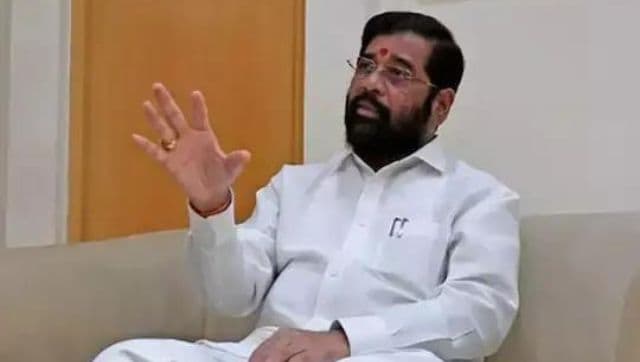 Shiv Sena MLA Eknath Shinde. News18[/caption]“The ‘real Shiv Sena’ will have to have majority support from all office-bearers in the party, legislators, and Members of Parliament. Just having a large number of MLAs on one’s side is not enough for it to be recognized as the party,” a senior party leader who did not wish to be named told News18.So what next?
It’s complicated.“After trust vote and also crossing the legislative and legal hurdles, they will try to take up the issue of the symbol with the Election Commission. For this, they require the support mentioned in the EC rules and norms which is based on their region-wise branches, district karyakarnis, and executives. This will be countered by Shiv Sena of course,” he added. “But if they are deemed qualified by the deputy speaker and upheld by the apex court, then the whole story will change.”So the EC decides?Yes.The EC’s powers in dealing with a split in a political party are spelled out by the Election Symbols (Reservation and Allotment) Order, 1968: “When the Commission is satisfied… that there are rival sections or groups of a recognised political party, each of whom claims to be that party the Commission may, after taking into account all the available facts and circumstances of the case and hearing (their) representatives… and other persons as desire to be heard, decide that one such rival section or group or none of such rival sections or groups is that recognised political party and the decision of the Commission shall be binding on all such rival sections or groups.”Former secretary general of Lok Sabha PDT Achary told India Today, "The EC has to decide which faction is the real party and after hearing both the parties in detail and evidence submitted before it before deciding on the allocation of the symbol."How does it do so?The EC makes its decision by examining precedents and which way maximum lawmakers and office-bearers lean.[caption id="attachment_8744041" align="alignnone" width="640"]
 Representational Image. PTI[/caption]As per Indian Express, in case of a dispute, the EC first examines the support each faction enjoys, both within the party’s organisation and its legislature wing. Then it identifies the top committees and decision-making bodies within the political party and proceeds to know how many of its members or office-bearers back which faction. It also counts the number of lawmakers and legislators in each camp.This applies to disputes in recognised national and state parties. For splits in registered but unrecognised parties, the EC usually advises the warring factions to resolve their differences internally or to approach the court, as per the report.In short?Taking all the above into consideration, the EC can rule in favour of either faction or neither of them.What happens if EC can’t rule in either favour?It can freeze the party’s symbol and ask the two factions to register with new names and symbols.
In case polls are around the corner, it can ask factions to pick a temporary symbol.If the factions decide to unite in the future and seek the original symbol back, the EC is empowered to rule on the merger and could decide to restore the symbol to the unified party.With inputs from agenciesRead all the Latest News, Trending News, Cricket News, Bollywood News, India News and Entertainment News here. Follow us on Facebook, Twitter and Instagram.
First Published:Jun 28, 2022, 18:37:16 IST
Advertisement
Advertisement

Rahul Gandhi, Kharge lead protest near PM residence; Centre says Parliament discussion was offered
The developments come amid the continuing CJP-led agitation at Jantar Mantar, where protesters have vowed to continue their sit-in despite recent clashes with Delhi Police
2 min read
Parliament's Monsoon Session from July 20: Key bills, numbers game to dominate agenda
The Monsoon Session of Parliament will begin on July 20 and continue till August 13, with the government expected to push several key legislations, including constitutional amendment bills
2 min read
Major blow to Uddhav Thackeray as six Lok Sabha MPs join Shinde camp
In a major political setback for Shiv Sena (UBT) chief Uddhav Thackeray, six of the party's nine Lok Sabha MPs joined the Eknath Shinde-led Shiv Sena in Mumbai on Monday
2 min read
12 years and counting: NDA leaders felicitate PM Modi as he trumps Nehru's tenure record
Leaders of the National Democratic Alliance (NDA) on Wednesday felicitated Prime Minister Narendra Modi on completing 12 years in office and becoming India's longest-serving continuously elected Prime Minister
3 min read
‘Trust, progress and welfare’: PM Modi celebrates 12 years in office, highlights big policy moves
Prime Minister Narendra Modi on Tuesday marked 12 years in office. He described the period as one dedicated to "trust, development and public welfare" while highlighting key achievements of his government
3 min read
Advertisement
Advertisement