
Advertisement


Sections
S&P's decision to not upgrade India should be eye-opener for Modi govt, not frustrate it
Crying foul at rating agencies for not delivering the expected rating would hardly help; instead work to resolve the problems they point out

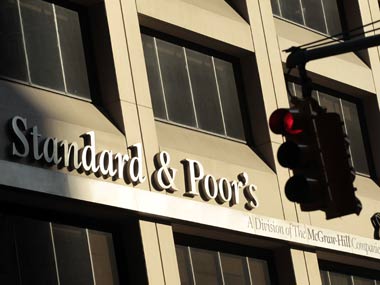 Reuters[/caption]In September, another global rating agency, Moody’s too had retained India ratings saying it would wait for at least two years to see ‘tangible’ results of reforms on the ground before thinking about a rating upgrade.Das’s frustration is understandable given that the Modi government has been desperate to get credit for its work on the reform front in the last two years and show the voters that the government’s work is indeed showing results. When things don't happen in the desired speed, it’s quite logical the political leadership gets disappointed. This was so even when the recent World Bank’s ranking of countries based on ease of doing business, came in October, showed only a marginal improvement for India (one rank up to 130 of 190 economies).Even the political enemies of Modi wouldn’t deny the reform intent of this government. Ever since the NDA government took charge in May 2014 it has made notable progress on pushing certain key bills in Parliament including insurance, coal, Aadhhar and the crucial bankruptcy law besides managing to build the political consensus to initiate the rollout of the crucial Goods and Services Tax (GST) regime. Also, the government’s initiatives on subsidy reforms, rural infrastructure and its efforts to give a leg-up to the small industries have helped to improve sentiments.
A look at the S&P note shows that the agency has indeed acknowledged that the positive changes in the economy. “India's governing parties have made progress in building consensus on a passage of laws to address long-standing impediments to the country's growth...we believe these measures, supported by India's well-entrenched democracy, will promote greater economic flexibility and help redress public finances over time,” S&P has said.Then why is the rater reluctant to up the sovereign rating? S&P has highlighted two key reasons, “vulnerabilities stemming from its low per capita income and weak public finances"."The outlook indicates that we do not expect to change our rating on India this year or next, based on our current set of forecasts,” S&P has said.In September, Moody’s too had highlighted weak private investment scenario in the country as a hurdle for a rating upgrade. The agency had listed a six-point agenda on the list of pending reforms -- the land acquisition Bill, labour law reforms, significant infrastructure investment, tangible benefit from Make in India initiative, tax administration and PSU bank reforms.These are precisely areas where the Modi government has so far failed to make significant progress. Absence of revival in private investments remains a big concern. According to data from the Centre for Monitoring Indian economy (CMIE), private investments have fallen sharply ever since the Modi government took over. The share of private investments in projects under implementation has fallen from 52.8 percent in 2013-14 to 47.7 percent in 2015-16, whereas during the same period, the government’s share of investments increased from 47.2 percent to 52.3 percent.The growth in private investments between 2013-14 and 2015-16 rose by mere 1.1 percent, whereas that in the public investments grew by 24 percent. In short, private investments have been painfully low.The bottom line is this: Crying foul at rating agencies for not delivering the expected rating would hardly help. Instead, these indications should act as an eye opener to understand the problems and move ahead to solve them.Data contributed by Kishor Kadam
First Published:Nov 02, 2016, 16:39:18 IST
Advertisement
Advertisement

Rahul Gandhi, Kharge lead protest near PM residence; Centre says Parliament discussion was offered
The developments come amid the continuing CJP-led agitation at Jantar Mantar, where protesters have vowed to continue their sit-in despite recent clashes with Delhi Police
2 min read
Parliament's Monsoon Session from July 20: Key bills, numbers game to dominate agenda
The Monsoon Session of Parliament will begin on July 20 and continue till August 13, with the government expected to push several key legislations, including constitutional amendment bills
2 min read
Major blow to Uddhav Thackeray as six Lok Sabha MPs join Shinde camp
In a major political setback for Shiv Sena (UBT) chief Uddhav Thackeray, six of the party's nine Lok Sabha MPs joined the Eknath Shinde-led Shiv Sena in Mumbai on Monday
2 min read
12 years and counting: NDA leaders felicitate PM Modi as he trumps Nehru's tenure record
Leaders of the National Democratic Alliance (NDA) on Wednesday felicitated Prime Minister Narendra Modi on completing 12 years in office and becoming India's longest-serving continuously elected Prime Minister
3 min read
‘Trust, progress and welfare’: PM Modi celebrates 12 years in office, highlights big policy moves
Prime Minister Narendra Modi on Tuesday marked 12 years in office. He described the period as one dedicated to "trust, development and public welfare" while highlighting key achievements of his government
3 min read
Advertisement
Advertisement