


Hating Jawaharlal Nehru: Opponents envy him because they can never be him
To his ideological enemies, Nehru is the epitome of the very idea of India — a secular, liberal, syncretic nation — they want to replace with their narrow, communal, conservative narrative of India.

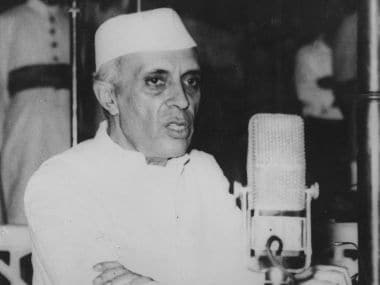
Former Prime Minister Jawaharlal Nehru. Getty Images[/caption]Back home, in Parliament, a young Atal Bihari Vajpayee remembered Nehru as the chief actor of the world stage. Vajpayee implored: "With unity, discipline and self-confidence we must make this Republic of ours flourish. The leader has gone, but the followers remain. The sun has set, yet by the shadow of stars we must find our way. These are testing times, but we must dedicate ourselves to his great aim, so that India can become strong, capable and prosperous."He built some of the defining monuments and institutions of modern India; nurtured its fledgling democracy when all around dictatorships were blooming; contributed to India's liberal, secular, socialist ethos; argued for a scientific temperament; built several new cities and gave the country an identity on the world stage because of his charisma and intellect.For more than three decades, Nehru was India's pride and joy. He was symbol of our syncretic culture and rich cultural heritage, a rare blend of idealism, intellect, penmanship and statesmanship. And now we want to demonise the PM our ancestors elected for almost two decades. Want our future generations to think of him as a villain. In fact, not to talk about him at all. Is this madness real?Two days ago, the Madhya Pradesh government transferred Barwani district collector Ajay Gangwar for praising India's first PM in his Facebook post. If remembering Nehru's contribution to India is a crime, let me take the state's chief minister — in case he has not read Vajpayee's tribute to Nehru — back to a balmy morning in April 2014. Back then, standing on his home turf, with the CM in attendance, BJP patriarch LK Advani told a huge crowd that India's democracy owes its strength to Nehru. Did Shivraj Singh Chauhan's earns turn red then?In his lifetime, Nehru survived at least four assassination attempts. But, it is clear that another attempt is now being on his life, reputation and legacy. References to his name are being omitted from history books, his iconic tryst-with-destiny speech is being removed from school syllabi. To supplant the image of India's erstwhile hero, an entirely new persona is being created for Nehru with fake pictures, twisted facts and manufactured history. In the fertile imaginations of his assailants, an entirely new Nehru is being created for mass consumption and hatred.The reasons behind this demonisation of Nehru are easy to explain. To his ideological enemies, Nehru is the epitome of the very idea of India — a secular, liberal, syncretic nation — they want to replace with their narrow, communal, conservative narrative of India. An assault on Nehru is actually a proxy for an attack on the Nehruvian legacy embedded deep in the Indian psyche.The other reason is psychological. Hatred of the good is a manifestation of a deep-seated human hatred for a person who possesses virtues and qualities they themselves lack and find desirable. At the sub-conscious level, many of Nehru's opponents envy him, detest in him what their own personalities lack.As Ayn Rand argues in Atlas Shrugged: "They do not want to own your fortune, they want you to lose it; they do not want to succeed, they want you to fail; they do not want to live, they want you to die; they desire nothing, they hate existence, and they keep running, each trying not to learn that the object of his hatred is himself . . . . They are the essence of evil, they, those anti-living objects who seek, by devouring the world, to fill the selfless zero of their soul."This is not to argue that Nehru did not have his shortcomings or failures. His handling of the Chinese attack in 1962, decision to take Kashmir to the UN (morally right, diplomatically wrong) and focus on socialism could have led to long-term consequences. By all means, these should be debated, argued and discussed in the public domain, in the right context and with the proper intent.In the long run, attempts to erase Nehru from India's history will backfire. So interlinked is India's pre and post Independence history with him that several chapters of it could be written as a biography of Nehru. To separate Nehru from India would be impossible. In fact, recent attempts to vilify him will entice people to study him closely in an attempt to separate the truth from propaganda. Ultimately, his critics will end up reviving interest in Nehru and Nehruvianism.Nehru will live on, he will survive his enemies and their envy.

Rahul Gandhi, Kharge lead protest near PM residence; Centre says Parliament discussion was offered
Parliament's Monsoon Session from July 20: Key bills, numbers game to dominate agenda
Major blow to Uddhav Thackeray as six Lok Sabha MPs join Shinde camp
12 years and counting: NDA leaders felicitate PM Modi as he trumps Nehru's tenure record
‘Trust, progress and welfare’: PM Modi celebrates 12 years in office, highlights big policy moves